Play-based literacy means kids learn about reading and writing while they play. This article gives simple, practical ideas for child care providers and directors. You will find easy activities, center ideas, tips to watch progress, and common mistakes to avoid. Use the ideas with groups or small circles. And remember: state requirements vary - check your state licensing agency.
Why does play-based literacy matter?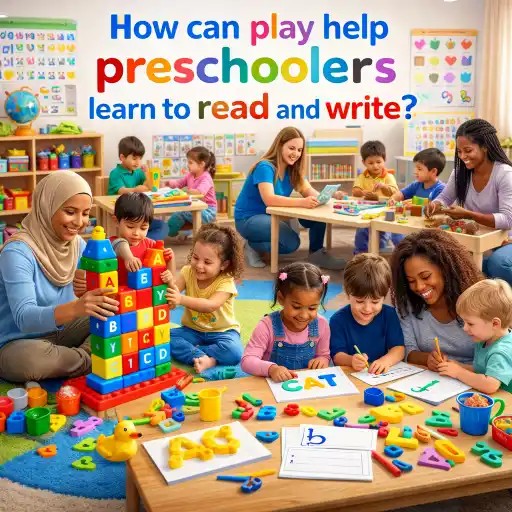
Quick reasons it matters:
- Early #literacy predicts later school success.
- Play builds oral language and #vocabulary naturally.
- Play supports social skills needed for reading groups and storytime.
What kinds of play boost early literacy?
- 📚 Read-aloud with questions and props. Use puppets, props, or story stones so children act out parts of the story. See resources like Talk, Read & Sing Buy Now $0.00.
- 🎭 Dramatic play with print. Add menus, shopping lists, and play money so children practice #books and print as part of their role play; guidance at dramatic and sensory play.
- 🧩 Block and construction play with labeling. Encourage children to draw plans, write labels, or create signs for their buildings. Scholastic shows easy ideas to pair blocks and reading (blocks + reading).
- 🔤 Sensory bins and letter hunts. Hide letters in sand or rice for letter ID, matching, and word building. Try ideas from ABC sensory bins.
- 🎶 Songs, rhymes, and fingerplays. These build sound awareness and memory. ChildCareEd's Boosting Language Through Play has more examples.
How do I teach phonological skills and letters through play?
- 🎵 Rhyming rounds: Say a word and ask children to give a rhyme. Make it a quick circle game. Resources on phonological play include phonological awareness activities.
- 👏 Syllable clap: Have children clap or stomp the parts of their names and snacks. This helps them hear chunks of words.
- 🔎 I Spy sounds: "I spy something that starts with /b/." Use real objects or picture cards.
- 🪣 Letter sensory hunt: Put plastic letters in a sensory bin and ask kids to find a letter and name its sound. See ABC sensory bin ideas.
- ✏️ Writing with play tools: Provide clipboards, crayons, and labels in dramatic play. Let children draft menus or tickets. Links at fresh curriculum ideas.
- 📘 Decodable and patterned books: Use books that match practiced sounds. Scholastic explains how sounding-out games fit daily play (sound out words).
How can I set up classroom centers and routines that make literacy play happen every day?
Set up simple, safe spaces so teachers and children can use play to practice literacy. Follow these steps and tips.
- Design a cozy reading corner with pillows, baskets of books, and flannel board pieces for retelling. Rotate books weekly to keep interest fresh. See ChildCareEd resources on emergent literacy tools (classroom tools for emergent literacy).
- Create a dramatic-play area stocked with culturally diverse props, clipboards, menus, and print. Encourage children to make lists and tickets. More on bringing play into the classroom: how to bring play into the classroom.
- Make a print-rich environment: label bins, doors, and centers with pictures and words. Young children begin to match words and objects when print is everywhere (foster early literacy skills).
- Use the sensory table for letters and story-building prompts. Rotate materials often so play stays new and inviting (sensory play ideas).
- Schedule daily mini-routines: 1) read-aloud, 2) small guided-play group, 3) child-led center time. These routines help children know what to expect and give adults chances to teach in the moment. For staff training and supervision tips, explore Play Safe, Think Big
 Buy Now $10.00.
Safety note: always supervise messy or small-piece activities and follow local rules — state requirements vary - check your state licensing agency.
How will I know it’s working and how do I avoid common mistakes?
Look for small, clear signs that play is helping literacy. Use simple methods and avoid common pitfalls.
Quick ways to check progress
- Observe and note: Keep short anecdotal notes during centers: words children use, attempts at writing, retelling of stories.
- Collect work samples: photos of play, drawings, invented spelling, and labeled constructions.
- Use short checklists: letter recognition, rhyming, one-minute retell of a story, and attempts at writing a name.
- Talk with families: share a quick note or photo and ask what words children use at home. Family connection is powerful (family resources).
Common mistakes and how to avoid them
- ❌ Over-directing play — let children lead more. Adults can scaffold with one or two prompts.
- ❌ Too little repetition — repeat games and books often to build memory and confidence.
- ❌ Skipping documentation — quick notes help you see growth over weeks.
- ❌ Materials never change — rotate props and books to keep interest.
FAQ
- Q: How long should literacy play be? A: Short and often. Five to 15 minutes of focused play, repeated daily, helps most preschoolers.
- Q: What if a child resists books? A: Try props, puppets, or a sensory bin tied to a story to spark interest.
- Q: Can infants or toddlers join? A: Yes — use simpler songs, fingerplays, and board books; adapt materials to age.
- Q: Do I need special materials? A: No. Use household items, recycled boxes, and free printables. ChildCareEd has many free resources (free resources).
Conclusion
Play-based literacy is doable, affordable, and joyful. Start small: add one print-rich prop, one sensory-letter bin, or one rhyming game this week. Watch, note, and celebrate small steps. For more training and detailed lesson ideas, check ChildCareEd courses like Play Safe, Think Big Buy Now $10.00 and the Classroom Tools resources (classroom tools for emergent literacy). You are the best guide for your children — keep it playful, simple, and full of praise for their efforts. #play #literacy #phonics #books #vocabulary
- 45 Hour Child Growth and Development
- Science of Reading Foundations in the Pre-K Classroom
- CDA Preschool Credential with Portfolio Review
- Language Development in School Age
- Bienvenido! Welcoming All Families
- Play Safe, Think Big: Literacy Through Play
- CDA Bridge Bundle: Preschool
- Texas Director Credential
- Wellness in Action: Teaching Healthy Habits to Children
- Sep 1 is National No Rhyme (Nor Reason) Day: Rhyming Fun & Playful Language Activities
- CDA Certification en Español: Recursos y Consejos para Educadores Bilingües
- How can I support children’s language and literacy development?
- What are the developmental milestones from birth to 5 years and how can providers track them?
- How to Write an Early Childhood Lesson Plan Step by Step
- Early Childhood Lesson Plan Examples for Toddlers and Preschoolers
- How Can Teachers Support Language and Literacy Every Day?
- A Simple Guide to Toddler and Preschool Lesson Plans
- How can I design age-appropriate lesson plans that really work?
- How can we teach letters, numbers, and early literacy to young children?
- What are fun language-learning games preschool teachers can use?
- Celebrando la amistad en el cuidado infantil durante el Día de los Mejores Amigos
- How can I make easy, useful lesson plans for my childcare program?
- Daycare Activity Ideas for Infants, Toddlers, and Preschoolers
- What simple early literacy activities really work for preschoolers?
- How can preschool programs build early literacy every day?
- How can I make infant and toddler lesson plans that really work?
- What simple early literacy activities really help children learn?
- Can preschoolers learn through play?
- Can we build early literacy skills through play in high-quality child care?
