Outdoor time is one of the best parts of the day for school-age children. It helps them move, make friends, solve problems, and calm down after a long school day. This article gives simple, ready ideas for child care providers and directors who want outdoor ideas that are fun, easy, and safe. You will find numbered lists, quick tips, safety reminders, and links to trusted resources like Outdoor Spring Play and School-Age Lesson Plans for After-School Child Care. Use these ideas to build a weekly plan that fits your space, staff, and rules. Remember: state requirements vary - check your state licensing agency. This article highlights how to mix fun with learning while keeping #outdoor time organized and safe for every child.
What outdoor activities work best for school-age groups?
- 🟢 Nature Scavenger Hunt — List 8–12 items (leaf, feather, round rock). Use photos so all ages can join. For simpler, age‑adjusted lists and printable prompts that build color recognition, observation, and early literacy skills for preschool and kindergarten groups, see Scavenger Hunt January. See sample ideas at Outdoor Spring Play.
- 🎨 Outdoor Art Station — Clip paper to a fence or easel. Use watercolors, chalk, or natural collages with leaves and twigs. Low mess, big creativity.
- 🏃 Obstacle Course / Relay Races — Use cones, hoops, and tape lines for stations. Rotate groups every 10–20 minutes to keep energy fresh. For more active games see School-Age Daycare Activities.
- 🔬 Mini STEM Challenges — Build the tallest cup tower or test which leaf shape floats. Use simple materials and 20–30 minute challenges. ChildCareEd has STEM ideas that scale up from preschool to #schoolage groups.
- 🕵️ Team Treasure Hunt — Kids solve clues or maps to find a treasure. Great for problem-solving and teamwork.
- 🌱 Gardening & Nature Care — Plant easy veggies or flowers; label plants with pictures. This builds responsibility and science talk. See nature-class ideas at What Are Creative Ways to Use Nature as Your Classroom?. Consider tying this work to local Earth Day events, like park cleanups or community bird counts, to give children a real-world service project and deepen environmental learning. Consider tying gardening lessons to pollinator awareness — use simple crafts and activities for kids on World Bee Day to teach about bees, pollination, and caring for pollinator-friendly plants.
- 🐦 Quiet Nature Watch — Binoculars, bird lists, or sound hunts for calm moments. Use this to practice observation and journaling.
- 💧 Water Play (warm days) — Small splash tubs, water relays, or sponge races. Supervise closely and follow sanitation tips.
- 🎭 Dramatic Play Outdoors — Set up a market, bug clinic, or weather station. Let kids create roles and rules.
- 🧩 Puzzle & Game Station — Tables outside for board games, coding cards, or group puzzles for quieter play.
Why these work: 1) Choice keeps kids engaged, 2) small groups help leaders teach skills, and 3) rotating stations balance calm and active time. For ready printable packs, try ChildCareEd's activity PDFs like Outdoor Earth Day Activities Buy Now $0.00 or seasonal packs. You can also find simple, program-friendly Earth Day and sustainability activities to use on April 22 at April 22nd Is Earth Day.
How do I plan a daily schedule and lesson plans for outdoor time?
- 🎯 Start with one learning goal — e.g., "Work together to build an obstacle course." Keep it short and clear. See tips in School-Age Lesson Plans.
- 📋 List materials — include backups and weather options (shade tarp, extra water, indoor alternative).
- ⏱ Set timing — Typical rotation: 1) Arrival/snack (15–20 min), 2) Homework/quiet help (20–30 min), 3) Outdoor activity rotation (30–60 min), 4) Free choice/closing (15–20 min).
- 🔁 Write 3 simple steps — First, Next, Last. Keep directions short so kids understand at a glance.
- 🗣 Add 2 open questions — e.g., "What worked?" and "What will you change next time?" to boost reflection and language.
- 📝 Add quick adaptations — one note for mixed ages or children who need quieter options. See adaptations ideas at Adaptations that support children's learning.
Sample weekly rotation (numbered days makes it easy):
1. Monday: STEM challenge + active games + art
2. Tuesday: Garden care + quiet nature watch + free play
3. Wednesday: Team project + sports + journaling
4. Thursday: STEAM + dramatic play + outdoor reading
5. Friday: Showcase + group games + reflection
Practical tips:
1) Use visual schedules and timers to help transitions. 2) Give 5- and 2-minute warnings. 3) Keep one "Sunday Basket" of supplies so you can pull materials quickly. For lesson-planning templates and short one-page plans, use ChildCareEd's lesson templates and the sample routines in School-Age Lesson Plans.
How do we keep children safe, healthy, and supervised outdoors?
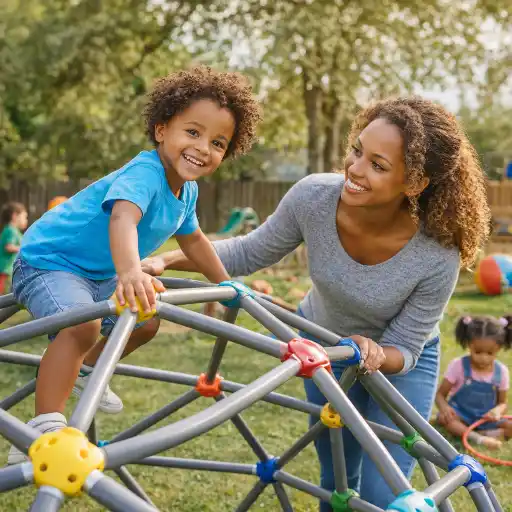
Keeping kids safe outdoors is a top priority. Use simple rules, active supervision, and health checks so play stays fun and low risk. The CDC has clear safety tips for ECE outdoor play; see Outdoor Play and Safety for Children in ECE.
- 🛡 Active Supervision — Always position adults so you can see all children. Assign zones and use spot checks every 30–60 seconds for high-risk play areas (water, climbing).
- 🌞 Sun & Heat Safety — Use shade, hats, light clothing, frequent water breaks, and sunscreen with permission. The CDC recommends planning outdoor time to avoid the hottest midday hours.
- 🦟 Bug & Tick Prevention — Cover arms/legs, use EPA-registered repellents with parental permission, and check gear after nature walks.
- 🩹 First Aid & CPR — Keep a stocked first-aid kit and ensure staff have current CPR and first-aid training. Keep emergency contacts handy.
- 🚸 Boundaries & Rules — Number your outdoor boundaries, post them with pictures, and practice routes to restrooms and shade. Use consistent signals for clean-up and line-up.
- 💧 Water Play Safeguards — Constant adult supervision; follow sanitizer and diaper rules; avoid inflatable baby pools in program settings. For water safety and illness prevention see the CDC guidance linked above.
Also remember developmental safety: allow appropriate risk (climbing, balance) so kids build confidence. The research shows outdoor play supports physical and mental health — see the CDC benefits of physical activity for children at Health Benefits of Physical Activity for Children. Finally, state requirements vary - check your state licensing agency for staff ratios, equipment rules, and sunscreen/repellent policies.
How can I include learning, support inclusion, avoid common mistakes, and answer quick FAQs?
This section pulls learning, inclusion, and common pitfalls together. Outdoor time can teach science, math, SEL, and language when you add small prompts and supports.
Why it matters (short):
1) Outdoor #play improves focus, fitness, and cooperation.
2) It gives children chances to lead and try new skills safely. Using nature as your classroom makes lessons real and memorable — see Creative Ways to Use Nature.
Ways to teach outdoors (numbered):
- 🔢 Math — measure leaf lengths, count petals, graph rock colors.
- 🔬 Science — plant experiments, observe insects, compare soil.
- 🗣 Language & SEL — ask open questions, do reflection circles, practice turn-taking.
- 🎨 Art & STEAM — create nature sculptures, shadow drawings, or water color mixing. Try simple shadow experiments and shadow-puppet prompts outdoors to teach light, observation, and storytelling — see step-by-step examples and adaptations in these easy-to-run activities with shadows.
Adaptations and inclusion tips:
1) Offer two levels for each task (easy + challenge). 2) Use picture directions and peer buddies. 3) Provide sensory-friendly options (gloves, tools) for children who avoid touch. See practical adaptations at Adaptations that support children's learning.
Common mistakes and fixes (numbered):
1. ❌ Too many long activities. ✅ Break into 15–30 minute rotations.
2. ❌ No transition plan. ✅ Use a song, timer, and job chart.
3. ❌ One-size-fits-all tasks. ✅ Offer layered choices and buddy support.
Quick FAQ (4 short Q&A):
- Q: How long should outdoor blocks be? A: 30–60 minutes works well; shorter for high-energy games.
- Q: How many adults outside? A: Follow licensing ratios; add at least one extra adult for water or climbing play. State requirements vary - check your state licensing agency.
- Q: What if weather changes suddenly? A: Have an indoor backup (active games, art) and a gear bin with tarps and extra layers. For quick, tested options you can rotate as backups, see Indoor and Outdoor Activities.
- Q: Where to get ready-made activity packs? A: ChildCareEd free resources and PDFs like March Madness Activities Buy Now $0.00 or seasonal packs save time.
Final practical tip: start with 2–3 outdoor routines you can do well, track what kids loved, and grow from there. Small, consistent outdoor experiences build big skills over time. Keep it simple, keep kids moving, and celebrate effort.
Conclusion
Outdoor play is a powerful tool for school-age programs. Use short, numbered lesson plans, rotate stations, supervise actively, and include simple learning prompts. Prioritize safety, offer choices for different ages and needs, and use ChildCareEd and CDC resources to guide you. Your outdoor time can be fun, calm, and packed with learning. Try one new outdoor rotation this week and note one win — that small step will make your program stronger and happier. #play #activities #schoolage #outdoor #safety
Below are easy-to-run outdoor activities that match different moods and energy levels. Each is quick to set up and can be scaled up or down.Good planning helps the day run smoothly and keeps staff confident. Use a short, numbered plan for each outdoor block so every staff member knows the goal and steps.- 45 Hour Child Growth and Development
- Teach with Respect ONLINE
- 45 Hour Preschool Methods and Materials
- 45 Hour Infant and Toddler Methods and Materials
- 45 Hour School Age Methods and Materials
- Key Elements of an After School Program
- Lesson Planning to Meet School Age Needs
- Texas Director Credential
- Family Child Care: Building, Premises, and Outdoor Safety
- Daycare Training 101: Building a Safe, Fun, and Educational Environment
- ❄️ ¿Qué actividades al aire libre funcionan bien para los niños de Illinois en cada estación? 🌷🍂
- ¿Cómo puedo usar escenarios de juego de roles de primeros auxilios en mi aula?
- Actividades de Motricidad Gruesa que Desarrollan el Equilibrio, la Coordinación y la Fuerza
- Proporciones de Cuidado Infantil y Tamaños de Grupo por Edad en Maryland (Guía Rápida para Centros y Hogares)
- Proporciones de Cuidado Infantil y Tamaños de Grupo por Edad en Nueva Jersey (Guía Rápida para Centros y Hogares)
- Proporciones de Cuidado Infantil y Tamaños de Grupo por Edad en Virginia (Guía Rápida para Centros y Hogares)
- Consejos de Supervisión Activa para Salones de Preescolar y el Juego al Aire Libre
- Best Daycare Field Trip Ideas in North Carolina
- Can Toddlers Do STEM in the Sandbox at Minnesota Daycares?
- Child Care Weather Guidelines: Using the 2026 Weather Watch Chart
- Safe Temperature Regulations in Daycare: California Rules for Child Care Providers
- Celebrando la amistad en el cuidado infantil durante el Día de los Mejores Amigos
- Canciones, juegos y preguntas de círculo para niños
- How can we plan fun, safe outdoor activities for school-age daycare programs?
- How can school-age daycare use outdoor activities to teach, play, and stay safe?
- Utah Home Daycare Standards: What Providers Need to Know
- Mixed-Age Daycare Schedule: How to Plan a Day for Different Age Groups
- What Do You Need to Open a Daycare at Home? Start With Your House, Not the Toys
- Common After School Activities Kids Get Bored With—and What to Try Instead
