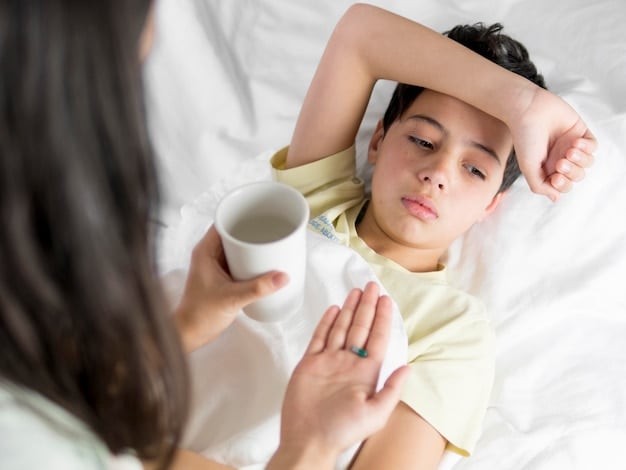
When a child vomits, families and providers must balance recovery, hydration, infection control, and the realities of group care. A practical starting point is to keep the child home until vomiting has stopped overnight, the child can keep down fluids and food, and the program’s return policy is satisfied; Prevention and Control of Infectious Diseases  Buy Now $16.00 can help providers strengthen illness-prevention practices while earning focused professional-development training.
Why does the timing of return matter?
Vomiting can result from a contagious gastrointestinal infection, food exposure, motion sickness, medication, migraine, or another noninfectious condition. Providers generally cannot determine the cause at drop-off, so decisions should focus on observable symptoms, the child’s ability to participate, and the risk to others.
Group care increases opportunities for transmission because children share toys, surfaces, bathrooms, meals, and close physical contact. The American Academy of Pediatrics recommends exclusion when a child has vomited two or more times during the previous 24 hours, unless a noninfectious cause is established and dehydration is not a concern (AAP child care exclusion recommendations).
For providers, the goal is not to punish absence or diagnose illness. It is to create a predictable, compassionate process that protects the sick child and the classroom community. State requirements vary - check your state licensing agency.
How long should a child stay home after vomiting?
For many child care and school settings, a child may return after vomiting has resolved overnight and the child can hold down food and liquids the following morning. The CDC identifies “vomiting more than twice in the preceding 24 hours” as a reason to stay home and lists overnight resolution with successful morning intake as a possible return-to-school checkpoint (CDC guidance).
Many programs use a conservative 24-hour symptom-free rule after the last vomiting episode. During a suspected norovirus outbreak, local public health authorities may recommend 48 hours after symptoms stop. Norovirus is highly contagious, and people are most likely to spread it while ill and during the two days after symptoms resolve (California Department of Public Health norovirus guidance).
- One isolated episode: Consider the context, monitor closely, and follow the written program policy.
- Two or more episodes in 24 hours: Exclude the child and arrange prompt pickup.
- Vomiting with diarrhea, fever, severe pain, lethargy, or dehydration: Keep the child home and recommend medical guidance.
- Known or suspected norovirus: Follow local health-department instructions; a 48-hour symptom-free period may be appropriate.
Do not use a return rule as a substitute for individualized medical advice. Infants, children with chronic conditions, and children who cannot retain fluids may need earlier evaluation.
What should providers assess before allowing a child to return?
A child who has not vomited recently may still be unable to manage a full day. Before return, consider whether the child can participate comfortably without requiring care beyond what staff can safely provide. The Child Care Technical Assistance Network emphasizes participation, staffing capacity, risk of disease transmission, and fever or behavior changes when making exclusion decisions (CFOC inclusion and exclusion guidance).
At arrival, use a brief, consistent check:
- Can the child drink and keep fluids down?
- Can the child eat an age-appropriate snack if offered?
- Is urination reasonably normal for the child?
- Does the child have usual energy and behavior?
- Can the child participate in routine activities?
- Are diarrhea, fever, abdominal pain, or additional vomiting present?
Look for possible dehydration. Warning signs include a dry mouth, fewer tears, reduced urination, unusual sleepiness, irritability, sunken eyes, or cool, discolored hands and feet (American Academy of Pediatrics dehydration guidance). A child who cannot keep fluids down, urinates very little, appears unusually difficult to wake, or has signs of severe illness requires prompt medical attention.
Providers should document observations rather than assign a diagnosis. Record the time of the last vomiting episode reported by the family, current symptoms, behavior, intake, action taken, and parent communication.
How should staff respond when vomiting occurs in care?
Respond calmly and protect the child’s dignity. Move the child to a comfortable, supervised area away from other children while maintaining required supervision. Contact the parent or authorized pickup person promptly, explain what was observed, and provide the program’s written return criteria.
Vomiting can contaminate nearby surfaces and spread pathogens through droplets, hands, clothing, toys, and shared objects. Staff should use appropriate disposable gloves and other protective equipment required by program or public-health guidance. After cleanup, wash hands thoroughly with soap and water; hand sanitizer is not a reliable substitute for handwashing against norovirus (CDC norovirus information).
- Remove children from the contaminated area until cleaning and disinfection are complete.
- Handle contaminated clothing and linens carefully without shaking them.
- Clean visible material before applying an appropriate disinfectant.
- Follow the product label, including required contact time.
- Disinfect nearby high-touch surfaces, bathroom areas, and objects that may have been contaminated.
- Record the episode and note when the family was contacted.
🤢 A simple staff script can reduce conflict: “I’m sorry that Jordan is feeling sick. We observed vomiting, so Jordan needs to rest at home. Our policy allows return after the required symptom-free period and when Jordan can drink, participate, and manage the day comfortably.”
Programs can reinforce these practices through Illness, Medication, and Allergies in Child Care Buy Now $32.00, which addresses illness signs, medication, and allergy-related health responsibilities.
How can directors create a fair vomiting policy?
A strong policy is short, observable, and shared before illness occurs. Include separate guidance for children, staff, food handlers, and outbreak situations. Explain that the program does not diagnose illness; it applies health and safety criteria consistently.
A family-facing policy might state:
- Children who vomit two or more times in 24 hours must remain home.
- Return requires no vomiting for the program’s stated period, commonly 24 hours, and the ability to keep down fluids and participate comfortably.
- During a suspected outbreak, the program follows local health-department instructions, which may require a longer symptom-free period.
- Families must notify the program about vomiting, diarrhea, fever, diagnosis, and known exposures.
- Children who cannot participate comfortably or need one-to-one care beyond program capacity must remain home.
Review the policy with staff during orientation and refresh it before high-incidence seasons. Keep a quick-reference chart near the sign-in area, but ensure staff understand that charts do not replace emergency procedures or medical advice. Policies should also address flexible communication and avoid unnecessary doctor’s-note requirements when public-health or licensing rules do not require them.
Additional professional development can support implementation. How To Keep A Healthy Class: Six Tips for Germ Control Buy Now $35.00 focuses on communicable disease prevention, hygiene procedures, and healthier classroom practices. For broader foundational training, Health and Safety Orientation Buy Now $55.00 covers infectious-disease prevention and other core safety topics.
What are common mistakes, and how can programs avoid them?
Vomiting policies often fail when they are either too vague or too rigid. “The child looks sick” does not give staff enough guidance, while an automatic multi-day exclusion for every isolated episode may unnecessarily burden families. Use objective criteria and allow individualized consideration for clearly noninfectious events, while still protecting the group.
- Mistake: Counting from the morning after vomiting without identifying the last episode. Better: Record the exact reported time and calculate the symptom-free period from that point.
- Mistake: Returning a child because they seem energetic after medication. Better: Confirm that symptoms are resolved without relying on symptom-suppressing medicine.
- Mistake: Treating all vomiting as proof of norovirus. Better: Document symptoms without diagnosing and consult health authorities when cases cluster.
- Mistake: Cleaning visible material but skipping disinfection. Better: Clean first, disinfect with an appropriate product, and follow contact time.
- Mistake: Failing to monitor hydration. Better: Ask about fluid intake and urination and communicate concerning changes to the family.
Directors should review illness logs for patterns. Multiple children or staff with vomiting and diarrhea within a short period may indicate a cluster requiring consultation with the local health department. Follow applicable reporting rules and protect confidentiality.
Conclusion: When can a child safely return after vomiting?
The central question is not only “How many hours has it been?” but also “Can this child participate safely, retain fluids, and receive care without compromising the group?” In many programs, return follows at least an overnight or 24-hour period without vomiting, with successful fluid and food intake and improving energy. During norovirus concerns or outbreaks, public-health guidance may call for 48 hours symptom-free.
Providers should apply the program’s written policy, communicate respectfully, document objective observations, monitor for dehydration, and seek medical or public-health guidance when symptoms are severe, persistent, or clustered. Consistent #policy, careful #documentation, thorough #cleaning, effective #handwashing, and clear #communication make vomiting episodes easier to manage while protecting children, families, and staff.
Important: This article provides general educational information, not a diagnosis or individualized medical advice. State and local rules differ; check your state licensing agency and consult the child’s healthcare professional when concerned.
- How To Keep A Healthy Class: Six Tips for Germ Control
- Basic Health & Safety and Breastfeeding Awareness
- CDA Family Child Care Credential
- Bienvenido! Welcoming All Families
- CDA Family Child Care Credential with Portfolio Review
- Pediatric RSV First Aid & CPR/AED
- 45-Hour Infant and Toddler Curriculum
- Creating Environments that Nurture Growth and Community
- Texas Director Credential
- ¿Cómo pueden los equipos de cuidado infantil practicar habilidades rápidas de primeros auxilios en situaciones reales?
- Lista para Abrir una Guardería en Casa en Dakota del Norte: Cómo Empezar
- Lista para Guardería en Casa en California: Cómo Iniciar una Guardería en el Hogar
- Lista para Guardería en Casa en Texas: Cómo Iniciar una Guardería en el Hogar
- How can childcare programs prevent the spread of illness?
- Canciones, juegos y preguntas de círculo para niños
- How can child care programs prevent the spread of illness?
- How can child care programs prevent and control infections?
- How can child care programs control infections and keep kids healthy?
- How can North Dakota providers recognize and respond to heat stress in young children?
- How can child care programs prevent infections and keep kids healthy?
- How can childcare settings prevent the spread of illness?
- How can group child care programs effectively prevent the spread of illness?
- Sick or Not Sick? How Do We Make Exclusion Decisions in Child Care?
- How should I prepare my classroom for cold and flu season beyond cleaning?
- How Can Child Care Programs Manage Sick-Child Exclusion Policies Fairly and Effectively?
- Can a Child Attend Daycare With a Cough or Runny Nose?
- When Should a Sick Child Be Sent Home From Daycare?
- How Long Should a Child Stay Home After Vomiting?
- When Should a Sick Child Be Sent Home From Daycare?
