A sick-child decision can affect one child, an entire classroom, and a family’s workday. Strengthen your ability to respond with confidence through ChildCareEd’s Illness, Medication, and Allergies in Child Care  Buy Now $32.00, a focused course on recognizing illness signs and responding appropriately. The practical guidance below can help you apply clear, compassionate criteria while building a stronger foundation in child health and safety.
Why does a clear sick-child policy matter?
Sending a child home is not a judgment about a family’s choices, and it is not a diagnosis made by teaching staff. It is a care decision based on the child’s comfort, the program’s capacity to meet the child’s needs, the possibility of transmission, and current licensing or public-health guidance. A sound approach avoids both extremes: excluding every child with a runny nose or keeping a child who needs more attention than a group setting can safely provide.
Consistency promotes trust and equity. Families are more likely to understand a difficult call when staff use the same written #policy for everyone, explain what they observed privately, and give specific return-to-care instructions. State requirements vary - check your state licensing agency.
Which symptoms commonly call for a child to go home?
Use observable symptoms rather than trying to diagnose. Specific thresholds differ by state, age, illness, and public-health direction, so programs should align their written criteria with the applicable rules. Common reasons to exclude or promptly consult the director include:
- Unable to participate comfortably: The child cannot play, eat, rest, or follow ordinary routines, or needs one-to-one attention that interferes with group supervision.
- Fever with behavior change or other symptoms: CFOC guidance identifies 100.4°F (38°C) or higher with behavior change as a reason for exclusion. For infants younger than two months, a temperature of 100.4°F or higher requires exclusion and immediate medical attention.
- Vomiting or diarrhea: Repeated vomiting, uncontrolled watery stools, blood or mucus in stool, or symptoms that prevent participation commonly call for exclusion.
- Breathing difficulty or serious behavior changes: New or worsening trouble breathing, unusual unresponsiveness, or severe lethargy requires urgent assessment; call emergency services for severe symptoms.
- Rash with fever or behavior change: Follow the written criteria and obtain appropriate health guidance.
- Other condition-specific symptoms: Follow program and health-department guidance for draining sores, eye drainage, mouth sores with uncontrolled drooling, and diagnosed communicable illnesses.
Not every symptom means a child must leave. A mild cold, clear runny nose, occasional cough, or allergy symptoms may be manageable when the child participates comfortably and does not require care beyond the program’s capacity. Document what you see—not conclusions such as “contagious” or “has the flu.”
How should staff respond when symptoms appear during the day?
A predictable response protects the ill child’s dignity and limits exposure for others. Stay calm, use neutral language, and follow the written #policy rather than negotiating an improvised rule in the moment.
- Assess immediate safety. Follow emergency procedures and call 911 for severe breathing difficulty, unresponsiveness, a seizure, or signs of a serious allergic reaction.
- When the child is stable but needs to leave, move them to a comfortable area away from close group activity. Maintain continuous adult supervision and offer reassurance.
- Contact the parent, guardian, or authorized pickup person promptly. Describe observable symptoms and participation—not a suspected diagnosis.
- Explain the pickup timeline and the program’s return-to-care criteria.
- Record the date, time, symptoms, temperature and measurement method if taken, contact attempts, instructions, and pickup time.
A respectful script might be: “I’m sorry that Jordan is not feeling well. We observed two episodes of vomiting, and Jordan is unable to participate comfortably. Our policy asks that Jordan rest at home and return after the required symptom-free period.” This is direct, supportive, and focused on care rather than blame.
The CDC recommends planning a supervised space for ill children, separating personal belongings, practicing hand hygiene, and cleaning or disinfecting when someone is sick. These prevention measures complement—but do not replace—the decision about whether the child can remain in care.
What return-to-care criteria should programs use?
Return rules should match the reason for exclusion and be written clearly for families and staff. A caregiver’s report that a child “seems fine” does not replace a required symptom-free interval. Depending on the illness and jurisdiction, common considerations include:
- Fever: Return after the program’s required fever-free period without fever-reducing medication. Medication that temporarily lowers a temperature does not establish that the fever has resolved.
- Vomiting: Follow the written symptom-free interval; the child should also be able to tolerate fluids and participate in ordinary routines.
- Diarrhea: Return when symptoms have improved and the child meets the program’s and jurisdiction’s criteria, including any requirements related to accidents or stool frequency.
- Confirmed communicable illness: Follow disease-specific instructions from the healthcare provider or public-health authority.
- Documentation: Request medical documentation only when required by applicable rules, a specific diagnosis, or the written program policy.
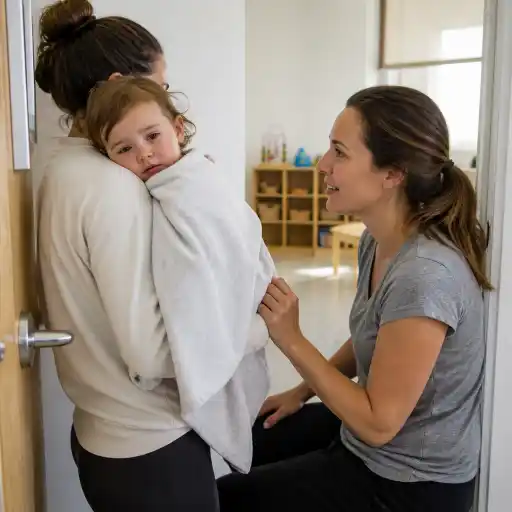
There is no universal return rule for every illness. The CDC’s general guidance for school settings includes being fever-free for at least 24 hours without fever-reducing medication for certain common symptoms, but child care providers must use the rules that apply to their program and the particular illness. Avoid requiring a doctor’s note for every uncomplicated cold unless your jurisdiction or policy requires one; unnecessary visits can burden families. At the same time, do not waive an applicable symptom-free period because pickup or return is inconvenient.
How can directors make exclusion decisions fair and consistent?
Fair decisions start before the difficult phone call. Give families a concise illness handout at enrollment, maintain a fuller staff procedure, review expectations during orientation, and update materials when public-health guidance changes. Translate information when feasible so every family can understand the process.
Train staff to use a brief arrival and illness screen:
- Can the child play, eat, rest, and engage as usual?
- Does the child need more individual care than staff can safely provide?
- Could the symptoms indicate an illness that may spread through close group contact?
- Does a state, local, or disease-specific rule require exclusion?
Common pitfalls include vague language such as “too sick,” different decisions between classrooms, failing to record how a temperature was measured, and asking staff to diagnose. Replace vague terms with examples, rehearse family conversations, and keep a one-page decision tool accessible. Discuss symptoms privately and protect the child’s confidentiality in group communications.
Keep records factual and concise: “10:15 a.m.—three watery stools; child unable to participate. Parent called at 10:20 a.m.; pickup at 10:48 a.m.” Accurate notes support continuity, help identify patterns, and avoid assigning blame.
What should programs do during outbreaks or urgent illness events?
A single illness does not necessarily signal an outbreak, but clusters deserve prompt attention. The CDC recommends layered infection prevention in early care settings, including encouraging families to keep children home when ill, supporting hand hygiene, cleaning high-touch surfaces, improving ventilation where feasible, separating belongings, and maintaining a supervised space for a sick child.
When several children or staff develop similar symptoms:
- 📞 Contact the director and local health department for guidance, and make any required notifications.
- Review attendance and illness records by classroom and date.
- Increase cleaning and disinfection of high-touch surfaces, bathrooms, mouthed toys, and areas contaminated by body fluids.
- Share verified information, prevention steps, symptoms to monitor, and whom families can contact.
- Protect confidentiality; do not name an affected child unless authorized or legally required.
For infants, children with chronic conditions, or children with severe symptoms, encourage families to seek advice from a healthcare professional and follow emergency procedures when needed. The program’s role is careful observation, supportive care, documentation, and communication—not diagnosis.
Professional development can help staff turn policy into everyday practice. Consider these focused ChildCareEd courses:
- Prevention and Control of Infectious Diseases Buy Now $16.00 — a two-hour online course on reducing the spread of germs and maintaining a healthy child care environment.
- How To Keep A Healthy Class: Six Tips for Germ Control Buy Now $24.00 — strategies for communicable disease prevention and hygiene-focused classroom practices.
- Preventative Health and Safety Buy Now $24.00 — covers illness prevention alongside supervision and broader safety practices.
Conclusion: When should a sick child be sent home from daycare?
Send a child home when they cannot participate comfortably, need more care than staff can safely provide, have symptoms or a diagnosis requiring exclusion, or pose a meaningful risk of spreading illness under applicable guidance. Use observable evidence, follow your written criteria, and apply them consistently. When symptoms arise during the day, provide a comfortable supervised space, contact the family promptly, document facts, and use emergency procedures when indicated.
Clear return rules, respectful communication, and routine infection-prevention practices help protect children while supporting families and staff. Review your procedures regularly, consult public-health guidance when illnesses cluster, and remember: state requirements vary - check your state licensing agency.
- 45 Hour Child Growth and Development
- CDA Home Visitor Subject Area 3 Part 3 Birth to 5
- 45 Hour Preschool Methods and Materials
- CDA Family Child Care Credential
- Pediatric RSV First Aid & CPR/AED
- 45 Hour School Age Methods and Materials
- Texas Director Credential
- CDA Infants/Toddlers: Stages of Development
- CDA: Stand With Respect and Professionalism
- Daycare illness guide: when to keep your child home
- 😫🧸 ¿Qué hacer cuando un bebé no quiere dormir la siesta en el aula?
- Recursos en Español sobre el Sueño Seguro del Bebé
- How do I do daily health checks in child care and record what I find?
- Cómo Empezar una Guardería en Casa: Requisitos y Pasos
- Lista para Abrir una Guardería en Casa en Carolina del Norte: Cómo Empezar
- Lista para Abrir una Guardería en Casa en Dakota del Norte: Cómo Empezar
- Lista para Guardería en Casa en California: Cómo Iniciar una Guardería en el Hogar
- Lista para Guardería en Casa en Texas: Cómo Iniciar una Guardería en el Hogar
- Retraso del Habla en la Guardería: Cómo Pueden Ayudar los Proveedores
- Daycare Center Requirements in Virginia
- How Can Michigan Daycare Centers Prevent the Spread of Illness?
- Celebrando la amistad en el cuidado infantil durante el Día de los Mejores Amigos
- How do I start a home daycare business?
- How Many Kids Can You Babysit in Your Home Without a License?
- How to Communicate with Families During a Daycare Emergency
- Sick or Not Sick? How Do We Make Exclusion Decisions in Child Care?
- How should I prepare my classroom for cold and flu season beyond cleaning?
- When Should a Sick Child Be Sent Home From Daycare?
- When Should a Sick Child Be Sent Home From Daycare?
