Introduction
Your #classroom shapes how children feel, act, and learn every day. Small changes in the space can make a big difference in #behavior and #learning. This article helps directors and child care providers understand what matters and how to make the room work for kids and staff.
Why it matters: A calm, clear room helps children focus, follow routines, and learn more. Research shows that well-designed classrooms improve learning gains, while busy, cluttered rooms can make young children more distracted. For more ideas on designing helpful spaces, see resources like Designing Learning Spaces that Inspire Curiosity, Not Chaos and Tips for designing your early childhood classroom space.
1) Why does classroom design matter for behavior and learning?
Answer: The space sends messages. A room that is messy, loud, or crowded can make children anxious and off-task. A room that is simple, safe, and organized helps kids calm down and pay attention.
- 💡 Research shows clear effects:
- Kids in tidy, less busy rooms paid more attention and learned more in a study about classroom displays (Carnegie Mellon / APS).
- Well-designed classrooms that consider light, air, and layout can boost learning progress by up to 16% in a year (University of Salford).
- 🔍 Why this happens:
- Young children are still learning to filter distractions. Too many visuals or sounds pull their attention away from lessons (educational psychology review).
- Spaces that match children’s needs help adults teach better and let children make choices and practice self-control.
2) What parts of the room most affect behavior and learning?
Answer: Five big parts of a room matter most. Use simple changes that are low cost but high impact.
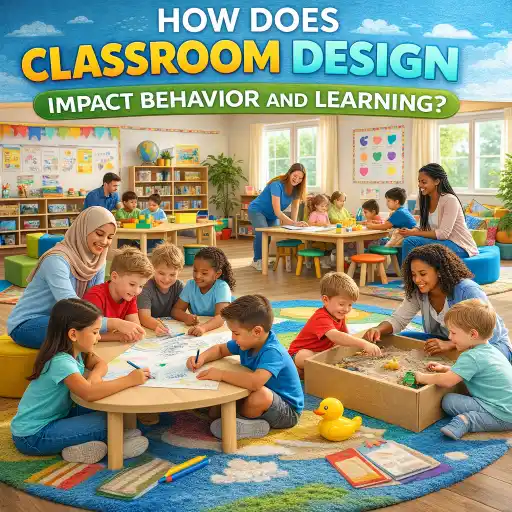
- 🪟 Light and color
1) Natural light and calm color palettes help attention and mood. Bright, harsh lights or very loud colors can raise stress. See tips about light and color in Sensory Perceptions in the Classroom.
- 🪑 Layout and furniture
2) Group tables, clear traffic paths, and child-sized furniture help independence and good supervision. Active learning setups let children work together and let teachers move easily (Learning Spaces and Engagement).
- 📚 Displays and decorations
3) Keep displays lesson-relevant and not overwhelming. Research found heavily decorated walls increase off-task behavior in young kids (Carnegie Mellon).
- 🔉 Sound and acoustics
4) Too much noise makes it hard to hear and concentrate. Soft materials, rugs, and quiet zones help reduce noise (GreenHeart).
- 🎯 Defined centers and choices
5) Clear interest centers (reading, blocks, sensory) support focused play and learning. ChildCareEd shows how centers can promote play and learning (How to Design Centers That Promote Both Play and Learning).
3) How can providers make practical design changes that improve behavior and learning?
Answer: Start with small steps. You don’t need a big budget. Follow these actions you can do this week or this month.
- 🔧 Quick fixes (do first)
- 🧹 Declutter and store extras out of sight. Less visual clutter = fewer distractions.
- 🪵 Arrange clear walking paths so children and teachers can move safely and see the whole room.
- 🧺 Use open, labeled bins at child height so kids find and return items themselves (ChildCareEd tips).
- 🛋️ Set up zones and calm spaces
- 📚 Create a cozy reading nook with soft cushions and calm colors to help self-regulation (Calm Classroom).
- 🌿 Add a small nature or sensory spot—plants, natural objects, or a sensory bin—to support exploration (Designing Learning Spaces).
- 📋 Make displays purposeful
- 📎 Rotate wall displays: keep only what is relevant to current lessons visible.
- 🖼️ Use student work and process displays that show learning steps, not just finished pieces.
- 🧭 Keep rules and routines visible
- 1) Use visuals for schedules and transitions so children know what happens next (Visuals for class schedule Buy Now $0.00).
- 2) Remember: state requirements vary - check your state licensing agency when you change furniture, cot spacing, or safety items.
4) What are common mistakes and how do we avoid pitfalls?
Answer: Many programs try to do too much at once. Here are common mistakes and how to fix them.
- ❌ Mistake: Over-decorating the walls
Fix: Keep lesson-relevant, high-value displays. Rotate work and store older items. Research warns that too many visuals distract young children (APS/CMU).
- ❌ Mistake: No clear centers or too many toys in one place
Fix: Define zones and limit items in each center. Use numbered storage and encourage children to put things back.
- ❌ Mistake: Ignoring acoustics and lighting
Fix: Add rugs, soft seating, and task lamps. When possible, use natural light and soft colors (Clever Classrooms).
- ❌ Mistake: One-size-fits-all design
Fix: Plan flexible spaces for different ages and needs. Children with sensory differences may need quieter areas (Supportive Learning Environments for Children with ASD).
Conclusion
Good #design supports teachers and helps #children behave, focus, and learn. Start small: clear clutter, set up centers, make quiet spaces, and use displays that support your lesson. Monitor how children respond and adjust. The research and practical guides show the room is a powerful tool for learning. For hands-on guidance, ChildCareEd offers courses like Classroom Designers ONLINE  Buy Now $24.00 and trainings on setting up centers (How to Design Centers).
Quick checklist (do in 1–4 weeks):
- 🧹 Declutter & label storage
- 🪑 Arrange child-sized furniture & clear paths
- 📚 Create calm reading/quiet nook
- 🖼️ Limit wall displays to current lessons
- 🔉 Add soft materials to reduce noise
FAQ (short answers):
- Q: How often should displays change?
A: Rotate every 3–6 weeks so walls stay relevant and not overwhelming. - Q: What if my room is small?
A: Use vertical storage and clear zones with rugs or shelves. Small changes help big. - Q: How do I include children in design?
A: Ask them what centers they like, and display their work. It builds ownership and respect. - Q: Who should I check before major changes?
A: Your licensing office and building maintenance—state requirements vary - check your state licensing agency. - Q: Where can I learn more?
A: ChildCareEd articles and courses listed above are practical places to start.
Keep observing, and make the room a partner in learning. Small, thoughtful design choices will help children feel safe, be on-task, and grow their skills.
- 45 Hour Child Growth and Development
- Roots & Resilience: Understanding What Shapes a Child
- Bienvenido! Welcoming All Families
- Texas Director Credential
- Anxiety: Signs & Strategies
- Access for All: Inclusion and the ADA
- Every Moment Matters: Schedules and Transitions
- Professional Integrity in Child Care
- Trauma-Sensitive Care: Supporting Young Children with Empathy
- Tips for designing your early childhood classroom space
- Every Child Matters: Practical Tips for a Safe and Inclusive Classroom
- Mastering the Art of Emotional Intelligence: A how to Guide for Early Childhood Educators
- Can the 45-Hour Growth and Development Course Transform Your Teaching Practice?
- Can Continuing Education in North Dakota Directly Impact Child Outcomes?
- 👶 ¿Cuáles son las proporciones y grupos requeridos en Dakota del Norte? 🏫
- Cómo Abrir Una Quardería En Casa Sin Dinero?
- How Does Classroom Design Impact Behavior and Learning?
- ¿Cuáles son las mejores actividades del Día de la Tierra para niños en casa o en el aula?
- Capacitación en Salud y Seguridad Preventiva en Línea para Proveedores de Cuidado Infantil
- Proporciones de Cuidado Infantil y Tamaños de Grupo por Edad en Virginia (Guía Rápida para Centros y Hogares)
- Actividades de Otoño Fáciles para Preescolares esta Temporada
- Organized Classrooms: Why Layout, Design, and Space Matter
- How does room arrangement shape behavior, engagement, supervision, and learning?
- How Can Early Childhood Programs Implement Practical Sustainability Practices?
- How can you design childcare spaces for flexible learning?
- What Does Compassion Look Like in Child Care? 10 Everyday Moments That Matter
- Which Low-Cost Printables Make the Biggest Classroom Impact?
- ¿Todos los niños deben participar en el tiempo de círculo?
- When Does Exclusion in an After-School Group Become a Pattern?
