Celebrating Black culture and music in early childhood and school-age programs is both an important responsibility and a meaningful educational practice. When approached thoughtfully and respectfully, these experiences can affirm children’s identities, build empathy, expand cultural understanding, and enrich learning across developmental areas. This article offers practical, evidence-informed guidance for directors and child care providers who want to create celebrations that are authentic, developmentally appropriate, inclusive, and sustained throughout the year rather than limited to a single holiday or event. Educators can deepen this work through ChildCareEd’s self-paced online course Strength in Differences: Cultural Diversity  Buy Now $24.00, which explores cultural competency, acceptance, diverse perspectives, and inclusive child care environments. Programs seeking additional staff training can also use ChildCareEd’s course Colorful Culture for practical strategies to build cultural competency and support children’s cultural identity. They can also use Mind’s Medicine: Music in Early Childhood Buy Now $16.00 to strengthen their understanding of how music can support children’s learning and development. Together, these trainings can help programs incorporate Black music, artists, stories, traditions, and family voices in ways that are respectful, purposeful, and connected to the everyday curriculum. For a broader overview of the cognitive, social, and emotional benefits of arts participation—and to find related training courses for providers—see Children and the Arts. State requirements vary, so always check with your state licensing agency.
1. Why does celebrating Black culture and music matter for children and programs?
1. Culture shapes development. Research and professional guidance explain that honoring a child's cultural background strengthens identity and learning outcomes — see How Can Culture Affect A Child’s Development? for program-level strategies.
2. Music is a vehicle for engagement and memory. University research shows culturally relevant music increases engagement and learning compared with exclusively Western curricula (University of Miami study), and music pedagogy scholars argue for including global Black musical traditions (Oxford Handbook review).
3. Young children notice differences and form attitudes early; anti-bias practice can interrupt prejudice before it solidifies. Practical tools and activities are available from ChildCareEd resources on Black History Month and classroom activities (10 Fun and Engaging Ways…; Black History Month Activities Buy Now $0.00).
Why it matters: celebrating #BlackCulture and #Music in intentional ways helps children develop pride, belonging, and critical thinking — outcomes tied to long-term wellbeing. It also communicates to families and staff that your program values equity and representation.
Use varied modalities and age-appropriate scaffolds. Below are enumerated classroom-ready ideas drawn from early childhood resources and arts partners.
- 🎵 Music and Movement Sessions
- Introduce songs from jazz, blues, gospel, Afro-Caribbean, hip-hop roots, and contemporary Black artists; link each song to its story and cultural origin (see Virginia Tech on including many Black genres: Teaching history of Black music).
- 🖼️ Art & Storytelling
- Study artists like Alma Thomas or Jacob Lawrence and create responsive art projects. ChildCareEd suggests artistic explorations tied to historical figures and identity (Black History Month ideas).
- 📚 Biography Corners (preschool—school age)
- Create rotating displays with age-appropriate biographies (e.g., Garrett Morgan, Ella Fitzgerald). Use movement games (red light/green light) to dramatize inventions and contributions — a strategy used in preschool lesson plans (traffic light/ Garrett Morgan).
- 🥁 Community Artist Residencies
- Invite local Black musicians or use resident artist programs to co-teach music workshops (see arts residency models like San Francisco Performances resident artists: Artist Residencies).
- 🍽️ Cultural Celebrations and Foodways
- Host tasting events and cook-alongs that explore soul food history, Caribbean dishes, and stories behind recipes, tying food to migration and family traditions.
Tip: Use multiple entry points—visual arts, story, music, food, and movement—to reach diverse learners and honor the complexity of Black cultural traditions.
3. How can you design a culturally relevant music curriculum?
Design principles for a music curriculum that centers Black musical cultures:
- 📌 Intention and continuity: Avoid one-off ‘performances only’ approaches. Integrate Black music across the year — ChildCareEd and university studies recommend sustained inclusion rather than token events (Black History Month Activities Buy Now $0.00; University of Miami research).
- 🎤 Authentic sources: Use recordings, guest artists, family oral histories, and primary media rather than only textbooks. The Oxford Handbook emphasizes centering children’s musical experiences and authentic voices (Globalization & Tradition).
- 🎛️ Pedagogical flexibility: Blend listening, improvisation, movement, and creation. Allow children to respond through drawing, rhythm play, and composition.
- 🤝 Collaborative planning: Invite families to suggest songs and to teach; recruit local teaching artists and HBCU or community ensemble partnerships where possible.
- 🧭 Critical framing: Teach context — historical, social, and political — in age-appropriate ways so children understand sources, resilience, and innovation (see resources for contextual teaching on ChildCareEd: activity ideas).
Outcome: Programs that center culturally relevant music promote engagement and identity affirmation for #Children and respect for diverse musical lineages. Professional development for staff (e.g., ChildCareEd courses on cultural activities and Montessori cultural approaches) can scaffold educator confidence (Montessori Cultural Activities Buy Now $24.00).
4. How do you partner with families and community artists to deepen impact?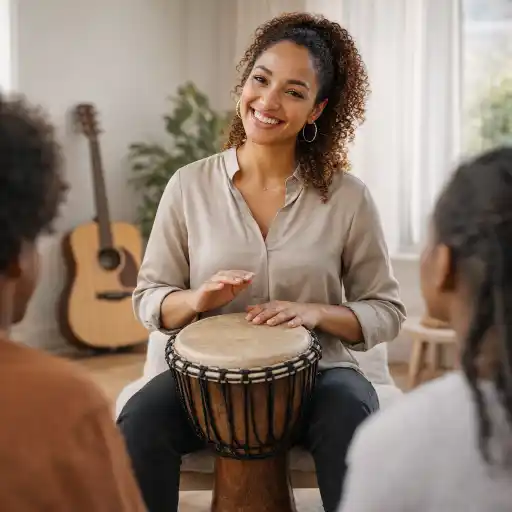
1. Build relationships intentionally:
- 😊 Invite family input: Create intake tools that ask about songs, celebrations, and family traditions. Display family photos and artifacts to normalize representation.
- 🎶 Host community music nights: Rotate artists and genres; provide translation or bilingual materials (ChildCareEd supports multilingual course translation and culturally sensitive strategies: How Culture Affects Development).
- 🤝 Develop reciprocal partnerships: Offer rehearsal space, co-sponsored events, or small stipends for artists; partner with local universities or arts organizations that maintain resident artist programs (resident artists).
- 📅 Co-create calendars: Let families suggest which traditions to highlight and when; avoid clustering all celebrations in one month to prevent tokenization.
Benefits: Community partnerships expand authenticity, model career pathways in the arts for children, and strengthen trust with families — especially important given documented experiences of anti-Black bias in early years settings that make family trust vital (Anti-Black racism study, Canada).
5. How can programs avoid common mistakes and respond to bias when it appears?
Common mistakes and how to avoid them:
- ❌ Token events without context — fix: integrate culture across curriculum and include historical/cultural framing.
- ❌ Relying on stereotypes (e.g., dress, food, or music caricatures) — fix: consult community members and use primary sources and living artists.
- ❌ One-person responsibility (the “Black staff educator” expectation) — fix: distribute responsibility across leadership and invest in staff PD.
- ❌ Ignoring anti-Black bias in discipline and interactions — fix: examine discipline data, provide anti-bias training, and adopt restorative practices.
Responding to incidents:
- 🛑 Immediately address harm with age-appropriate language and adult follow-up.
- 🔎 Investigate contextually, center affected families, and document actions.
- 💬 Use incidents as learning opportunities for staff training and policy revision; involve community advisors.
Why this matters: Studies document that Black children can experience “othering” and bias in early learning settings; proactive policies and educator reflection reduce harm and increase belonging (Canadian study).
Conclusion: What are the first practical steps you can take this month?
1. Convene an implementation meeting with staff and family representatives to set three goals for the year (e.g., curriculum integration, one resident artist, PD plan).
2. Start small and sustained: add one weekly music block featuring a Black musical style with a story and an art response; rotate families and artists as co-teachers.
3. Review policies: check representation in books and materials, discipline referrals, and staff training needs. Use free ChildCareEd materials to jumpstart planning (Black History Month Activities Buy Now $0.00).
FAQ
- Q: How can I teach complex history to preschoolers without oversimplifying or harming?
A: Focus on stories of contribution, emotion, and resilience (inventors, musicians, artists), use play-based activities, and scaffold complexity by age — see ChildCareEd’s activity ideas (Black History Month ideas). - Q: What if my staff lacks confidence in teaching music from unfamiliar traditions?
A: Start with recorded performances, invite community artists, and pursue PD modules (ChildCareEd offers courses on cultural activities and Montessori cultural approaches: Montessori Cultural Activities Buy Now $24.00). - Q: How do we involve families who are wary because of past bias?
A: Be transparent, listen, document actions, and invite families to co-design activities. Trust-building is essential given documented family experiences with bias (study). - Q: Can we celebrate Kwanzaa or other holidays?
A: Yes — approach with cultural respect and invite community members; see ChildCareEd’s Kwanzaa classroom activities for hands-on projects (Kwanzaa Classroom Activities Buy Now $0.00). - Q: Where can I find high-quality music resources?
A: Use university studies and local arts organizations, resident artist programs, and curated children’s music collections. Consider partnerships with community music schools and resident artist programs (SF Performances).
Final encouragement: Centering #Inclusion and honoring #Educators in this work is transformational. Begin with curiosity, consultation, and consistency — your program will be richer,r and children will thrive.
- Leveling the Playing Field: ERSEA for Head Start
- Professional Presence in Early Childhood
- From Play to Planning: Building Culturally Competent, Child-Centered Curriculum
- CDA: Special Needs: Understanding the Whole Child
- Texas Director Credential
- Building Bridges for Dual Language Learners
- Mind's Medicine: Music in Early Childhood
- Montessori Cultural Activities: Exploring the World Through Play and Learning
- Bridging Cultures: Family Communication & Collaboration
- Supporting Families and Caregivers in Language and Literacy
- Celebrate Juneteenth in Baltimore
- Tiny Tots, Big Learning: Crafting Curriculums for the Littlest Learners!
- 10 Fun and Engaging Ways to Teach Kids About Black History Month!
- Activities for Black History Month: Classroom Ideas for Kids (Ages 2–8)
- 10 Ejemplos de Cómo la Cultura Influye en el Desarrollo Infantil
- Actividades de Fiesta para Niños de Preescolar y Primaria
- Capacitación Previa al Servicio para Proveedores de Cuidado Infantil en Dakota del Norte
- Celebrando la amistad en el cuidado infantil durante el Día de los Mejores Amigos
- Diversión fresca de verano: actividades del Día Nacional del Helado para niños
- Canciones, juegos y preguntas de círculo para niños
- Cómo simplificar la capacitación para sus empleados de daycare
- How Can You Celebrate Black Culture and Music Effectively in Your Program?
- How Can I Celebrate Lunar New Year Respectfully and Effectively in My Classroom?
- How can I teach Black history to young children year-round?
- How Can We Celebrate Every Family and Create a Classroom Where Everyone Is Represented?
- How Can Early Childhood Programs Introduce Juneteenth in Developmentally Appropriate Ways?
- How Can Child Care Programs Celebrate Juneteenth Through Respectful, Child-Centered Art?
- How Can Coloring Pages Spark Meaningful Historical Conversations About Juneteenth?
- How Can Meaningful Juneteenth Vocabulary Support Early Writers?
