How do the arts support learning and development in young children?
Arts participation in early childhood typically includes music, movement, drama, and visual arts. These modalities engage perception, motor planning, symbolic play, and communication systems that are core to early learning. In toddler and preschool years, children rapidly refine fine and gross motor skills, expand receptive and expressive language, and strengthen perspective-taking. Well-designed arts experiences scaffold those skills while also supporting self-regulation and social competence.
What specific developmental benefits are linked to arts activities?
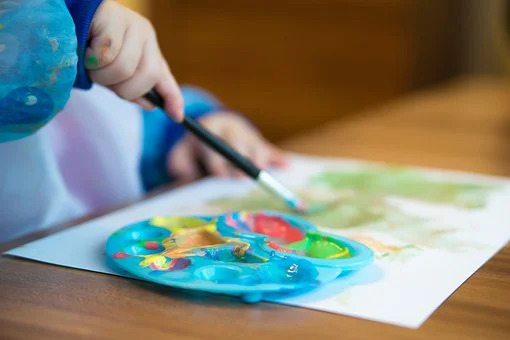
Research and field guidance show that the performing and visual arts contribute to multiple developmental domains. Music and movement activities support auditory discrimination, timing, and bilateral coordination; singing and call-and-response build vocabulary and memory. Dramatic play fosters symbolic thinking and emotional expression, helping children practice language about feelings and try on different social roles. Visual art activities (open-ended drawing, painting, sculpting) strengthen fine-motor control and visual-spatial reasoning and provide low-pressure avenues for personal expression, which can enhance self-esteem.
Practical classroom examples include short rhythm games to cue transitions, a simple dramatization of a story to practice narrative language, and open-ended painting centers where the product is secondary to the process. For quick movement breaks that combine music and motor practice, see our activity ideas in "How can I host a safe, engaging freeze-dance party in my daycare?" which links musical play to safety and group management strategies.
Field resources and practitioner-focused reviews document the developmental benefits of creative arts. For a practical early-childhood guide to creative-arts strategies, see Eastern Connecticut State University’s Center for Early Childhood Education: Creative Arts with Young Children. Commentary summarizing the performing-arts benefits for cognition, emotion, and school outcomes is also helpful background: see Scholastic’s practitioner summary "How the Performing Arts Benefit Kids."
Which arts activities best support motor, language, and social-emotional skills?
Choose activities that are developmentally appropriate and open-ended. For motor development, provide rhythmic clapping, scarves for large-motor dance, and clay or threading beads for fine-motor practice (see related guidance in "How motor skills shape child development and creative ways educators can foster them"). For language, use action songs, predictable chants, and storytelling with props to build vocabulary and sequencing. For social-emotional learning, dramatic-play scenarios and process art encourage children to label feelings, cooperate, and manage impulses; helpful approaches are summarized in "How can child care programs best support school-age children’s social and emotional development?" (adapt strategies for younger ages).
How can educators implement arts-rich experiences with limited time and resources?
Integrate arts into routines rather than treating them as separate lesson blocks. Examples: use a short song for clean-up transitions, add a dramatic gesture to storytime, incorporate scribble-to-shape drawing during snack prep, or rotate low-cost materials (scrap paper, crayons, boxes, scarves) that invite creation. Create a loose-parts art shelf that children can access freely and schedule a weekly "music and movement" slot that can be led by rotating staff. For ideas that connect arts to community, consider intergenerational projects or festival celebrations; see "Intergenerational Activities for Kids: Learning Across Generations" and "Intergenerational Activities That Bring Children and Seniors Together" for practical examples linking arts and community partners.
What training and courses can help staff bring the arts into daily practice?
Professional learning that emphasizes open-ended process art, inclusive practices for children with diverse abilities, and embedding music/movement into routines is most useful. ChildCareEd offers several relevant courses and conference options, including Power of Art: Bldg Self-Esteem & Positive Behavior for ALL Abilities  Buy Now $24.00 and Open Heart, Open Art Buy Now $16.00 which are already popular with providers. A third complementary course is Art from the Heart for Preschoolers: Open-Ended Art Projects that Build Self-Esteem Buy Now $35.00, which focuses specifically on process-based projects that support autonomy and decision-making in young children.
For larger-scale professional exchange, consider attending events like "Many Colors, One Canvas: MD ECE Conference" where practical breakout sessions demonstrate inclusive art strategies.
How can educators adapt arts activities for children with diverse abilities?
Design arts experiences with universal design for learning (UDL) and practical adaptations in mind so every child can participate meaningfully. Start by observing how each child interacts with materials and sounds; use those observations to scaffold access. Concrete strategies include offering tiered choices (e.g., three different art tools rather than open choice), using tactile and high-contrast materials for children with visual needs, and providing large-handled tools or adapted grips for children who need fine-motor supports. For children with sensory differences, offer quiet sensory stations with headphones or gentle materials, and pair noisy, active music segments with calm alternatives (e.g., rhythm with scarves).
Augment communication with visual supports and augmentative and alternative communication (AAC) options during drama and song (simple picture cards for song verses, gesture cue cards for action songs). Use peer modeling and short, scaffolded steps: demonstrate a small sequence, then invite a child to try one part, and celebrate any attempt. Collaborate with families and specialists to align materials and goals and to ensure safety and licensing compliance: if your program is in Connecticut, consult the Connecticut Office of Early Childhood licensing guidance about materials safety, staffing and ratios, and documentation expectations when adapting activities for children with special health or behavioral needs.
Track adaptations in a simple plan: the child's strength, the barrier observed, the adaptation used, and the next step. These short notes help staff replicate successes and share strategies during shift changes. Embedding these approaches into routine songs, story dramatizations and process art preserves dignity and fosters meaningful participation for every child.
How do cultural responsiveness and inclusion shape arts programming?
Intentional inclusion means offering materials and music from diverse cultures, inviting families to share songs and stories, and adapting materials for children with differing abilities. For programmatic examples on honoring culture through music and arts, see "How Can You Celebrate Black Culture and Music Effectively in Your Program?". These practices strengthen identity and respect while teaching children to recognize multiple perspectives.
Summary: How can I bring more effective arts experiences to my classroom?
Make arts regular, accessible, and open-ended. Prioritize process over product, embed brief music and movement into routines, provide accessible materials and adaptations, and pursue targeted staff training. Start with one sustainable change (e.g., a weekly music-and-movement transition or a self-serve art shelf) and expand. For practical lesson ideas, teacher resources, and courses to build staff skills, review the linked internal articles above and our courses on ChildCareEd. Focus areas include creativity, motor skill development, language growth, social-emotional learning, and inclusion — #creativity #motor #language #socialemotional #inclusion.
- CDA Home Visitor Subject Area 3 Part 3 Birth to 5
- Many Colors, One Canvas: MD ECE Conference
- Open Heart, Open Art
- Power of Art: Bldg Self-Esteem & Positive Behavior for ALL Abilities
- Art from the Heart for Preschoolers: Open Ended Art Projects that Build Self-Esteem
- Emergent Learning & Development
- Creating Environments that Nurture Growth and Community
- Texas Director Credential
- Montessori Cultural Activities: Exploring the World Through Play and Learning
- Power of Art: Bldg Self-Esteem & Positive Behavior for ALL Abilities ONLINE
- Gift of Gratitude: Fostering Emotional Intelligence in Children through Acts of Kindness
- CDA Certification en Español: Recursos y Consejos para Educadores Bilingües
- ¿Cuáles son las mejores actividades del Día de la Tierra para niños en casa o en el aula?
- Proporciones de Cuidado Infantil y Tamaños de Grupo por Edad en Nueva Jersey (Guía Rápida para Centros y Hogares)
- Lista para Guardería en Casa en Illinois: Cómo Iniciar una Guardería en el Hogar
- Consejos de Supervisión Activa para Salones de Preescolar y el Juego al Aire Libre
- Retraso del Habla en la Guardería: Cómo Pueden Ayudar los Proveedores
- What is the Many Colors, One Canvas: MD ECE Conference and why should I attend?
- How Did Oklahoma’s Week of the Young Child Resource Fair Show Why Community Partnerships Matter?
- Canciones, juegos y preguntas de círculo para niños
- How Can You Celebrate Black Culture and Music Effectively in Your Program?
- How can I create clubs and interest groups for school-age children?
- Who Qualifies for a Crayola Donation Request? A Guide for Child Care Programs
- Types of Curriculum in Early Childhood Education: Which Approach Fits Your Classroom Best?
- How Can Child Care Providers Use Art and Creative Expression to Support Young Children?
- How Can Art Become a Meaningful Part of the Early Childhood Curriculum?
- Why Did My Stamp Print Backward? Discover Reversal Through Printmaking
- How Can Creative Art Support Early Fine Motor Development?
