Every child deserves to recognize their family, language, and lived experience in the classroom. The Family and Culture Classroom Activity Pack can help providers turn that goal into meaningful daily practice, while Community and Family Engagement in Childcare  Buy Now $24.00 offers focused professional learning for strengthening relationships with diverse families and communities.
Representation is more than displaying a few multicultural books or planning an annual family event. It is an ongoing commitment to helping children understand that their families belong, their identities are valued, and differences are a natural part of a caring community. Head Start describes a strong sense of identity and belonging as an important part of children’s early learning experiences, and NAEYC recommends that children and families see their daily lives positively reflected in curriculum, materials, interactions, and learning environments.
For providers and directors, this work can feel both inspiring and complicated. Families may differ in structure, language, culture, religion, economic circumstances, abilities, and traditions. The goal is not to represent every family perfectly; it is to create a classroom culture marked by curiosity, respect, flexibility, and authentic partnership.
Why Does Family Representation Matter in Early Childhood?
Children begin developing ideas about identity and belonging during the earliest years. When they see people, homes, names, languages, and relationships that resemble their own experiences, they receive a powerful message: “People like me are welcome here.” When they encounter unfamiliar experiences in thoughtful ways, they gain opportunities to develop empathy, vocabulary, perspective-taking, and social understanding.
Representation also influences how children view one another. A classroom that consistently reflects many family structures and cultural experiences helps challenge narrow assumptions before those assumptions become fixed. NAEYC emphasizes the importance of upholding the unique value and dignity of each child and family while actively preventing children from feeling invisible, excluded, or unnoticed.
For adults, representation is connected to quality practice. Educators who learn about families’ strengths and priorities can plan more relevant experiences, communicate more effectively, and respond to children with greater cultural and linguistic responsiveness. Family engagement should not be treated as an extra activity; it is part of creating an environment in which children can learn and thrive.
- Children build a stronger sense of #belonging.
- Families experience greater trust and respect.
- Peers learn to notice both similarities and differences with care.
- Teachers gain information that supports individualized curriculum planning.
How Can the Family and Culture Classroom Activity Pack Support Daily Learning?
A ready-to-use activity pack can help translate inclusive intentions into concrete classroom experiences. The strongest activities invite children to explore family and culture without requiring any child to speak for an entire group or disclose private information. Activities should be open-ended, developmentally appropriate, and adaptable to different comfort levels.
Consider using the Family and Culture Classroom Activity Pack to create a rotating set of experiences:
- 🎨 Family portrait studio: Invite children to draw the people, pets, or caregivers who are important to them. Use flexible prompts such as “Who helps you feel safe?” rather than assuming every child lives with a mother and father.
- My grown-ups book: Create individual or classroom books using children’s drawings, dictated comments, and optional family contributions.
- Home-language greetings: Add greetings and kind phrases shared voluntarily by families. Pair words with pictures and gestures so every child can participate.
- Family traditions collage: Invite families to contribute a photo, object description, song title, or one-sentence tradition. Participation should always be optional.
- Same and different sorting: Use blocks, buttons, fabrics, or natural materials to explore attributes. Connect the activity to a simple message: people can be different and still belong together.
Repeat activities over time rather than treating family representation as a one-week theme. Children benefit from revisiting concepts through art, dramatic play, literacy, music, movement, and conversation. The ChildCareEd article Celebrate Every Family: Classroom Activities That Build Belonging similarly recommends small, consistent practices such as correct name pronunciation, warm greetings, inclusive books, and voluntary family sharing.
How Should Classrooms Represent Different Families and Cultures?
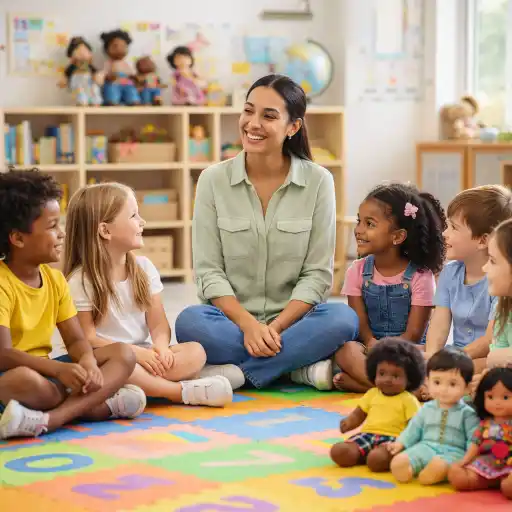
The physical environment communicates values before an adult says a word. Books, photographs, dolls, dramatic-play materials, posters, labels, and displays all answer an implicit question: Who is expected to belong here? Representation should be visible, accurate, varied, and integrated throughout the year.
Begin with an environmental audit. Walk through the classroom from a child’s perspective and ask:
- Do books show single-parent, blended, adoptive, foster, same-gender-parent, multigenerational, and extended families?
- Do dolls and figures represent varied skin tones, hair textures, body types, ages, and abilities?
- Are family roles described flexibly, using terms such as caregivers, grown-ups, relatives, and family members?
- Can children find their home languages in labels, songs, greetings, or classroom print?
- Are cultural materials presented as part of everyday life rather than as costumes or stereotypes?
Colorín Colorado distinguishes between “mirror” books, which reflect children’s own experiences, and “window” books, which introduce children to other people’s experiences. Both are essential. A mirror supports identity; a window expands understanding. Select books in which diverse families are shown doing ordinary things—eating, playing, solving problems, resting, celebrating, and caring for one another.
Representation must also include children with disabilities and families experiencing economic hardship. Avoid presenting one type of family as the default and all others as variations. The classroom should communicate that family diversity is ordinary, meaningful, and worthy of respect.
How Can Educators Include Home Languages Without Placing Pressure on Children?
Home languages are important resources for identity, communication, and learning. A child should never be expected to translate for adults or perform a language for classmates. Instead, educators can create voluntary, low-pressure opportunities for multilingualism to be heard and valued.
Practical strategies include:
- Ask families which words, pronunciations, and phrases they would like included in the classroom.
- Learn to pronounce every child’s name correctly, and continue practicing when needed.
- Use picture labels alongside English and family-provided translations.
- Invite families to record a greeting, song, or short story if they prefer audio participation.
- Include repeated songs, gestures, and visual cues so children can participate regardless of English proficiency.
- Provide multilingual books and encourage families to share titles that are meaningful to them.
When communicating with families, offer translated materials or qualified interpretation when appropriate. Avoid relying on children as interpreters, especially for sensitive information. NAEYC recommends supporting children’s first languages while simultaneously promoting English development, recognizing that multilingualism is an asset rather than a barrier.
Language inclusion also requires humility. Educators do not need to know every language represented in the program. They do need to communicate respect, ask for guidance, and correct mistakes without becoming defensive. A simple statement such as “I want to say your child’s name accurately—could you help me practice?” models lifelong learning for children.
How Can We Partner With Families in Meaningful and Respectful Ways?
Families are experts on their children. Effective engagement begins by treating caregivers as decision-making partners rather than guests invited only for special events. The course Family Voices Matter: Tools for Meaningful Collaboration Buy Now $55.00 is one relevant professional development option for providers seeking practical strategies for culturally and linguistically responsive communication, family input, and collaborative goal setting.
Make engagement flexible and accessible. Some families may have demanding work schedules, transportation barriers, privacy concerns, limited internet access, or previous experiences of discrimination in educational settings. A family who cannot attend an event may still contribute through a short message, photograph, drawing, voice recording, or informal conversation.
Try the following approach:
- Explain the purpose clearly: “We are learning about the people and experiences that help us feel connected.”
- Offer choices: photo, drawing, song, story, object description, or no contribution.
- State that sharing is optional and that private information will be respected.
- Ask families how they define their family members and roles.
- Thank families for contributions without comparing one family’s participation with another’s.
- Use family knowledge to shape curriculum, routines, comfort strategies, and communication.
Family engagement should continue after the activity pack is used. Share children’s questions, observations, and work with caregivers. Ask, “What did your child talk about at home?” or “What would you like us to understand about your child’s routines?” These exchanges create a two-way relationship rather than a one-time classroom display.
What Common Mistakes Should Providers Avoid?
Good intentions can still produce exclusion when activities simplify, stereotype, or pressure children. A reflective team culture helps educators notice these risks before they affect children and families.
- Mistake: Holding a single “culture day.”
Better approach: Integrate family and cultural representation into daily books, materials, routines, and play. - Mistake: Asking one child to represent an entire culture.
Better approach: Use multiple sources, family voice, authentic books, and teacher-facilitated discussion. - Mistake: Using costumes or caricatures.
Better approach: Explore everyday life, music, stories, family routines, architecture, art, and community experiences. - Mistake: Assuming that all families celebrate the same holidays or traditions.
Better approach: Use inclusive language and invite voluntary sharing. - Mistake: Treating food as the primary way to teach culture.
Better approach: Use photos, pretend food, recipes, stories, or sensory alternatives while considering allergies, religious practices, cost, and sensory needs. - Mistake: Focusing only on differences.
Better approach: Help children notice shared interests, relationships, feelings, and classroom responsibilities as well as differences.
Directors can support quality by reviewing materials with staff, inviting honest reflection, and establishing a process for responding when a child or family feels misrepresented. State requirements vary - check your state licensing agency, particularly when activities involve food, photography, visitors, or documentation.
How Can We Know Whether Children Feel Represented and Included?
Belonging is not measured by the number of multicultural materials on a shelf. It is reflected in children’s participation, language, relationships, and sense of safety. Use simple, strengths-based observation rather than expecting children to provide formal explanations of identity.
Over several weeks, notice whether children:
- choose books or materials that reflect their families;
- use inclusive language during dramatic play;
- invite peers into play and respond respectfully to differences;
- recognize family photographs, names, and classroom contributions;
- use home-language words or gestures with confidence;
- show curiosity without mocking or excluding others.
Invite family feedback with brief questions such as:
- “What helped your child feel welcome this month?”
- “Did your child see something familiar in the classroom?”
- “What would make communication easier for your family?”
Document children’s comments, drawings, and interactions while protecting privacy. Review the evidence with staff and identify one realistic improvement, such as adding books about a family structure currently missing or learning greetings in a new home language. Professional learning can strengthen this reflection. Providers may also explore Strength in Differences: Cultural Diversity Buy Now $24.00 for focused study of cultural competency, acceptance, and intercultural communication.
Conclusion: What Does It Take to Celebrate Every Family?
Creating a classroom where everyone is represented is an ongoing practice, not a single project. Use the Family and Culture Classroom Activity Pack as a practical starting point, then weave its ideas into books, dramatic play, art, music, routines, communication, and family partnerships.
The central question—how can we celebrate every family and create a classroom where everyone is represented?—is answered through consistent action:
- Reflect each child’s family, language, identity, and abilities in meaningful ways.
- Invite family participation with choice, flexibility, and respect for privacy.
- Use authentic materials and avoid stereotypes, tokenism, and forced sharing.
- Support home languages as strengths.
- Observe children’s experiences and use family feedback to improve practice.
When children see that their lives matter in the classroom, they are better positioned to participate, connect, and learn. Your steady attention to representation helps build a community in which every child can say, with confidence, “This place is for me.”
Additional professional learning options:
- Community and Family Engagement in Childcare Buy Now $24.00
- Family Voices Matter: Tools for Meaningful Collaboration Buy Now $55.00
- Strength in Differences: Cultural Diversity Buy Now $24.00
- Cultures in the Classroom Buy Now $24.00
- Bridging Cultures: Family Communication & Collaboration Buy Now $55.00
References: ChildCareEd: Celebrate Every Family; Community and Family Engagement in Childcare Buy Now $24.00; ChildCareEd: Inclusive Classroom Environment; ChildCareEd: Partnering With Families; ChildCareEd: Supporting Diverse Families; ChildCareEd: Preschool Social Science Activities; ChildCareEd: Cultural Activities for Preschoolers; Head Start: Sense of Identity and Belonging; Colorín Colorado: Using Diverse Books; NAEYC: Recommendations for Early Childhood Educators; University of Miami: Diversity in Early Childhood Education.
- Beyond the Classroom: Connecting Families to Essential Services
- Building Equity: Inclusionary Practices in Preschool
- Family Connections: Creating Inclusive Relationships
- Engaging Parents in the Montessori Toddler Classroom
- Creating Environments that Nurture Growth and Community
- Texas Director Credential
- Building Bridges for Dual Language Learners
- Montessori Cultural Activities: Exploring the World Through Play and Learning
- Every Moment Matters: Schedules and Transitions
- Bridging Cultures: Family Communication & Collaboration
- Building a Back-to-School Routine: Balancing Homework, Extracurriculars, and Family Time
- DIY Snow Globes: The Fine Motor Craft That’ll Keep Kids (and Adults) Busy for Hours
- CDA Certification en Español: Recursos y Consejos para Educadores Bilingües
- ¿Cuáles son las mejores actividades del Día de la Tierra para niños en casa o en el aula?
- 10 Ejemplos de Cómo la Cultura Influye en el Desarrollo Infantil
- Regulaciones de Licenciamiento de Cuidado Infantil en California para Centros y Hogares de Cuidado Infantil Familiar
- Proporciones de Cuidado Infantil y Tamaños de Grupo por Edad en Virginia (Guía Rápida para Centros y Hogares)
- Cómo Trabajar en el Cuidado Infantil en California: Requisitos y Pasos
- Celebrando la amistad en el cuidado infantil durante el Día de los Mejores Amigos
- Canciones, juegos y preguntas de círculo para niños
- How can my classroom celebrate multiple traditions in ways that are fair, meaningful, and sustainable?
- How can we create classrooms where every child feels represented?
- Building a Better Head Start Lesson Plan: 7 Things Every Teacher Should Include
- Why Do Bilingual Classroom Activities Matter for Dual Language Learners?
- How Would You Approach Inclusivity and Diversity in a Childcare Setting? A Strong Interview Answer With Real Examples
- How Can We Celebrate Every Family and Create a Classroom Where Everyone Is Represented?
- How Can Child Care Programs Celebrate Hispanic Heritage Month Meaningfully?
- How Can Preschools Celebrate Hispanic Heritage Month Meaningfully?
- How Can Child Care Programs Celebrate Juneteenth Through Respectful, Child-Centered Art?
- How Can Child Care Providers Create Inclusive Father’s Day Activities for Diverse Family Structures?
