Observation and assessment are ways we watch children and turn what we see into helpful steps. This article is for child care providers and directors. It gives simple, practical steps you can use today. You will find clear examples, short lists, and links to tools from ChildCareEd and other trusted sources. Use these ideas to make notes faster, fairer, and more useful.
1) What should we watch and why does it matter?
Why it matters: 1) Observation shows real learning during play and routines. 2) It helps us find needs early. 3) It guides what we teach next. Seeing children in ordinary moments — like snack, block play, or story time — tells us about their thinking, language, social skills, and motor work. Good, simple observation makes teaching kinder and smarter.
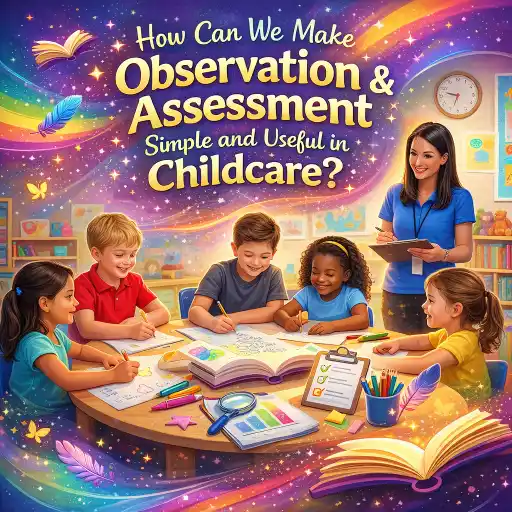
Try this short list when you pick a focus:
- 🟣 What the child says and does (exact words and actions).
- 🟣 How the child plays with others (sharing, helping, waiting).
- 🟣 Problem solving (tries, asks for help, keeps trying).
- 🟣 Movement and hands (grasping, cutting, balancing).
For more on watching with purpose, see How do we observe with purpose in early childhood assessment? and How can teachers observe children's development effectively?. These ChildCareEd resources show why short, focused checks are powerful. Keep in mind: state requirements vary - check your state licensing agency. Use a simple focus and repeat it often so you spot patterns. This is the heart of strong #observation and fair #assessment work that helps #families and teachers support a child’s #development and next #goals.
2) How do we observe fairly and write useful notes?
Objective notes are facts, not feelings. Write what you see and hear. Don’t guess why the child did something. Follow these easy steps every time you write an observation.
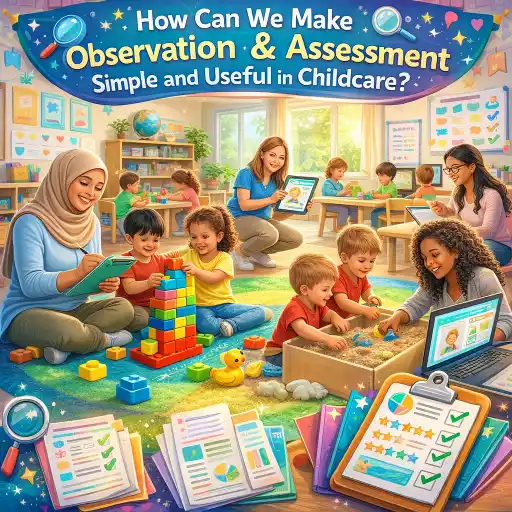
- 📝 Before: Pick one focus (for example: sharing at snack). Decide time (5–10 minutes or a full routine).
- 📍 During: Note exact actions and quotes. Use short phrases: "Ava stacked 4 blocks," not "Ava is good at blocks."
- 📅 After: Add date, time, location, and who was nearby. Write a one-line summary.
- 🔁 Compare: When you can, have another staff person observe the same moment and compare notes to reduce bias.
Use simple forms like the Anecdotal Record Observation Form Template Buy Now $0.00 to keep notes tidy. Practice helps: try watching the same short video with a colleague and compare what you wrote. That builds agreement and lowers bias. For more tips about staying objective, see Observations in Childcare.
Common mistakes and quick fixes:
- ❗ Writing opinions — Fix: stick to actions and exact words.
- ❗ Watching only hard moments — Fix: watch routines and play to see strengths too.
- ❗ No context — Fix: always add date, time, and setting.
3) Which tools and methods should we use for assessment?
No single tool fits every classroom. Use a mix. Pick 1–2 methods to start and try them for a month. Here are common, easy-to-use methods:
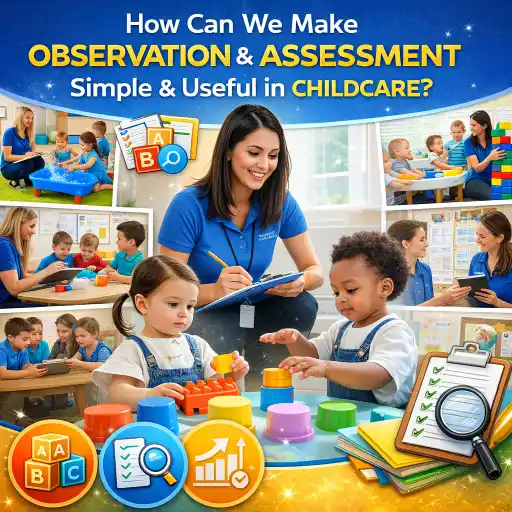
- ⏱ Time sampling — Check if a behavior happens during set time blocks. Good for attention and routines.
- 🎯 Event sampling — Note every time a specific event happens (sharing, hitting, asking for help).
- 🧩 Portfolios & work samples — Collect drawings, photos, and child work to show growth over time.
- 📋 Checklists & milestone tools — Use them to compare progress to typical milestones.
ChildCareEd offers resources and course-guides that help you choose tools. See Identify assessment tools and the Preschool Assessments & Observations resources. If you are worried about development, trusted screening tools and guidance like the CDC’s materials help you talk with families; see Training Module 4 for tips on conversations. Also check lists from state or local health agencies for recommended screening measures (for example, Minnesota’s list of recommended instruments: Recommended Screening Instruments).
Keep your system simple:
- 📁 One child file for notes and samples.
- 📘 One classroom binder for quick checklists.
- 💻 One secure digital folder (if allowed) for photos and scans.
4) How do we turn observations into goals and partner with families?
Observations matter only when you use them. Follow these steps to make a short plan and share it with families in a positive way.
- 📑 Summarize the observation in one short paragraph (include date, place, what happened).
- 🎯 Set 1–3 simple, measurable goals (example: "Will name 3 colors during art time, 3 out of 5 tries").
- 🛠 List 2–3 supports teachers will use (modeling, cueing, small group practice).
- 🔁 Track progress: re-observe in 2–4 weeks and update the plan.
Share with families using strengths-first language and actual examples. Invite family observations and ideas. ChildCareEd’s family engagement resources show ways to include families; see Preschool Assessments & Observations resources. If progress is slow despite good supports, document carefully and consider referral. Use multiple measures to support referral decisions and remember: state requirements vary - check your state licensing agency.
Quick checklist to share with staff or families:
- ✏️ One short summary note with an example.
- ✅ One clear goal and how we will help during the day.
- 🤝 A short family note or quick meeting to invite input.
- 📆 Re-check date and update.
Conclusion
Observation and assessment do not need to be big or slow. Start small:
- 🔎 Pick one focus.
- 📝 Use a short form like the Anecdotal Record Buy Now $0.00.
- 🤝 Share with families using examples and strengths-first language.
- 🔁 Re-observe and adjust goals.
FAQ (short):
- Q: How often should we observe? A: Quick daily notes and one deeper observation each month works well.
- Q: Who writes observations? A: Staff who know the child best; use more than one observer when you can.
- Q: How long keep records? A: Keep them while the child is in your program and follow your state rules.
- Q: What if a family disagrees? A: Listen, show examples, and invite their observations to make a plan together.
For more tools and training, visit ChildCareEd pages such as How can teachers observe children's development effectively? and How do we observe with purpose. Your careful watching helps children grow. Keep it simple, kind, and focused on strengths.
- CDA Certification en Español: Recursos y Consejos para Educadores Bilingües
- 🔍 ¿Qué ves cuando observas a un niño aprender?
- How can observation help us better understand children in DC early childhood classrooms?
- How can we assess child progress in simple, helpful ways?
- How can we make observation and assessment simple and useful in childcare?
- Cómo simplificar la capacitación para sus empleados de daycare
- How can I build a simple assessment system for my North Dakota program?
- How can child care providers track development without comparing children?
- First Week of Pre-K Lesson Plans: What Can You Learn About Your New Class?
- How Can Developmental Observation Strengthen Early Childhood Practice?
- How Can Child Care Providers Use Observation and Assessment to Support Every Child?
- How Can Child Care Providers Navigate Developmental Delay Conversations with Caregivers?
- How Can Child Care Providers Assess Children Through Everyday Activities?
- How Can Child Care Providers Document Learning During Ordinary Routines?
- How Often Should Early Childhood Educators Observe Each Child?
- What Is Anecdotal Documentation in Early Childhood Education?
- How Can You Share a Child’s Unfinished Learning Without Calling It Failure?
- What Can—and Can’t—an All-About-Me Activity Tell You About a Child?
- How Can You Turn a Classroom Observation into Tomorrow’s Lesson Plan?
- Is It Safe to Put Child Assessment Notes into an AI Tool?
