Assessing child progress can feel big, but it can be simple and practical. This short guide helps child care providers and directors use easy steps to watch, record, and act on what children can do. You will find clear ideas for tools, ways to stay fair, how to set goals, and tips to make documentation fast. Use small habits every day and your team will see big gains.
Why it matters:
1) Assessment makes learning visible so teachers plan the right next steps. 2) It helps families understand their child’s strengths. 3) It shows when a child may need extra help early. For helpful guides and forms, see resources like How can teachers observe children's development effectively? and How do we observe with purpose in early childhood assessment?. Remember: state requirements vary - check your state licensing agency.
What simple steps should we follow to assess child progress?
- 🔎 Pick one focus (language, motor, sharing).
- ⏱ Decide how long to watch (5–10 minutes for a quick check).
- 📝 Record one clear fact (who, what, when, where).
- 📂 Save a sample (photo or work sample with permission).
- 🔁 Repeat weekly and compare notes.
Start with simple tools like an anecdotal note or a checklist. ChildCareEd offers templates and courses such as Assembling the Tools for Assessment to help you choose forms. Use a mix: quick daily notes plus one deeper monthly check. This gives a clear view of a child’s #development and helps you plan lessons and supports.
How do we keep observations fair and useful?
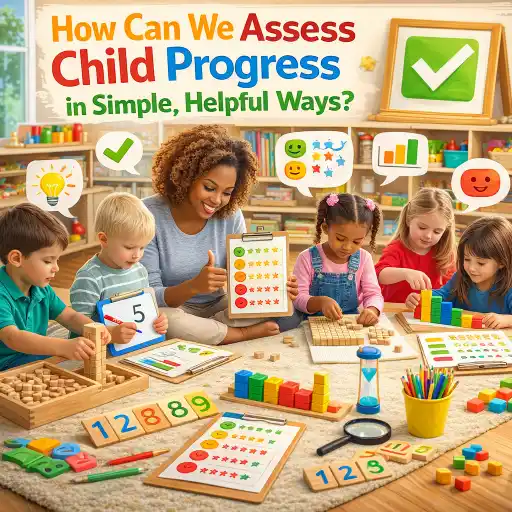
Fair notes are factual and kind. Follow these rules to avoid bias and make your notes trusted by families and specialists:
- 🔍 Describe only what you see and hear. Write "stacked 6 blocks" not "great at blocks."
- 🧾 Include date, time, and setting for every note.
- 👥 Use more than one observer when possible to check accuracy.
- 🔁 Practice with colleagues: watch a short video and compare notes to build agreement.
Tools like event sampling, time sampling, and portfolios give different views of a child. See methods at Identify methods of assessments and pick 1–2 that fit your day. Training helps staff stay objective—courses such as Growing Strong: How to Track and Support Child Development explain how to practice.
Common mistakes and how to avoid them:
- ❗ Writing opinions—Fix: stick to facts and quotes.
- ❗ Watching only tough moments—Fix: observe play and routines too.
- ❗ Using one tool only—Fix: mix notes, photos, and checklists.
How do we turn observations into goals and share them with families?
- 📑 Summarize the observation in one short paragraph (date, place, what happened).
- 🎯 Write 1–3 measurable goals (example: "Will name 3 colors during art time 3 of 5 tries").
- 🛠 List 2–3 teacher supports (model, cue, small group practice).
- 🔁 Re-check in 2–4 weeks and update the plan.
Use tools like the ASQ for screening and family input. See ASQ Online Developmental Screening and CDC tips about talking with families at Watch Me! Module 4. Start conferences by sharing strengths and a short example. Invite family observations and plan together. For help making conferences work, see Let’s Talk! Parent-Teacher Conferences.
What systems make documentation fast, reliable, and useful?
Good systems save time and keep records useful. Try this simple system many programs use:
- 🗂 One child file for samples and notes.
- 📘 One classroom binder with quick checklists.
- 💻 One secure digital folder (if allowed) for photos and scanned work.
Tips to make it work every day:
- ⏱ Make mini-notes during the day and finish the form at naptime or transition time.
- 😊 Rotate who writes daily notes so it’s fair and accurate.
- 📆 Review notes in a short weekly team meeting to spot patterns.
- 🔒 Keep privacy in mind: get permission for photos and follow your center rules.
ChildCareEd has guides on recordkeeping and documentation like How can we document child progress effectively?. Use simple checklists and portfolios so staff don’t feel overwhelmed. If progress is slow after good supports, document carefully and consider referral steps. For screening and social-emotional tools, see resources like Finding Social Emotional Screening Tools and CSEFEL practices. Remember: state requirements vary - check your state licensing agency.
FAQ: Quick answers for busy teams
- Q: How often should we observe? A: Daily short notes and one deeper observation each month.
- Q: Who writes observations? A: Staff who know the child best; add a second observer sometimes.
- Q: How long keep records? A: Follow your program policy and state rules.
- Q: What if a family disagrees? A: Listen, show examples, and invite their observations.
- Q: When do we refer? A: If progress is slow despite good supports; use multiple measures and document.
Conclusion
Start small: pick one routine, try a short anecdotal form, and use one checklist. Use objective notes and turn them into tiny goals you can do during the day. Share wins with families and ask for their ideas. With simple routines and teamwork you will make assessment a helpful tool for every child’s growth. For tools and training, explore ChildCareEd courses and articles linked above. Keep it kind, clear, and useful for children and families.
Keep assessment small and regular. Try these 5 easy steps you can use in any #classroom:Turn what you see into small, clear steps everyone can use. Follow this 4-step plan to make goals and talk with families in a positive way:- 45 Hour Child Growth and Development
- CDA Home Visitor Subject Area 3 Part 3 Birth to 5
- 45 Hour Preschool Methods and Materials
- Easy Steps to Resume and Interview Success
- Tracking Progress, Shaping Futures: Observation & Assessment Skills
- Healing Young Hearts: Stress and Grief
- Texas Director Credential
- Technology as a Classroom Tool
- CDA Certification en Español: Recursos y Consejos para Educadores Bilingües
- 🔍 ¿Qué ves cuando observas a un niño aprender?
- ❄️ ¿Qué actividades al aire libre funcionan bien para los niños de Illinois en cada estación? 🌷🍂
- How do we observe with purpose in early childhood assessment?
- How can teachers observe children's development effectively?
- 10 Ejemplos de Cómo la Cultura Influye en el Desarrollo Infantil
- Proporciones de Cuidado Infantil y Tamaños de Grupo por Edad en Maryland (Guía Rápida para Centros y Hogares)
- Proporciones de Cuidado Infantil y Tamaños de Grupo por Edad en Nueva Jersey (Guía Rápida para Centros y Hogares)
- Proporciones de Cuidado Infantil y Tamaños de Grupo por Edad en Virginia (Guía Rápida para Centros y Hogares)
- Lista para Guardería en Casa en Texas: Cómo Iniciar una Guardería en el Hogar
- Consejos de Supervisión Activa para Salones de Preescolar y el Juego al Aire Libre
- Cómo Trabajar en el Cuidado Infantil en Carolina del Norte: Requisitos y Pasos
- How can California early childhood educators use inclusive communication strategies for children with special needs?
- How can we assess child progress in simple, helpful ways?
- How can Florida preschool staff assess children during everyday activities?
- Celebrando la amistad en el cuidado infantil durante el Día de los Mejores Amigos
- Canciones, juegos y preguntas de círculo para niños
- Cómo simplificar la capacitación para sus empleados de daycare
- What skills do preschoolers need to be ready for school?
- How Can Child Care Providers Assess Children Through Everyday Activities?
