Creating activities that fit each child makes your day calmer and learning stronger. This article is for child care providers and directors. It uses clear steps, lists, and links to helpful resources from ChildCareEd and trusted sites. You will see simple ideas you can use today. Remember: state requirements vary - check your state licensing agency.
What is Developmentally Appropriate Practice and why does it matter?
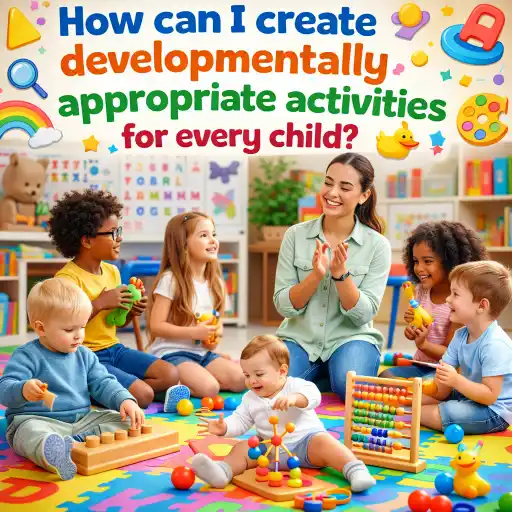
Developmentally Appropriate Practice (DAP) means planning activities that match a child’s age, their unique needs, and their family culture. For a clear overview, see What Is Developmentally Appropriate Practice in Early Childhood Education? from ChildCareEd. DAP helps teachers decide what to teach, how to set up the room, and how to guide behavior.
Why it matters:
- Children learn more when tasks are neither too easy nor too hard. Good matches keep kids curious.
- Warm teacher-child interactions help learning and behavior. DAP supports strong relationships (DAP teaching strategies).
- DAP supports fairness. When we adapt activities, more children can join and feel included.
Short version: think about three checks every time you plan — age-appropriate, individual-appropriate, and culturally-appropriate. Use the simple steps in How can I create developmentally appropriate lesson plans? to get started. This approach supports #DAP, helps your #children feel safe, and makes #play purposeful.
How do I plan activities that fit age and individual needs?
Planning is a small routine you can repeat each week. Follow these steps and use lists to keep the plan short and useful.
- Observe first (5–10 minutes). Watch what children choose and what holds their attention. Notes or a quick photo help you remember. See Mastering DAP for observation tips.
- Pick 1–2 goals. Pick simple goals like new words, taking turns, or fine motor skills. Keep goals short so staff can follow them.
- Design invites with layers so mixed ages join: one easier way and one harder way to do the same activity. For mixed-age ideas see How to Manage a Classroom with Multiple Age Groups.
- Set up centers: books, blocks, art, dramatic play, and a sensory table. Rotate materials to renew interest. Use labeled baskets so staff swap quickly. For a simple hands-on activity that builds fine-motor skills and invites outdoor movement, include a paper airplane center — see Paper Airplanes for kid-friendly folding, origami, and drawing methods.
- Write a one-page plan: theme, goal(s), materials, steps, and one way to record learning. ChildCareEd has templates to copy (Lesson planning).
Quick checklist you can do daily:
- 🔍 Observe 5 minutes
- 📝 Note one goal
- 🎯 Offer two entry levels
- 📷 Take one photo or short note after the activity
These steps make planning faster and keep your #classroom focused on real learning. Mix quiet, hands-on, and movement activities so every child gets a chance to shine.
How can I adapt activities so all children can join?
Inclusion is a key part of DAP. Small changes help children with different skills join the same activity. For many easy ideas, see Adapting Activities for Children with Developmental Delays at ChildCareEd.
- Space: move to a quieter spot, reduce distractions, or make a small-group version of the activity.
- 🙂 Use a calm corner for kids who need a break.
- Stuff (materials): swap for easier tools — thicker crayons, larger blocks, trays to hold pieces.
- 🎨 Tape paper to the table, use dot markers, or give pre-cut shapes.
- Steps: break tasks into 2–3 pieces, model first, then let children try. Give extra wait time for answers.
Support language and sensory needs:
- 🗣️ Use short sentences, gestures, and picture cards. Repeat key words.
- 🎧 Offer headphones (if allowed) or heavy-work jobs for sensory regulation.
Partner with families and specialists. Ask families what helps at home and include home languages and traditions in play and books. ChildCareEd has free resources and multicultural activities (Playful Learning resources and DAP for Family Child Care).
Remember: small changes often make the biggest difference for #inclusion. If a child has an IEP or IFSP, coordinate with the family and specialists. State requirements vary - check your state licensing agency.
How do I check progress, avoid common mistakes, and what do providers ask most?
Assessment in early childhood is mostly watching and noting. Use short notes, photos, or a simple checklist. The CDC milestone checklists are useful for age guides: CDC Developmental Milestones.
- Quick assessment steps:
- 📸 Take one photo per activity.
- ✍️ Write one sentence: what the child did and the next step.
- 🔁 Review weekly with staff and share one quick note with families.
- Common mistakes and quick fixes:
- ❌ Too many goals — ✅ Fix: pick 1–2 goals per week.
- ❌ Skipping observation — ✅ Fix: schedule a 10-minute daily watch time.
- ❌ Over-adulting play — ✅ Fix: let children lead, then scaffold when asked.
- ❌ Relying on screens — ✅ Fix: use tech rarely and keep play hands-on.
FAQ (short answers):
- Q: How many goals per week? A: 1–2 clear goals work best.
- Q: Can mixed ages do the same activity? A: Yes—offer layered roles and materials (multi-age tips).
- Q: How do I document without too much paper? A: One photo + one sentence = strong evidence for planning.
- Q: Where to learn more? A: ChildCareEd courses and articles like DAP Teaching Strategies.
Use short reflections to keep improving. These steps support staff confidence, child growth, and program quality. Keep the focus on simple observation and play-based learning. Use #assessment to track growth and keep records useful and short.
Summary
- 1) Observe first. 2) Pick 1–2 goals. 3) Offer layered choices. 4) Adapt small parts so every child joins. 5) Record one photo and one note. These steps help your #children learn through meaningful #play and strengthen your program’s #DAP approach.
For ready tools and templates, explore ChildCareEd courses and free resources linked above. State requirements vary - check your state licensing agency. Keep trying small steps — they add up to big gains for children, families, and your team.
- 45 Hour Child Growth and Development
- 45 Hour Preschool Methods and Materials
- Easy Steps to Resume and Interview Success
- 45 Hour Infant and Toddler Methods and Materials
- Pediatric RSV First Aid & CPR/AED
- 45 Hour School Age Methods and Materials
- Texas Director Credential Renewal
- Texas Director Credential
- 45 hour Growth and Development Birth-age 12 ONLINE
- Bye Bye Winter: The Role of Outdoor Play in Early Childhood Development
- Tiny Tots, Big Learning: Crafting Curriculums for the Littlest Learners!
- How can I create developmentally appropriate activities for every child?
- Canciones, juegos y preguntas de círculo para niños
- Cómo simplificar la capacitación para sus empleados de daycare
- How can we teach community and country to young children in simple, respectful ways?
- How can I introduce the Festival of Lights to young children in respectful, developmentally appropriate ways?
- 15 Around-the-World Activities Toddlers Can Explore Through Play
- Crunch, Stomp, Scoop! Fall Activities Toddlers Can’t Resist
- Hello, Fall! Cozy Activities to Help Babies Explore the Season
- Can You Build a Leaf Bridge? Fall STEM Challenges for Pre-K
- After School Lesson Plans That Don’t Feel Like More School
- Common After School Activities Kids Get Bored With—and What to Try Instead
- Social Studies Activities for Toddlers: Start With Home, Helpers, and Their Little World
- How Can Printable Activities Save Teachers Hours of Prep Time?
- How Can Themed Activity Bundles Simplify Weekly Planning?
- How Can Child Care Providers Assess Children Through Everyday Activities?
- How Can You Plan Developmentally Appropriate Activities for Preschoolers?
- What Are the Best Transition Activities for Preschool Classrooms?
- How Can Child Care Programs Plan Appreciation Activities When Families Use Different Names for Caregivers?
