Introduction
A positive classroom climate helps children feel safe, seen, and ready to learn. In a calm room, teachers and kids can spend more time learning and less time fixing problems. This article shares clear steps for child care providers and directors to build that kind of space. You will see simple ideas about routines, room setup, positive guidance, teamwork with families, and trauma-informed care. Remember: state requirements vary - check your state licensing agency.
Why it matters: A warm climate lowers stress, improves focus, and helps children grow social skills. Research and practice show that predictable routines and kind guidance lead to better learning and happier staff. See practical tips at Creating a Positive and Calm Classroom Environment and use the free Positive Learning Environment Checklist Buy Now $0.00.
Key words to remember: in your #classroom with #children, use #routines, #guidance, and strong #relationships.
What is a positive classroom climate and why does it matter?
A positive classroom climate means children feel safe, respected, and included. It is built with clear routines, caring adults, and rules that teach what to do. When the climate is positive:
- 😊 Students feel safe to try new things and make mistakes.
- 📚 Learning time increases because fewer disruptions happen.
- 🤝 Children practice sharing, talking about feelings, and solving problems.
Why it matters: research shows that social-emotional support improves learning and behavior. The CSEFEL briefs and ChildCareEd resources explain that teaching social skills and preventing problems works better than only reacting to misbehavior. A positive climate supports children's brain development and helps teachers keep calm and focused. For big ideas and stories about impact, read How a Positive Classroom Changes Everything.
How do routines and classroom design support a calm climate?
Good routines and smart design make the day predictable and safe. Follow these steps to plan your space and schedule:
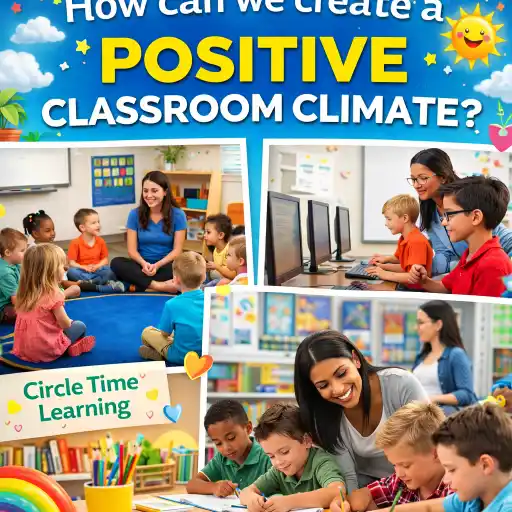
- 🧭 Create a simple visual schedule at child eye level. Post pictures for arrival, play, snack, and circle time. Children know what comes next and feel less anxious (see Creating a Positive Learning Environment).
- 🧩 Arrange learning zones: reading, blocks, art, and a calm corner. Label shelves with pictures so kids find materials alone.
- ⏱️ Use clear transition signals: a song, bell, or a 2-minute warning. Short warnings help children prepare and reduce running or shouting.
- ✨ Keep the room cozy: soft light, rugs, and child-sized furniture. A calm corner with books, fidgets, or a feelings chart helps children self-regulate.
- 🔍 Observe and tweak: watch where bumps or squabbles happen and move furniture or limit group sizes there.
Practical tools: use the checklist Buy Now $0.00 to walk through your room and pick one small change this week. When the space matches kids’ needs, they make better choices and feel more independent.
What positive guidance and teacher responses help children feel safe and learn skills?
Positive guidance teaches skills instead of only stopping wrong behavior. Use short, kind directions and teach replacements for problem actions. Try this 4-step approach:
- 🧘 Stay calm and get close. Your calm voice helps the child calm down.
- 🗣 Name the feeling: “You seem upset.” Naming feelings helps children learn emotional words.
- 🚦Set a clear limit: “Hands are for helping.” Say what to do, not just what not to do.
- 🛠 Teach the next step: “Show me gentle hands” or “Use your words.”
Use praise that tells exactly what the child did right: “You used walking feet—thank you!” Specific praise helps the behavior repeat. For more phrases and steps, see Positive Guidance That Works and How Positive Guidance Improves Management.
When behavior is ongoing or intense, use data and get help. The CSEFEL and Pyramid Model resources recommend observing patterns (antecedents and consequences) and teaming with specialists when needed. Always keep safety first and follow your state rules for reporting and supports.
How can staff, families, and trauma-informed care strengthen classroom climate?
Climate is strongest when adults work together. Use these steps to build teamwork and include trauma-aware practices:
- 📞 Communicate early and kindly with families: share one strength and one small concern. Ask what works at home.
- 🤝 Create simple shared plans: pick 1–3 phrases and one routine everyone uses so children see the same expectations across places. ChildCareEd suggests using shared rules and coaching check-ins (Creating a Positive and Calm Classroom Environment).
- 🧠 Use trauma-informed ideas: keep routines steady, offer choices, and teach calming skills (breathing, feelings charts). ChildCareEd’s trauma-informed piece gives practical steps: Trauma-Informed Care Strategies.
- 📋 Bring in supports early: consult a mental health or special education specialist if behavior keeps interfering with learning. The CSEFEL and PBIS frameworks show how teams can plan consistent responses and teach replacement skills (see CSEFEL).
- 🏫 Promote staff wellness: calm adults create calm rooms. Schedule brief team check-ins and share wins.
Partnering with families and professionals builds consistency. The CDC also highlights school-family partnerships and staff training to create safe, supportive settings.
Common mistakes and how to avoid them
- 😵 Mistake: Too many rules. Fix: Teach 3 or fewer simple rules with pictures.
- 😶 Mistake: Long lectures when behavior is big. Fix: Use short phrases and calm proximity.
- ⚠️ Mistake: Inconsistent responses across staff. Fix: Pick one script and one routine to use team-wide.
- 🔍 Mistake: Waiting too long to ask for help. Fix: Collect simple notes and consult a specialist sooner.
FAQ
- Q: How many rules should we teach? A: Three or fewer, with pictures and practice.
- Q: What if a child keeps hurting others? A: Keep everyone safe, use short calm limits, teach replacement skills, and bring in supports.
- Q: How can directors help teachers? A: Offer short coaching, shared phrases, and time for staff reflection.
- Q: Do these ideas work for infants and toddlers? A: Yes, adapt routines, keep language simple, and use more visuals and choices.
Conclusion
Creating a positive classroom climate is a step-by-step job. Start small: pick one routine, one space change, and one common phrase for staff. Use visual schedules, kind guidance, and family partnerships. If behavior is hard, collect notes and ask for help early. For tools and courses to support your work, explore ChildCareEd resources like Creating a Positive Learning Environment and the checklist Buy Now $0.00. With predictable routines, thoughtful space, and caring adults, your #classroom will be a place where #children grow with strong #relationships, helpful #guidance, and steady #routines.
- CDA Home Visitor Subject Area 3 Part 3 Birth to 5
- Guiding School-Aged Children
- Building Equity: Inclusionary Practices in Preschool
- Early Emotional Wellness
- Connections That Count: Building Relationships in Child Care
- Texas Director Credential
- Behind the Scenes: Baby Routines ONLINE
- Staying Positive: Guidance for Preschoolers
- Environments That Inspire Independence and Exploration
- Every Moment Matters: Schedules and Transitions
- Sweet Home Alabama: How Can You Create Classroom Harmony.
- 10 Ejemplos de Cómo la Cultura Influye en el Desarrollo Infantil
- Proporciones de Cuidado Infantil y Tamaños de Grupo por Edad en Nueva Jersey (Guía Rápida para Centros y Hogares)
- Proporciones de Cuidado Infantil y Tamaños de Grupo por Edad en Virginia (Guía Rápida para Centros y Hogares)
- How can North Dakota childcare workers use positive discipline every day?
- Canciones, juegos y preguntas de círculo para niños
- What Is a Positive Classroom Climate?
- Classroom Climate: How Teachers Can Build a Positive Environment
- Building a Classroom Climate That Supports Learning and Behavior
- How Can Arizona Preschool Programs Best Understand Temperament and Behavior?
- How can we host a Daycare Mini Olympics that builds movement and teamwork?
- How can child care providers help toddlers manage separation anxiety?
- What small changes make child care classrooms feel more welcoming?
- How can songs and routines be used to teach emotional skills in early childhood?
- How Can Thoughtful Design Create Calm Classrooms?
- What Small Teacher Habits Do Children Notice the Most?
- What Makes a Great Home Daycare? 10 Things Parents Notice First
- Attention Signals: Which Ones Work Best for Toddlers, Preschoolers, and School-Age Kids?
- How Can Child Care Providers Help School-Age Children Research a State Independently?
- When Adult Frustration Sets the Tone for the Whole Classroom, What Can Child Care Teams Do?
