Building trust with the families you serve helps children feel safe, supports learning, and makes your program stronger. This short guide gives simple steps you can use right away. It is written for directors and child care providers and includes practical ideas, scripts, and links to helpful resources. Remember: state requirements vary - check your state licensing agency. Working with #families and making #trust a daily habit will change your classroom for the better.
How do we make a strong first week with families?
- 👋 Greet each family by name at drop-off. A warm hello is a quick #trust deposit.
- 📝 Give a short welcome sheet with: times, who to call, how you share updates, and one photo idea. For sample ideas, see How can we build trusting relationships with families?.
- 📸 Invite a family photo or a small keepsake for the child’s cubby. This shows belonging.
- 🤝 Offer a 5–10 minute orientation. Ask one question about home routines and one about questions they have for you.
- 🚪Create a simple goodbye ritual so drop-off is calm and predictable.
Why this matters:
1) Children settle faster when families feel connected. 2) Parents share important details when they trust you. 3) Small, steady actions prevent bigger problems later. For more step-by-step ideas, explore the course Community and Family Engagement in Childcare  Buy Now $24.00.
What daily habits keep trust growing?
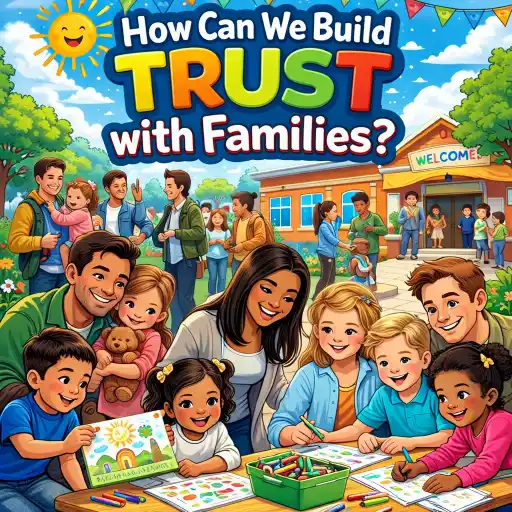
Trust grows from clear, short, and steady communication. Use more than one way to reach families and keep messages simple.
- 📱 Quick check-ins at drop-off/pick-up: name one strength and one quick fact about the day.
- ✉️ Daily or end-of-day note with three bullets: meal, mood, and a learning highlight. For templates, see Using Daily Reports to Build Trust.
- 📷 Share a photo or short video (with permission) to show learning moments.
- 🗓️ Send a weekly summary with 3 bullets and one home activity to try together.
- 🗣️ Ask families which method they prefer and follow that choice.
Use simple words. Avoid long notes and jargon. If you see a developmental question, use a milestone tool and talk with parents—see the CDC guide How to Talk with Parents about their Child’s Development.
How can we handle hard conversations without losing trust?
- 💬 Prepare: gather brief notes and examples from the day.
- 🙂 Start with a strength: "I love how Mia joins group songs."
- 🔍 Share the fact: "Today she pushed two times during block play."
- 🎯 Explain the impact: "That can make others feel hurt and stop play."
- 🤝 Invite partnership: "What do you see at home? What would help?"
If a parent becomes upset: breathe, listen, repeat what you heard, and offer a private follow-up. For deeper training and conferencing skills, consider Family (or Parent) Conferencing: Developing Trust.
Common mistakes and how to avoid them:
- 🚫 Waiting until a problem appears. Fix: make small relationship deposits daily.
- 🚫 Only sending logistics (meals, naps). Fix: share learning stories and strengths.
- 🚫 Using one method for everyone. Fix: ask preferences and adapt.
- 🚫 Blaming language in hard talks. Fix: use neutral facts and invite solutions.
How do we make families true partners in their child’s learning?
Partnership means working together. Use small steps to include families and respect culture and values.
- 📚 Share learning, not just care tasks. Explain why an activity helps a child grow. See How can providers and parents communicate so children thrive?.
- 🌍 Be culturally responsive: invite families to share traditions and use materials that reflect their lives. For tips, see How Do I Support Diverse Families.
- 🏡 Offer home visits or resource links when families need extra support. Home visiting research shows big benefits—learn more in the RWJF home visiting piece (Home Visits Help Families Achieve Brighter Futures).
- 🤝 Invite families to events, short workshops, or simple volunteer roles—start small and low pressure.
- 🎓 Train staff in listening, empathy, and family engagement. For a course, see Community and Family Engagement in Childcare Buy Now $24.00.
Why this matters: strong family partnerships improve child outcomes, reduce stress for families and staff, and create a safer, happier classroom. Research and practice—from CSEFEL to OECD reports—show that inclusion and steady engagement help children thrive (see CSEFEL Briefs).
Quick FAQ:
- Q: How long should an orientation be? A: 5–10 minutes at drop-off and offer a longer time later if needed.
- Q: How often should we send reports? A: Infants/toddlers daily; preschoolers daily highlights + weekly summary works well.
- Q: What if a family speaks another language? A: Use short translated notes, visuals, or an interpreter for sensitive talks.
- Q: Who should lead tough talks? A: A calm staff member or director with notes and a follow-up plan.
Takeaway: Do small things every day. Greet families, share short helpful notes, listen, and partner. For templates, scripts, and courses, visit ChildCareEd resources like Using Daily Reports to Build Trust and How can we build trusting relationships with families?. Keep building #communication, #partnership, #children, #families, and #trust one small step at a time.
The first days set the tone for trusting relationships. Try this easy plan you can repeat every year. Use small, predictable steps so families feel welcome and seen.Tough talks feel hard, but a calm plan helps. Use facts, start with strengths, and invite partnership.- 45 Hour Child Growth and Development
- Birth to Five CDA Credential with Portfolio Review
- CDA Family Child Care Credential with Portfolio Review
- CDA Bridge Bundle: Family Child Care without Portfolio Review
- Connections That Count: Building Relationships in Child Care
- Texas Director Credential
- 45 hour Growth and Development Birth-age 12 ONLINE
- Supporting Families and Caregivers in Language and Literacy
- Trauma-Sensitive Care: Supporting Young Children with Empathy
- 👶 ¿Cuáles son las proporciones y grupos requeridos en Dakota del Norte? 🏫
- How can we build trusting relationships with families?
- Curso de Comunicación de 9 Horas de Maryland
- Proporciones de Cuidado Infantil y Tamaños de Grupo por Edad en Virginia (Guía Rápida para Centros y Hogares)
- How can Washington, D.C. child care providers keep children safe during transitions, drop-off, and pick-up?
- The First Weeks of Child Care: Building Trust with Children
- How can we help Georgia families feel heard, valued, and included in child care?
- How can Nevada early childhood educators build trust and mutual respect with parents?
- How can child care programs best support families from diverse backgrounds?
- How can early childhood programs best support diverse families?
- How can we build trust with families?
- How can we build trust with families?
- How can Michigan childcare providers build trust with families from day one?
- How to Communicate with Families During a Daycare Emergency
- How can we improve parent communication strategies in child care?
- How can child care providers handle tough conversations with parents effectively?
- How do we build trust with families from day one?
- How can family feedback improve program quality?
- How Can Child Care Providers Handle Difficult Conversations with Families Professionally?
- How Can Child Care Providers Share Small Concerns Before They Become Big Conversations?
