Every day you welcome children and their #families into your program. This short guide helps directors and child care providers in #Georgia build simple routines and strong partnerships so families feel heard, valued, and included. Why this matters: When families trust staff, children learn better, behavior improves, and the whole program feels calmer. Remember: state requirements vary - check your state licensing agency.
1) How can we make families feel welcome on day one?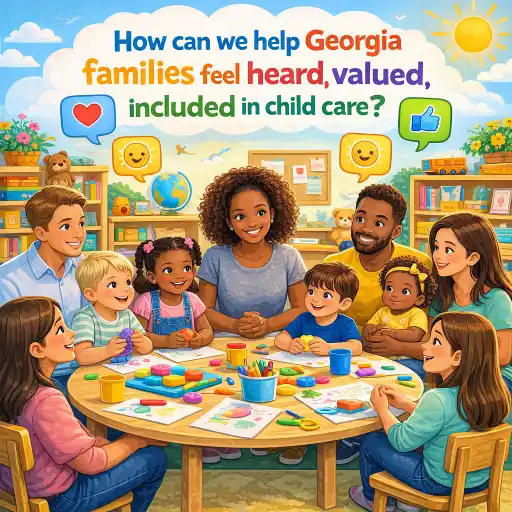
Why it matters: First impressions set the tone. A warm start builds #trust fast.
- 👋 Greet every family by name. A friendly hello shows respect and begins a relationship. See practical tips in How can we build trusting relationships with families?.
- 📄 Give a short welcome sheet that answers 3 things: drop-off/pick-up times, who to call, and how you share updates. Keep language simple and offer translations when possible.
- 📸 Create a family wall or space for photos. Families see their child’s culture reflected in the room and feel included — an idea from Celebrate Every Family.
- 🤝 Offer small ways to help: a 5–10 minute orientation, volunteer sign-ups, or a quick tour.
- 🔁 Use the same welcome routine every day, so families know what to expect. Consistency builds safety for children and parents.
2) How do we listen and communicate so families truly feel heard?
Good #communication is two-way. It is not just telling families what happened — it is asking and listening.
- 📱 Ask each family how they prefer to hear from you (text, paper note, app, or call). Then use that method.
- 📣 Use short, specific updates. Instead of "good day," say: "Anna built a tall block tower and shared two blocks." This shows you notice details (see Enhancing Communication).
- 🗣️ Practice active listening: repeat back what a parent says, ask one question, and thank them for sharing.
- 📷 Share photos or short videos (with permission) to show learning moments — parents love seeing purpose behind activities (see Beyond the Daily Report).
- 🔁 Schedule regular check-ins: brief daily notes + a weekly summary help families feel connected.
3) How can we honor culture, language, and children with extra needs in our program?
Inclusion means adapting the program so every child can belong. Small changes help a lot.
- 🌍 Invite families to share one thing from home (a song, a word, a photo). Make sharing optional and low-pressure — guidance from How Do I Support Diverse Families.
- 📚 Add books, labels, and signs in common home languages. For language access rules and help, see HHS guidance: LEP resources.
- 🧩 Use visual schedules, choice cards, and quiet spaces to support children with sensory or developmental needs. Georgia programs can connect to DECAL inclusion supports: DECAL Family Disability resources.
- 🤝 Work with families and specialists. Ask, "What helps at home?" and match classroom strategies. For ideas on partnering with families of diverse learners, see How can we partner with families?.
- 🗺️ Learn about refugee, immigrant, and migrant needs—trust builds when you show respect for each family’s story. See CDC guidance: Health Communication with RIM communities.
4) How do we know it’s working and what common mistakes should we avoid?
Measure progress with simple checks and avoid a few common pitfalls.
- 📈 Track basics: number of positive contacts per family each month and whether families respond to your preferred method.
- 🗣️ Use a short survey twice a year: ask, "Do you feel heard?" and "What helped your child most?"
- 🎯 Watch child signs: smoother drop-offs, more joyful play, and better routines often mean families feel included.
- ⚠️ Common mistakes to avoid:
- 🚫 Only sending logistics (meals, naps). Fix: share learning and strengths too.
- 🚫 Waiting for problems to start communication. Fix: make small, regular "trust deposits."
- 🚫 Using one-size communication for all. Fix: ask preferences and adapt.
- 🚫 Asking a child to interpret for a parent. Fix: use professional interpreters or translation tools (see HHS LEP).
- 🔁 Reflect monthly with staff: what worked? What to try next? Use small portfolios to share with families — a photo + one goal is enough.
For classroom activities that build belonging, try Celebrate Every Family. For staff training options in Georgia, see course listings: Childcare Courses in Georgia. State rules change—state requirements vary - check your state licensing agency.
Conclusion and FAQ
Small, steady steps build big trust. Start with warm routines, clear two-way #communication, and choices that honor culture and needs. Track simple signs of success and avoid common pitfalls. Training helps — consider ChildCareEd courses on family engagement and communication.
- Q: How often should we check in with families? A: Aim for one short positive contact weekly, plus notes when goals change.
- Q: What if a family doesn’t speak English? A: Offer translation, use pictures, and consult HHS LEP guidance (LEP).
- Q: How can we include busy families? A: Offer flexible options: short videos, evening chats, or written notes they can read later.
- Q: Who should lead family engagement at a center? A: A director or lead teacher can coordinate and make it a team task so it is steady and consistent.
Need quick tools? Start with a welcome sheet, a one-question weekly check-in, and a family photo wall. These three steps make families feel seen and your program stronger. Thank you for the work you do to make every family feel valued. #inclusion #trust
- 45 Hour Child Growth and Development
- Family Connections: Creating Inclusive Relationships
- Family Voices Matter: Tools for Meaningful Collaboration
- Bienvenido! Welcoming All Families
- CDA Family Child Care Credential with Portfolio Review
- 45 Hour School Age Methods and Materials
- Creating Environments that Nurture Growth and Community
- Texas Director Credential
- CDA Certification en Español: Recursos y Consejos para Educadores Bilingües
- Inside the Child Care Resource Center: How to Maximize Support for Families and Educators
- 10 Ejemplos de Cómo la Cultura Influye en el Desarrollo Infantil
- Proporciones de Cuidado Infantil y Tamaños de Grupo por Edad en Maryland (Guía Rápida para Centros y Hogares)
- Proporciones de Cuidado Infantil y Tamaños de Grupo por Edad en Virginia (Guía Rápida para Centros y Hogares)
- Lista para Abrir una Guardería en Casa en Georgia: Cómo Empezar
- Lista para Guardería en Casa en California: Cómo Iniciar una Guardería en el Hogar
- Lista para Guardería en Casa en Texas: Cómo Iniciar una Guardería en el Hogar
- Cómo Trabajar en el Cuidado Infantil en Carolina del Norte: Requisitos y Pasos
- Cómo Trabajar en el Cuidado Infantil en California: Requisitos y Pasos
- Capacitación Previa al Servicio para Proveedores de Cuidado Infantil en Georgia
- How can Nevada preschool programs help children with special needs feel heard, included, and understood?
- How can we help Georgia families feel heard, valued, and included in child care?
- How can Georgia early childhood educators build mutual respect with parents through daily communication?
- Celebrando la amistad en el cuidado infantil durante el Día de los Mejores Amigos
- Cómo simplificar la capacitación para sus empleados de daycare
- How Can We Celebrate Every Family and Create a Classroom Where Everyone Is Represented?
- How Can Child Care Providers Build a Classroom Community Where Every Child Belongs Through Family Engagement and Communication?
- How Can Family Knowledge Enrich a Montessori Toddler Classroom?
