Fall activities become more engaging when toddlers can influence what happens instead of simply following an adult’s plan. Learn how to offer two meaningful, manageable choices that nurture agency while keeping seasonal play purposeful and safe; Playing with a Purpose: Infant/Toddler Lesson Planning  Buy Now $24.00 offers practical support for planning developmentally appropriate experiences, and Planning for Every Child: Responsive Strategies in Action Buy Now $55.00 can help you adapt those experiences to children’s individual needs.
Why does toddler choice matter in fall activities?
For toddlers, autumn is a lively collection of things to notice: leaves skittering across the playground, pumpkins at the market, cool air, and the satisfying crunch of a walk. When educators invite children to make simple decisions within these experiences, they communicate that toddlers’ preferences and ideas matter. A choice can support early independence, engagement, communication, and a sense of agency—even when the options are as small as choosing a leaf to inspect or deciding whether to paint with a brush or sponge.
Choice does not mean handing over every decision or letting the activity become unstructured. The educator continues to set the learning intention, prepare safe materials, and guide the experience. The child has a genuine say within those boundaries. As the ECE Resource Hub’s guidance on providing choice explains, a small number of acceptable options can empower children and increase engagement. The CSEFEL brief on choice and preference also describes how access to preferred materials or activities may support participation.
Fall themes are most meaningful when they connect to the children in the room, rather than being a script everyone must follow. A toddler who chooses to watch leaves move before touching one is still exploring. Respectful options support #agency, nurture #belonging, and help educators notice what captures each child’s #curiosity.
What makes a choice genuine and manageable for toddlers?
A useful toddler choice is concrete, immediate, and limited to options the educator is comfortable honoring. Two choices are often enough: “Would you like the big leaf or the small leaf?” or “Shall we use the orange paint or the brown paint?” Show the actual objects when possible. Toddlers may understand a choice more readily when they can see, point to, reach for, or hold the options.
A choice is genuine only if both options are available and acceptable. Avoid presenting a demand as a choice—“Do you want to clean up?”—when cleanup is required. Instead, offer a real decision within the routine: “Would you like to put away the leaves or the crayons?” Similarly, never offer an option you cannot accept. If the outdoor area is closed because of weather, “outside or inside?” is not a real choice.
- Offer two clear options, adding a third only when a child can manage it and the situation calls for it.
- Use short phrases, gestures, objects, or pictures to make choices understandable.
- Pause long enough for the toddler to process and respond; silence is not necessarily refusal.
- Accept communication through words, pointing, reaching, gaze, gestures, signs, or an established communication system.
- Let the child decline or observe when participation is optional; do not turn choice into pressure.
Remember that toddlers may change their minds or choose something unexpected. Within safety and activity boundaries, honoring the decision builds trust. As the inclusionED practice on embedding choice notes, choices work best when they are developmentally appropriate, visually supported when useful, and paired with adequate response time.
How can two choices fit naturally into fall activities?
Choice-making can be woven into the activity rather than added as a separate lesson. Begin with a simple shared invitation—such as exploring leaves, making a fall collage, or noticing pumpkins—and find one or two points where toddlers can decide what to do. Keep the choices connected to the same experience so children remain part of the group while approaching the materials in their own way.
- Leaf discovery: “Would you like to carry the basket or point to a leaf for me to pick up?” Offer large, safe leaves or picture substitutes as appropriate.
- Fall art: “Do you want the sponge or the wide brush?” Leave room for toddlers to make their own marks rather than copying a model.
- Seasonal story: “Would you like to hold the leaf prop or turn the page?” A child can also watch quietly or point to a picture.
- Outdoor observation: “Should we look for yellow leaves or listen for rustling?” Adapt the options to the site, weather, and group.
- Cleanup: “Would you like to put the basket on the shelf or hand it to me?” The routine stays predictable while the child has a meaningful role.
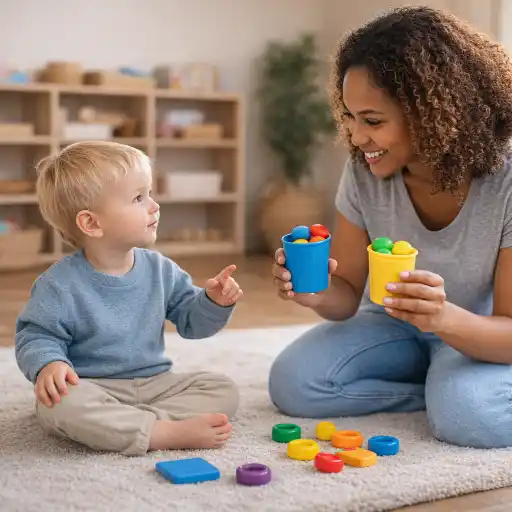
🍂 A small choice can turn a familiar activity into a moment of shared discovery: “Would you like to roll the pumpkin or wash it with the sponge?” Use age-appropriate objects, close supervision, and alternatives when a material is unsuitable. ChildCareEd’s responsive fall activity guidance emphasizes following children’s interests and adjusting the invitation as their questions and play develop.
These experiences support more than seasonal fun. Children practice making decisions, communicating preferences, exploring materials, and joining a group activity. The adult’s role is to prepare thoughtfully, listen closely, and extend the play without taking over.
How can providers adapt choices for different needs and communication styles?
Not every toddler communicates a preference with words, and not every child will want to touch, taste, or handle fall materials. A child may point, look toward an object, reach, vocalize, use a sign, or select a picture. Educators can place the choices close together, name each option, and wait. If the child does not respond, gently demonstrate or offer the choice again later rather than deciding that the child has no preference.
Offer different ways to participate in the same activity. A toddler might touch a leaf, use tongs, look through a clear container, point to a photograph, or watch a peer. A child who benefits from additional processing time may need a quieter moment; a child with motor access needs may benefit from a stable surface, larger tools, or a seated position. Follow individualized communication guidance and family or specialist recommendations. A classroom picture menu can support choosing, but it does not replace a child’s established AAC or communication system.
Choice also needs to be culturally and relationally responsive. Invite family insights about children’s interests, familiar seasonal experiences, languages, and preferences without assuming every family celebrates the same holidays. The Head Start overview of infant and toddler teaching practices underscores the value of relationships and attention to children’s interests and needs. The NAEYC discussion of inclusive engagement highlights how adjustments to the physical, social, and temporal environment can support participation.
Notice each child’s #communication and strengths without ranking one response above another. Watching, choosing a tool, changing an option, or returning later can all be meaningful participation. Responsive choices help every toddler find a comfortable route into play.
What common pitfalls should teams avoid?
Choice is a supportive teaching practice, but it can lose its value when options are confusing, unavailable, or used to pressure a child. A few simple team agreements help keep decisions respectful and practical. Directors can model concise language, ensure staff know which materials are available, and make time to reflect on what children’s responses reveal.
- Too many options: A wide array of materials can overwhelm. Start with two clearly presented choices, then adjust based on the child and context.
- False choices: Do not offer options if one is prohibited or unavailable. State the boundary plainly and offer a real choice within it.
- Repeated prompting: Ask once, wait, and observe. Repeatedly asking a child to choose or touch an item can feel like pressure.
- One communication route: Do not require a spoken answer. Accept gestures, gaze, signs, pictures, or the child’s established communication method.
- Equating participation with hands-on contact: Watching, pointing, listening, or directing an adult can be valid ways to engage.
- Forgetting safety: Inspect materials and supervise closely, especially outdoors and around small objects, food, or tools.
Use brief, objective observations to learn what is working: “Mina pointed to the orange paint after I showed both jars,” is more useful than “Mina is stubborn.” Discuss patterns with colleagues and families, and adapt the next invitation rather than labeling a child. State requirements vary - check your state licensing agency for applicable supervision, materials, and documentation expectations.
For a deeper professional learning experience, the English-language ChildCareEd course Planning for Every Child: Responsive Strategies in Action Buy Now $55.00 explores observation, individualized planning, differentiated instruction, and accessible environments. Its strategies can help teams make everyday choice opportunities more responsive and inclusive.
Conclusion: How can two real choices give toddlers a meaningful say?
Two real choices give toddlers a manageable way to influence fall classroom activities while educators continue to guide the learning and protect safety. Offer concrete, acceptable options; show or name them clearly; allow time to respond; and welcome communication in different forms. A toddler may choose a tool, a material, a role, or simply to watch before joining.
Most of all, treat children’s preferences and cues as useful information. Observe what draws their attention, adapt the experience when needed, and remember that meaningful participation does not have to look identical for every child. By embedding thoughtful choices into fall play and routines, providers nurture agency, connection, and joyful exploration—one small decision at a time.
Explore five relevant ChildCareEd courses
- Playing with a Purpose: Infant/Toddler Lesson Planning Buy Now $24.00
- Planning for Every Child: Responsive Strategies in Action Buy Now $55.00
- Playful Learning: Infant & Toddler Activities Buy Now $16.00
- Children at the Wheel: Emergent Curriculum Buy Now $25.00
- Supporting Children’s Independence Buy Now $24.00
- CDA: Stand With Respect and Professionalism
- Pediatric RSV First Aid & CPR/AED
- CDA Infants/Toddlers: Classroom Setup
- CDA Infants/Toddlers: Brain Development and Gene Expression
- Creating Engaging and Meaningful Learning Experiences
- CDA Infants/Toddlers: Health and Safety
- Texas Director Credential
- CDA Infants/Toddlers: Abuse and Neglect Reporting Requisites
- CDA Infants/Toddlers: Stages of Development
- CDA Infants/Toddlers: Smart Nutrition & Feeding
- CDA Certification en Español: Recursos y Consejos para Educadores Bilingües
- Recursos en Español sobre el Sueño Seguro del Bebé
- ¿Cómo puedo usar escenarios de juego de roles de primeros auxilios en mi aula?
- Actividades de Motricidad Gruesa que Desarrollan el Equilibrio, la Coordinación y la Fuerza
- 10 Ejemplos de Cómo la Cultura Influye en el Desarrollo Infantil
- Actividades de Fiesta para Niños de Preescolar y Primaria
- Proporciones de Cuidado Infantil y Tamaños de Grupo por Edad en Nueva Jersey (Guía Rápida para Centros y Hogares)
- Proporciones de Cuidado Infantil y Tamaños de Grupo por Edad en Virginia (Guía Rápida para Centros y Hogares)
- Actividades de Otoño Fáciles para Preescolares esta Temporada
- Cómo Trabajar en el Cuidado Infantil en Carolina del Norte: Requisitos y Pasos
- Pumpkin, Leaves, and Apples: Fall Activities for Preschoolers
- Calabazas, hojas y manzanas: actividades de otoño para preescolares
- Celebrando la amistad en el cuidado infantil durante el Día de los Mejores Amigos
- Canciones, juegos y preguntas de círculo para niños
- Crunch, Stomp, Scoop! Fall Activities Toddlers Can’t Resist
- How Can You Adapt Fall Learning Activities for Children of Different Ages?
- How Can Child Care Providers Celebrate Fall Without Assuming Every Family Shares the Same Traditions?
- How Can You Plan a Fall Celebration That Welcomes Families with Different Holiday Beliefs?
- How Can You Plan Fall Activities for a Mixed-Age Family Child Care Group?
- How Can Two Real Choices Help Toddlers Shape Fall Classroom Activities?
