Fall brings an inviting collection of leaves, changing weather, harvest materials, and children’s questions—but a seasonal theme alone does not guarantee meaningful learning. By noticing what children are curious about and adapting activities to their strengths and needs, educators can turn autumn play into responsive curriculum; Observing & Assessing in Child Care  Buy Now $16.00 offers practical learning to help strengthen observation and individualized planning. For additional strategies, explore Planning for Every Child: Responsive Strategies in Action Buy Now $55.00, which focuses on using observation and assessment to plan inclusive, culturally and individually responsive experiences.
Why does responsive teaching matter for fall activities?
Seasonal activities are most effective when they begin with the children in front of us—not simply with a calendar or ready-made craft. Responsive teaching means observing children’s interests, abilities, communication, and participation, then making thoughtful choices about materials, questions, and adult support. A group noticing red leaves may be ready to sort and compare them; another may be more absorbed by the sound they make underfoot or the way wind moves them.
This approach respects children as active learners. Research on playful learning landscapes describes learning as active, meaningful, socially interactive, iterative, and joyful, with adults offering guidance and scaffolded support. In practice, the educator creates an invitation, watches how children use it, and adjusts without taking over. That balance can deepen conversation, collaboration, problem-solving, and confidence.
Responsive planning also supports belonging. Children may engage through speech, home languages, gesture, movement, drawing, observation, or assistive communication. A fall activity with several ways to participate gives more children a genuine entry point and helps staff avoid mistaking a different response for a lack of interest.
- Build from children’s questions, play, and emerging skills.
- Offer flexible ways to join and express ideas.
- Use the season as a meaningful context, not a rigid script.
How can observation guide fall activity planning?
Begin with a focused question: What are children exploring? Which materials sustain their attention? What strategies do they try, and what support helps them participate? Brief observations during play, outdoor time, routines, and conversations can reveal far more than guessing from a theme plan.
Record what you see and hear rather than labeling a child. For example: “Nora placed three leaves side by side and said, ‘This one is the biggest,’” is more useful than “Nora likes math.” The factual note gives the team evidence to revisit and can guide a next step, such as offering a balance scale, measuring tape, or additional leaves to compare. ChildCareEd’s guidance on using child observations to plan meaningful classroom activities describes a practical observe-document-interpret-plan-revisit cycle.
Keep the process manageable. One short note, photograph with a caption, or child quote can be enough to inform a decision. Observe across more than one occasion when possible, since children’s participation can change with the setting, group size, language, materials, and familiarity.
- 🔎 Note children’s actions, words, questions, and interactions.
- Identify a possible interest or learning goal without treating it as a fixed conclusion.
- Decide what materials or adult support could extend the exploration.
- Observe again and adjust based on what children actually do.
How can educators adapt fall activities for different learners?
Responsive teaching does not require a separate lesson for every child. Often, one shared invitation can include multiple materials, roles, and levels of support. A leaf investigation, for example, might offer magnifiers, picture cards, drawing materials, sorting trays, and a quiet place to observe. Children can compare shapes, make a picture, describe a texture, sort by color, or simply watch before joining.
Consider the access needs of the children in your group. A child developing language may benefit from repeated words, gestures, visual choices, or time to respond. A child with a motor difference might use larger objects, a stable tray, or a seated role. A child who is sensitive to certain textures can observe, use tongs, or choose a different material. Family knowledge can help educators select respectful, familiar examples and understand children’s interests and home languages.
Avoid assigning a fixed “learning style” to a child based on one observation. Instead, vary how ideas are presented and allow children to explore through different modes. The ChildCareEd course Tailoring Instruction to Children’s Needs Buy Now $24.00 offers further strategies for differentiation and scaffolding.
- Offer a choice of tools, materials, and ways to communicate.
- Use visual cues and short, clear directions when helpful.
- Adjust space, group size, pace, and adult assistance.
- Invite family perspectives and represent children’s communities respectfully.
What fall activities invite curiosity and purposeful play?
Choose open-ended experiences that allow children to investigate rather than produce identical results. A seasonal nature walk can become a search for colors, shapes, sounds, or signs of change. Indoors, children might sort safe, clean natural materials, make leaf rubbings, dictate observations for a class book, or build a shelter for a pretend woodland animal. These invitations can connect language, early mathematics, science, art, movement, and social learning.
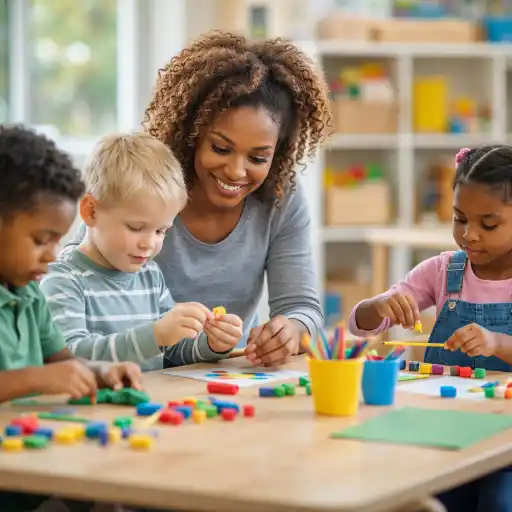
Follow children’s ideas as the activity unfolds. If a planned leaf collage becomes an inquiry into why some leaves are brittle and others flexible, pause and explore that question. Ask open-ended prompts such as “What do you notice?” “How could we find out?” or “What might happen if we try another way?” Give children time to think and respond. Adults can model vocabulary and introduce a manageable challenge while leaving room for children to make decisions.
Outdoor fall experiences can offer especially rich sensory and movement opportunities. ChildCareEd’s resource on fall sensory learning outdoors describes children’s opportunities to notice seasonal colors, sounds, textures, and movement. Adapt the idea for your space, group, weather, and safety procedures.
- Color and shape investigation with leaves or photographs.
- Sound walk: pause to listen for wind, birds, footsteps, or rustling foliage.
- Open-ended art with drawings, rubbings, or temporary nature patterns.
- Storytelling that incorporates children’s observations and questions.
How can teams avoid common pitfalls and keep activities safe?
A common pitfall is letting the theme dictate the activity, even when children’s attention has moved elsewhere. Another is focusing on a finished product or a completed checklist rather than children’s thinking. If an activity becomes confusing, inaccessible, or no longer engaging, educators can change the materials, simplify the steps, reduce the group size, or follow a new question. Responsive teaching is purposeful flexibility—not a failure to stick to a plan.
Safety and supervision remain central, especially with outdoor spaces, water, food, and natural materials. Inspect materials and spaces before use, consider choking and allergy risks, and ensure active supervision throughout. Avoid collecting or handling unfamiliar plants, fungi, or insects. Plan an indoor alternative when weather or site conditions make outdoor exploration unsuitable. State requirements vary - check your state licensing agency for applicable supervision, materials, and documentation rules.
Teams can make this work sustainable with short planning conversations. Review a few observations, identify one group interest or individual next step, and agree on a simple way to revisit learning. Directors can support staff by protecting time for reflection, providing shared documentation tools, and encouraging strengths-based discussion.
- Do not interpret quiet watching as automatic disinterest; allow time and alternate roles.
- Avoid making all children complete the same product or respond in the same way.
- Keep documentation brief, factual, secure, and useful to planning.
- Do not allow recording or setup tasks to interfere with supervision.
How can providers turn fall observations into next steps?
Use a repeating cycle: observe, document, interpret, plan, and revisit. For example, if children repeatedly compare pumpkins by size, record their words and actions. The next invitation might include a balance scale, measuring tape, drawing paper, and a prompt such as “How could we find out which one is heavier?” Children can predict, test, represent results, and revise their ideas. The educator’s role is to prepare useful materials, support safe exploration, and notice what learning emerges.
After an activity, ask a few practical questions: Who participated, and in what ways? Which materials supported engagement? What new question appeared? Did any child need a different entry point? The answers can shape a follow-up activity or an adjustment to the environment. Share concise, concrete examples with families and invite their knowledge; a specific observation can make classroom learning visible without turning the exchange into a formal assessment report.
For professional development focused on how observation and assessment inform teaching, consider Tracking Progress, Shaping Futures: Observation & Assessment Skills Buy Now $55.00. Providers interested in following children’s questions through curriculum planning can also explore Children at the Wheel: Emergent Curriculum Buy Now $25.00.
Conclusion: What makes fall activities more effective?
Fall activities become more effective when educators pair seasonal materials with careful observation, flexible planning, inclusive participation, and responsive adult interaction. Begin with what children notice, document concrete evidence, and choose an activity that extends their ideas while offering multiple ways to engage. Revisit the experience and adapt based on children’s responses rather than expecting a predetermined outcome.
The central question—how can responsive teaching improve fall classroom activities?—has a practical answer: follow children’s curiosity, scaffold without taking control, honor individual differences, and keep safety and family partnership in view. Small, thoughtful adjustments can turn an ordinary autumn invitation into meaningful learning for the whole group.
- CDA Home Visitor Subject Area 3 Part 3 Birth to 5
- 45 Hour Preschool Methods and Materials
- CDA Bridge Bundle: Preschool
- CDA Bridge Bundle: Family Child Care
- CDA Bridge Bundle: Family Child Care without Portfolio Review
- CDA Bridge Bundle: Infant/Toddler without Portfolio Review
- CDA Bridge Bundle: Preschool without Portfolio Review
- CDA Bridge Bundle: Infant/Toddler
- Texas Director Credential
- IEPs and IFSPs in Family Child Care
- How Can Childcare Educators Thrive in the Big Apple?
- Guidelines for Establishing a Consistent Sleep Routine to Ensure Kids are Well-Rested and Ready for School
- CDA Certification en Español: Recursos y Consejos para Educadores Bilingües
- 💛🧩 ¿Cómo puedo hacer que mi enseñanza sea inclusiva para los niños con autismo?
- ¿Cuáles son las mejores actividades del Día de la Tierra para niños en casa o en el aula?
- ¿Cómo puedo usar escenarios de juego de roles de primeros auxilios en mi aula?
- ¿Cómo puedo enseñar habilidades de primeros auxilios con escenarios de juego de roles?
- Actividades de Motricidad Gruesa que Desarrollan el Equilibrio, la Coordinación y la Fuerza
- 10 Ejemplos de Cómo la Cultura Influye en el Desarrollo Infantil
- Canciones, juegos y preguntas de círculo para niños
- Cómo simplificar la capacitación para sus empleados de daycare
- Hello, Fall! Cozy Activities to Help Babies Explore the Season
- Is This Development Typical? When Child Care Providers Should Watch, Document, or Refer
- What Leadership Skills Help Child Care Providers Build Stronger Programs?
- How Can Child Care Providers Build More Effective Classroom Management?
- Teacher-Led vs. Child-Led Activities: What Is the Difference?
- How Can Preschool Teachers Use Fall Activities to Strengthen Family Engagement?
- How Can Fall Classroom Activities Teach Positive Behavior?
- How Can Responsive Teaching Make Fall Classroom Activities More Effective?
- How Can Low-Cost Fall Classroom Activities Strengthen Professional Teaching Practices?
