Could short, practical mindfulness moments make your day calmer and your #classroom more focused? Simple breath, movement, and sensory practices built into routines help both staff and #children regulate emotions and return to learning more quickly. For a classroom-ready, evidence-informed set of strategies and CEU-eligible tools, try Self-Regulation & Change: Helping Children Cope  Buy Now $16.00 — it offers concrete routines you can integrate into transitions and calm-down areas. You might also explore Children's Keepers: Building Childhood Resilience Buy Now $24.00 for trauma-aware framing and resilience-building practices.
What does mindfulness look like for young children in a busy childcare day?
Mindfulness for young children is short, sensory, and playful — not extended silent meditation. It’s about helping children notice their bodies, shift attention to the present moment, and develop simple tools they can use independently. Examples include a single deep breath before snack, a 60–90 second “breathing buddy” with a stuffed toy on the belly, or a two-minute mindful-listening pause where children name three sounds they hear. These micro-practices support #selfregulation and attention by giving children concrete, repeatable strategies to interrupt escalation.
Why it matters: when children learn to pause and breathe, their nervous systems downshift, making transitions smoother and instruction time more productive. Teachers also benefit—short shared practices reduce stress and model calm behavior. Embed visuals (breathing charts), a predictable script, and a consistent cue (a chime or hand signal) so skills become routine.
How can I weave quick mindfulness moments into routines and transitions?
Mindfulness is most effective when it’s embedded into the rhythm of the day rather than added as an extra task. Use existing anchors (arrival, handwashing, transitions, before meals, after outdoor play) to practice tiny rituals. For example:
- 🔔 Signal a 30–60 second breath break with a soft chime.
- 🌬️ Start circle time with three balloon breaths: inhale slowly, imagine inflating a balloon, exhale to deflate.
- Use handwashing: ask children to notice the temperature and feel of the water for one mindful breath.
- Before small-group work: invite a one-minute mindful listening exercise — name three sounds.
Small wins matter. Keep practices under 2 minutes for toddlers/preschoolers and repeat them daily so children know when and how to use tools on their own. If you need structured lesson plans to support staff implementation, consider Play, Learn, Grow Buy Now $16.00 for developmentally-aligned routines and activity ideas.
Remember: state requirements vary - check your state licensing agency.
Which activities are developmentally appropriate and evidence-informed?
Choose short, concrete activities that match children’s attention spans and sensory needs. Evidence and field practice suggest sensory-based, movement, and story-linked activities work best for young learners. Practical options include:
- 🐻 Breathing Buddies: lie down with a small toy on the belly to watch rise/fall.
- 🫧 Bubble Breaths: slow exhales to blow bubbles — visual cue for long exhalation.
- Mindful movement: animal walks or child-friendly yoga poses that combine breath and motion.
- Sensory countdown walk: find five sounds, four colors, three textures, two smells, one sight.
- Short story pauses: read a book then ask "How might she feel? Where did you feel that in your body?"
These practices are supported by classroom-focused guides and articles that recommend brief, repeated, playful experiences rather than long meditations. For programs wanting trauma-aware approaches and resilience strategies that pair with mindfulness, Children's Keepers Buy Now $24.00 and Mental Health in Early Childhood Buy Now $24.00 offer classroom-ready content to help staff recognize when children need more support.
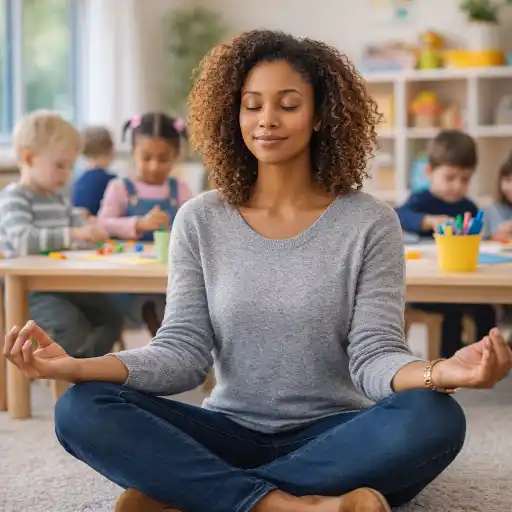
How can staff build their own mindfulness practices and reduce burnout while modeling calm?
Staff wellbeing is the backbone of sustainable practice. Short micro-practices—three deep breaths between tasks, a two-minute staff pause after arrival, or a brief body-scan at shift end—are realistic and effective. Leaders can support uptake by protecting a few minutes for staff reflection and pairing training with coaching.
Program-level steps to support staff:
- 🧭 Create a daily micro-habit menu (pick 2–3 small practices to try for four weeks).
- 🤝 Use peer check-ins: 5-minute debriefs after drop-off to share one win.
- Provide targeted PD: courses like Healing Young Hearts: Stress and Grief Buy Now $16.00 or Mental Health in Early Childhood Buy Now $24.00 give frameworks for coping with program stressors and supporting children exposed to loss or trauma.
Modeling matters: narrate brief self-regulation moves ("I’m taking a breath to help me think"). Over time, these adult habits become part of classroom culture and reduce staff turnover and #stress.
What common mistakes should teams avoid and how do we know it’s working?
Common pitfalls and fixes:
- ❌ Making mindfulness long or boring → ✅ Keep it playful and under 2 minutes.
- ❌ Teaching only during meltdowns → ✅ Practice when children are calm and make it voluntary.
- ❌ Turning calm spaces into punishment → ✅ Teach the area as a positive choice and rehearse visits together.
- ❌ Assuming one-size-fits-all → ✅ Offer sensory and movement options to respect individual differences.
Signs mindfulness is working:
- Fewer long meltdowns and quicker recovery after upset.
- Children using breathing or movement tools independently.
- Smoother transitions and increased focused time during small-group learning.
Measure impact with simple data: note frequency and length of meltdowns over weeks, track use of calm-down space, and collect brief staff and family feedback. If you need deeper training on building self-regulation program-wide, Self-Regulation & Change Buy Now $16.00 can guide team implementation.
Conclusion — What are the next practical steps for your program?
1) Pick one micro-practice (balloon breaths or breathing buddies) and use it at two predictable moments each day. 2) Teach it when children are calm and use the same brief script and cue every time. 3) Support staff with one short PD module (for example, Play, Learn, Grow Buy Now $16.00 or Children's Keepers Buy Now $24.00) and schedule a 5-minute weekly reflection to assess progress.
Mindfulness in the childcare day is pragmatic, relational, and scalable: little, repeated practices create durable gains in #attention, emotional #regulation, and classroom climate. Try one change this week, track one simple outcome, and build from there.
FAQ
- Q: How long should a child’s mindfulness practice be? A: For toddlers/preschoolers, 30 seconds to 2 minutes; repeat daily.
- Q: Do we need special equipment? A: No—stuffed toys, bubbles, a chime, and visuals are usually enough.
- Q: What if a child won’t participate? A: Offer without pressure; practice when calm so the child can choose later.
- Q: When should we refer for extra help? A: If meltdowns remain very long or frequent despite consistent teaching, involve families and specialists.
#mindfulness #children #selfregulation #classroom #breathing
- 45 Hour Child Growth and Development
- Building Equity: Inclusionary Practices in Preschool
- Bienvenido! Welcoming All Families
- From Tantrums to Triumphs: Equipping Preschoolers with Self-Regulation Skills
- Pediatric RSV First Aid & CPR/AED
- Texas Director Credential
- Every Moment Matters: Schedules and Transitions
- Mindful Supervision: Balancing Safety & Independence in Montessori
- Slaying Metaphorical Dragons of Fear and Self-Doubt in Childcare Educators
- Kickstart a Healthy Routine for Kids That Actually Sticks Past January
- CDA Certification en Español: Recursos y Consejos para Educadores Bilingües
- ❄️ ¿Qué actividades al aire libre funcionan bien para los niños de Illinois en cada estación? 🌷🍂
- ¿Cuáles son las mejores actividades del Día de la Tierra para niños en casa o en el aula?
- 10 Ejemplos de Cómo la Cultura Influye en el Desarrollo Infantil
- ¿Cómo solicito la licencia para una guardería en California?
- Proporciones de Cuidado Infantil y Tamaños de Grupo por Edad en Maryland (Guía Rápida para Centros y Hogares)
- Proporciones de Cuidado Infantil y Tamaños de Grupo por Edad en Nueva Jersey (Guía Rápida para Centros y Hogares)
- Proporciones de Cuidado Infantil y Tamaños de Grupo por Edad en Virginia (Guía Rápida para Centros y Hogares)
- Lista para Guardería en Casa en Illinois: Cómo Iniciar una Guardería en el Hogar
- Cómo Trabajar en el Cuidado Infantil en Virginia: Requisitos y Pasos
- How can positive guidance help manage big feelings during indoor play in Oklahoma classrooms?
- Celebrando la amistad en el cuidado infantil durante el Día de los Mejores Amigos
- Canciones, juegos y preguntas de círculo para niños
- How can preschool teachers teach mindfulness and calm-down skills so young children actually use them?
- Can Slowing Down Actually Boost Learning in Early Childhood Settings?
- How Can Child Care Providers Manage Stress During Challenging Behaviors?
- How Can Childcare Providers Practice Mindfulness During the Childcare Day?
- How Can Child Care Programs Reduce Decision Fatigue for Children and Educators?
