Working with young children means you will meet challenging moments. This short guide helps #teachers and centers handle behavior in kinder, clearer ways. You will find simple steps for preventing problems, what to do in the moment, how to find the cause, and how to team with families. Use one idea at a time and build from there. For more in-depth courses and tools, see How to Handle Challenging Behaviors in Early Childhood Settings and How to Support Children with Challenging Behaviors. Remember: state requirements vary - check your state licensing agency.
Why does managing behavior matter for my classroom?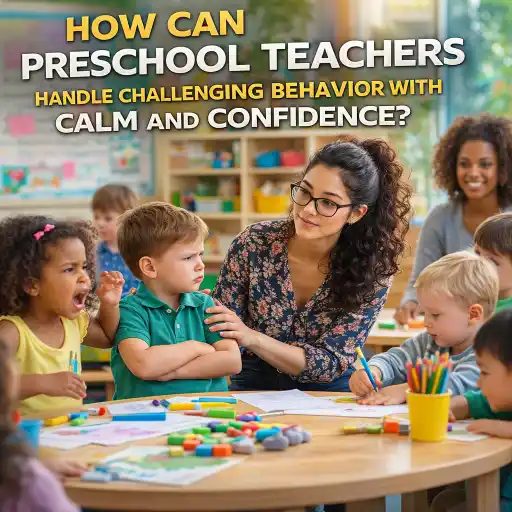
Why it matters:
- Children learn best when they feel safe and understood.
- Calm, consistent guidance helps everyone—staff, children, and #families.
- Teaching skills early prevents bigger problems later and supports school success.
When we change how we see behavior—from "bad" to "communication"—we open the door to teaching new skills. The Pyramid Model and positive guidance approaches show that prevention and teaching work better than quick punishment. For an easy read on positive guidance strategies, see What Positive Behavior Guidance Strategies Actually Work? and the Pyramid Model overview at Nebraska Children. Use short routines, clear rules, and warm connections to make the room safe for learning. This helps your #children feel seen and your team feel supported.
How can we stop problems before they start?
Prevention is powerful. Try these simple steps in your #preschool room:
- 😊 Keep a predictable daily routine: post a picture schedule at child height and give warnings ("2 minutes until clean-up").
- Set clear, 3–5 classroom rules with photos and practice them often.
- 🧩 Design learning zones: quiet reading, messy play, and block-building—limit crowding at each center.
- Offer choices: this reduces power struggles ("Do you want the red or blue cup?").
- ⏱️ Balance active times with calm moments and add short movement breaks.
Small environment changes stop many struggles. For tools like visual schedules and cue cards, see Resources for Managing Behaviors. Use observation to find patterns: when and where do behaviors happen? A short behavior log helps you spot triggers quickly. Prevention saves time and keeps dignity intact for the child and the group.
What should I do in the moment when a child is upset?
Stay calm and use a simple 4-step plan every time. This helps children feel safe and teaches skills.
- 🧘 Stay calm and get to the child's level. Lower your voice and breathe.
- 📣 Name the feeling: "You look angry." Simple words help children learn emotions.
- ⛔ Set the limit: "It’s okay to be mad. It’s not okay to hit." Keep the message short and kind.
- 🔁 Teach a replacement: show one skill (take deep breaths, ask for a turn, use a break card).
Common mistakes to avoid:
- 😓 Long lectures during a meltdown—children can’t learn then.
- ⚠️ Inconsistency between staff—confuses children.
- ❌ Shaming words like "bad kid"—this hurts trust.
For alternatives to time-out and ways to co-regulate with children, read What Can You Do Instead of Time-Out in Preschool?. After the child calms, briefly repair the relationship, restate the rule, and practice the new skill together.
How do I find the cause and work with families and the team?
Think like a detective. Use the ABC idea: Antecedent (what happened before), Behavior (what happened), Consequence (what happened after).
- 😊 Observe and record: note time, place, activity, and people involved for a few days.
- 📋 Look for patterns: same friend? same transition? hunger or tiredness?
- Use a simple behavior log or the free tools in ChildCareEd’s article.
- 🧩 If needed, use a Functional Behavior Assessment (FBA) approach and consult resources like the CSEFEL briefs at CSEFEL or sample forms at SampleForms.
- 🤝 Team up with families: share a short note with strength + fact + plan (e.g., "Marco loves blocks. He hits when crowded. We will try a calm corner and a 2-minute warning. What helps at home?"). For more on family partnership, see What Positive Behavior Guidance Strategies Actually Work?.
When behavior needs more help, consider training or consultation. ChildCareEd offers courses like Mysteries of Challenging Behavior Solved  Buy Now
 $24.00$18.00 and Turning Behavior Around Buy Now $25.00. Remember: state requirements vary - check your state licensing agency.
Conclusion
Quick steps to try this week:
- 📌 Post a picture schedule and give a 2-minute warning.
- 🛋️ Set up a calm-down spot and practice using it with the group.
- 🗣️ Teach one replacement skill (deep breaths or asking for a turn) during circle time.
- 🤝 Send one short strength + fact + plan message to a family.
Challenging behavior is a chance to teach. Small, consistent steps build safer classrooms and stronger skills for our #children. You are not alone—reach out to your team, use the free resources above, and consider training if you need more support. Keep your guidance #calm and #consistent.
FAQ
- Q: How long should a calm-down period be? A: Short and child-led—stay nearby until the child can use a calm skill.
- Q: When should we do an FBA? A: When patterns repeat despite prevention and teaching; consult a specialist when needed.
- Q: What if a child hurts others? A: Ensure safety first, then use the 4-step calm plan and document what happened.
- Q: How do I get staff on board? A: Start small, practice together, and share short, consistent messages with families.
For many practical examples, printable tools, and training, visit ChildCareEd’s behavior articles and courses linked above.
- 🏡🗣️ ¿Cómo hablo con los padres sobre los comportamientos que su hijo aprendió en casa?
- 🥺👋 ¿Por Qué la Despedida de la Mañana es Tan Emocional?
- 😅❌ ¿Cómo Puedo Manejar a un Niño que Dice “¡NO!” a Todo en el Aula?
- Cómo Crear Tu Portafolio CDA Paso a Paso
- ¿Cuál es la Diferencia Entre la Crianza Respetuosa y la Crianza Permisiva?
- How can child care teams manage challenging behaviors with calm, confidence, and care?
- Classroom Management in Preschool: Simple Strategies That Work
- Managing an Early Childhood Classroom with Confidence
- How can New York preschool programs safely handle aggressive behavior?
- How can ChildCareEd's behavior management courses help Minnesota childcare providers handle challenging situations without outside support?
- Celebrando la amistad en el cuidado infantil durante el Día de los Mejores Amigos
- How Can We Support Social-Emotional Learning in Early Childhood?
- How can child care providers handle challenging behavior calmly and effectively?
- How to Manage a Preschool Classroom with Confidence
- When Learning Feels Hard: Positive Discipline Strategies for Children Who Struggle
- How Can Child Care Providers Handle Challenging Behaviors Without Losing Control of the Classroom?
- How Can Providers Handle Biting in the Toddler Classroom?
- How Can New Teachers Build Confidence in the Classroom?
- How Can Preschool Providers Handle Unexpected Routine Changes with Confidence?
- How Can You Handle Challenging Behavior in Preschool Without Yelling?
