Introduction
Child care providers need ways to help young kids grow and keep the room calm and safe. This article gives clear, useful steps you can use right away. We focus on simple routines, kind limits, and teaching skills so children learn to behave. You will see links to helpful resources from ChildCareEd and others so you can read more.
Why it matters:
- Children learn best when they feel safe and know what will happen next.
- Good classroom control gives teachers time to teach and children time to practice new skills.
In this article, you will find 4 big questions answered with steps, short lists, and examples. You will also find common mistakes to avoid and a short FAQ. Remember to check your rules because state rules differ.
1) How do clear routines and room setup help children learn and stay safe?
Clear routines and a good room layout help children know what to do. When children know what comes next, they feel calm. Calm kids learn faster and act less out. Use these steps:
- 📋 Make a simple daily schedule with pictures. Post it where kids can see it. See ideas on CSEFEL schedules.
- 🪑 Organize areas by activity: reading, blocks, art, quiet. Keep materials easy to reach so children can help themselves. ChildCareEd shows room ideas in Effective Classroom Management.
- 🔁 Build the day with a mix: active play, calm time, small groups. Balance helps children stay focused.
- ⏳ Use timers and give a 2-minute warning before changes. This helps transitions and reduces meltdowns. See tips at CSEFEL on transitions.
How to measure success:
- Count fewer disruptions at transitions.
- Watch for more on-task play in centers.
- Ask staff if routines make their day easier.
These changes are small and quick to try. They prevent many problems before they start and help children feel safe in your #classroom.
2) What proactive strategies stop challenging behavior before it starts?
Prevention is the best strategy. If the room and routine fit the children, fewer problems happen. Try this plan below.
- 🧭 Teach rules with pictures and practice them. Keep rules short: be safe, be kind, use quiet hands. ChildCareEd explains using positive guidance in Behavior Management Techniques.
- 🎯 Use positive reinforcement: notice good choices and name them. Say, “I like how Maya used gentle hands.” This teaches what to do instead of just saying "no." The Managing Behaviors article gives examples.
- 🧩 Teach replacement skills: give children words or actions they can use instead of hitting or grabbing. Use role-play and short practice times.
- 🔍 Observe and record patterns. When does a child act out? After rest? Before snack? Use a simple chart to spot times and triggers. Tools and logs are in How to Support Children with Challenging Behaviors.
- 🤝 Use team plans for children who need more help. PBIS and Pyramid Model ideas can guide classroom systems. See Florida PBIS and Pyramid Model.
Short wins: fewer fights, smoother naptimes, and happier staff. Prevention helps both #teachers and children feel confident.
3) How do teachers turn behavior moments into learning moments?
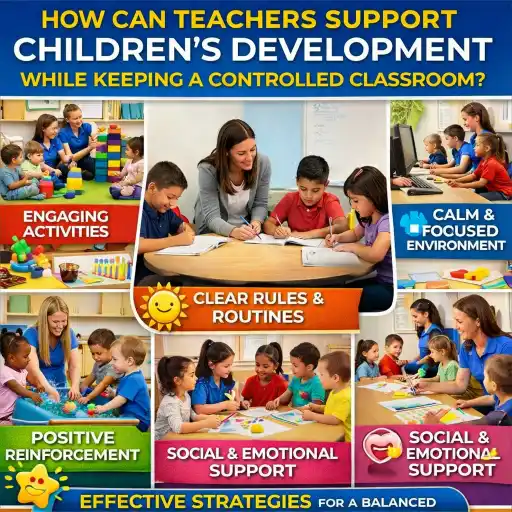
When a child acts out, it is a chance to teach. Use calm limits and then teach skills. Follow these steps in order:
- 🛑 Safety first: stop harm quickly and calmly. Use short words: “Hands are for helping.”
- 🗣 Name the feeling: say, “You look angry.” This helps children connect feelings to words.
- 🔁 Offer a choice or a safe alternative: “You can squeeze this ball or ask for a turn.” Choices reduce power struggles.
- 📚 Teach the skill later when calm. Practice asking for a turn, breathing, or using a timer. CSEFEL and ChildCareEd show how to teach social skills step-by-step: see CSEFEL self-management and Managing Behavior Without Shame.
- 💞 Repair and reconnect: after the moment, say, “That was hard. Let’s try again.” This keeps the child’s dignity and strengthens your relationship.
Use short, calm language. Avoid shaming phrases. If a child needs extra help, bring together staff and family to make a simple plan with clear steps. Training courses like Going Head-to-Head with Challenging Behavior  Buy Now $24.00 can help staff learn these skills.
4) How do we partner with families and specialists to support development and classroom control?
Families know their child best. Work with them and with specialists to make plans that work at home and in your #classroom. Try this 5-step process:
- 📞 Start with a positive contact. Share a strength first, then a concern. Example: “Sam loves blocks. He had trouble at cleanup today.” ChildCareEd suggests this approach in How to Support Children.
- 📝 Collect simple data together. Note times, places, and what happens before and after (ABC: Antecedent, Behavior, Consequence).
- 🧩 Make a short plan with steps families can try at home and teachers can use at school. Keep it 3 or fewer steps so it is easy to follow.
- 🤝 Use community supports when needed: mental health consultants, PBIS coaches, or early intervention teams. Resources include CSEFEL and the Family Engagement guides.
- 🔁 Check progress and stay kind. Meet often for short updates and adjust the plan as needed.
Partnering makes plans stronger. When families and staff use the same language and strategies, children learn faster and the #classroom runs smoother.
Conclusion: What are common mistakes and quick tips to avoid them?
Common mistakes (and how to fix them):
- 🚫 Mistake: Too many rules. Fix: Pick 3 simple rules and teach them daily.
- 🚫 Mistake: Long lectures when a child is upset. Fix: Use short calm sentences and a quiet space.
- 🚫 Mistake: Ignoring patterns. Fix: Track behavior for a week to find triggers.
- 🚫 Mistake: Blaming families. Fix: Start with strengths and ask what works at home.
Quick tips:
- ✅ Praise often and be specific.
- ✅ Use visuals and timers.
- ✅ Teach one skill at a time.
- ✅ Keep plans short and shared with families.
FAQ
- Q: What if a child’s behavior is unsafe?
A: Keep everyone safe first, then follow your center plan. Ask for help from your director or mental health consultant. - Q: How long until routines help?
A: You can see improvements in days for transitions and a few weeks for new social skills. - Q: Should I use time-out?
A: Use a calm-down area or "time-in" to teach self-regulation rather than isolating the child. See ChildCareEd guidance. - Q: How do I get staff on board?
A: Use short trainings, model strategies, and review quick data together. ChildCareEd courses like Classroom Management is Collaboration Buy Now $16.00 help teams.
For more reading, check ChildCareEd’s practical articles on classroom management and challenging behavior. Training and state resources like PBIS and CSEFEL give research-based tools you can use.
- Moving About the Classroom: Effective Transitions for Everyday
- How To Keep A Healthy Class for Infants/Toddlers
- CDA Home Visitor Subject Area 3 Part 3 Birth to 5
- How To Keep A Healthy Class: Six Tips for Germ Control
- Easy Steps to Resume and Interview Success
- 1,2,3, Eyes on Me: Classroom Safety
- Play Safe, Think Big: Literacy Through Play
- Pediatric RSV First Aid & CPR/AED
- Healing Young Hearts: Stress and Grief
- The Right Kind of Influence for Young Children
- CDA Certification en Español: Recursos y Consejos para Educadores Bilingües
- 💛🧩 ¿Cómo puedo hacer que mi enseñanza sea inclusiva para los niños con autismo?
- Recursos en Español sobre el Sueño Seguro del Bebé
- 10 Ejemplos de Cómo la Cultura Influye en el Desarrollo Infantil
- Celebrando la amistad en el cuidado infantil durante el Día de los Mejores Amigos
- Why Can Fewer Toys Lead to Richer Play in the Minimalist Classroom?
- How Can Child Care Programs Maintain Accurate Child and Staff Records?
- How Can Clip Cards Prepare Little Hands for Writing?
- How Can Clip Cards Build Focus and Fine Motor Skills?
- How Do Dot-to-Dot Activities Support Number Order and Pencil Control?
- How Can You Increase Maze Difficulty Without Frustrating Young Learners?
- How Can Low-Prep Christmas Activities Build Preschoolers’ Visual Planning?
- How Can Farm-Themed Mazes Build Spatial Reasoning and Pencil Control?
- How Often Should Preschool Teachers Change Classroom Activities?
- What Should You Do When Two Versions of a Staff Checklist Are Both in Use?
- How Can Child Care Centers Catch Duplicate Supply Requests Before Classrooms Place Orders?
- How Can You Keep Ramp Experiments Fair When Children Change Several Things at Once?
- What Should Child Care Programs Do When a Family Completes Another Child’s Enrollment Form?
- How Can Child Care Programs Update Emergency Contacts Before Holiday Travel?
