A preschool activity can have one shared learning goal and several meaningful ways to participate. Children exploring a story, for example, might describe what happened, arrange picture cards, or act out a scene. Use the Simple Daily Lesson Plan Template for Early Childhood Educators Buy Now $1.00 to identify your goal and plan participation options in the differentiation section. For practical guidance on adapting materials and lessons, explore Inclusive Lessons for Preschoolers  Buy Now $16.00, alongside Tailoring Instruction to Children’s Needs Buy Now $24.00 for strategies in differentiation and scaffolding. Read on for ways to give children choices that support the same learning goal.
Why offer more than one way to join an activity?
Preschoolers bring different interests, communication styles, motor abilities, experiences, and comfort levels to the same classroom. When an activity offers only one way to participate—such as speaking aloud, sitting still, or using a particular tool—some children may understand the idea but have no accessible way to show it. Multiple participation routes preserve a shared purpose while giving children agency and a better chance to experience success.
Inclusion is not simply being in the same space. It means having an authentic opportunity to engage, communicate, connect with peers, and demonstrate learning. Universal Design for Learning (UDL) encourages educators to plan multiple ways for children to encounter information, engage with it, and express what they know. Head Start’s UDL overview describes these principles as representation, engagement, and action and expression.
This approach can also make the activity more responsive for the whole group. A child may choose to observe before trying, while another jumps in immediately; both can be meaningful points of entry. NAEYC’s discussion of engagement in inclusive settings highlights how physical, social, and timing adjustments can support participation. The goal is not to make every child’s experience identical, but to sustain a common, worthwhile learning intention.
How can one activity become three participation pathways?
Start with a single clear learning goal, then design three flexible ways to work toward it. Consider a preschool activity about making a paper garden mural. The shared goal might be to explore how plants grow and contribute ideas to a collaborative artwork. Children could participate through these pathways:
- Make: Draw, paint, stamp, tear, or place shapes on the mural. Offer thick brushes, large paper pieces, tape to secure the paper, or pre-cut shapes as useful.
- Choose and arrange: Select flowers, leaves, or colors from real objects, photos, or picture cards, then point, gesture, or place selections on the mural.
- Tell, act, or collaborate: Share an idea verbally, use signs or a communication system, move a prop, dictate a label, or take a partner role such as passing materials.
These are options, not ability rankings. Children may move between pathways during the activity, and they may need a different option on another day. CAST’s guidance on action and expression emphasizes that no single response method works best for every learner in every context. Keep the goal visible to educators while allowing children’s contributions to take different forms.
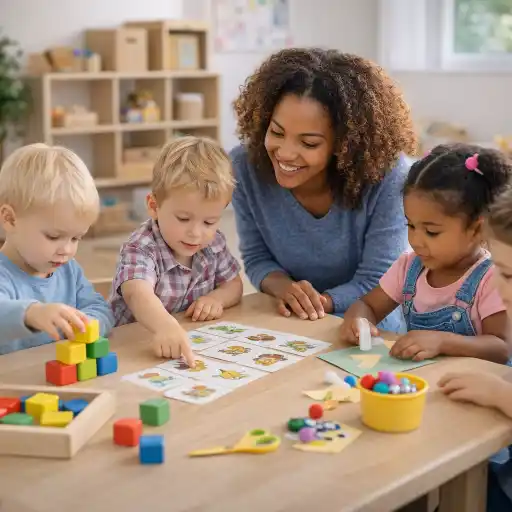
For more ideas on adapting the learning experience rather than expecting children to fit a fixed format, see ChildCareEd’s adapt-the-activity inclusion strategies.
How do you choose pathways that fit children’s strengths?
Begin with observation rather than assumptions. Notice what draws each child’s attention, which materials are easy or difficult to use, how the child communicates, and when participation rises or falls. Ask families about interests, familiar routines, and strategies that work at home. These details help educators offer relevant options without relying on a label or diagnosis to predict what a child can do.
Offer choices in an understandable format: two objects, two photographs, gestures, or a short verbal question. Pause long enough for children to process and respond. Accept a point, look, movement, sign, picture selection, spoken word, or communication device as a genuine contribution when it fits the child’s communication. The CSEFEL resource on choice and preference describes offering choices among materials and activities as a practical way to support engagement.
- Keep options manageable; two or three clearly distinct choices are often easier to understand than a crowded display.
- Present the choices neutrally, without suggesting that one pathway is more desirable.
- Look for access barriers in the room, materials, instructions, group size, or timing.
- 🧩 Treat watching, listening, and joining later as possible stages of participation—not automatic refusal.
Children’s preferences can shift with the activity, the day, or their energy. CAST’s engagement guidance notes that learners differ in what supports interest and motivation. Stay curious, and let the child’s response inform your next offer.
How can you adapt space, materials, and steps?
Small changes can make the same activity more accessible without changing its central purpose. Review the environment, tools, and directions before the group begins. NAEYC’s article on physical, social, and temporal modifications describes adjustments to materials and room arrangement, peer interactions, group size, and the length or timing of routines.
- Space: Clear pathways, bring materials within reach, reduce competing visual clutter, and offer a quieter work spot or flexible seating when helpful.
- Materials: Stabilize paper with tape, use larger or easier-to-grip tools, place small pieces on a tray, or provide photos and real objects alongside spoken directions.
- Steps: Give one or two directions at a time, demonstrate the first action, use a simple picture sequence, and allow processing time before repeating a prompt.
For example, a child who finds a paintbrush hard to control might use a sponge or choose where a partner places a shape. A child who is not ready to speak to the group may select an image or point to an idea. These adaptations maintain the learning intention while making the process usable.Offer only the support that helps the child take part, and avoid taking over. Observe whether the adaptation increases independence and comfort; if not, revise it with the child’s response in mind.
How can you keep the activity shared and socially inclusive?
Three pathways work best when children still experience a common activity rather than being separated into unrelated tasks. Design roles that make contributions visible and interdependent: one child may choose materials, another adds marks or shapes, and another helps describe the mural. Rotate roles when children are interested, but do not make peer assistance a requirement or assign a child the job of being another child’s caregiver.
Model respectful ways to invite interaction: “Would you like to choose a leaf?” or “Can I pass you the blue paper?” Teach children to wait for a response and to respect a no. Use shared resources, partner work, or a group product to create natural opportunities for communication, while allowing children to work alongside peers without pressure to engage in a particular way.
Educators can support belonging through how they describe participation. Rather than praising only the most verbal or independent response, name the specific contribution: “You chose the yellow flower,” “You showed us where the stem goes,” or “You stayed nearby and watched the pieces change.” This affirms that different forms of participation count. NAEYC’s guidance on planning for individuality emphasizes observing children’s strengths and interests and using those observations to shape learning experiences.
As a team, check whether each child has access to materials, a meaningful role, and a way to communicate. Inclusion is an ongoing design practice: plan, notice, adjust, and preserve each child’s dignity and agency.
How can you tell whether the three pathways are working?
Evaluate both learning and access. Ask whether children had a real choice, whether they could reach and use the materials, and whether their contributions connected to the activity’s shared goal. A child’s product is only one source of information; gestures, attention, attempts, peer exchanges, and choices can also reveal engagement and understanding.
- Before: State the shared learning goal and identify two or three participation options.
- During: Notice who begins, what supports are used, how much prompting is needed, and whether children interact comfortably.
- After: Record a brief, factual observation and decide whether to keep, change, or add a pathway next time.
Avoid common pitfalls: presenting choices that are not genuinely available, assuming a quiet child is not learning, overwhelming children with too many materials, or changing the learning goal when only the response method needs to change. Do not force a child to participate or use a physical prompt without appropriate guidance and consent. If the activity remains inaccessible, consult the family and, when applicable, the child’s support team. For specialized equipment, health-related procedures, or individualized plans, follow qualified professional guidance. State requirements vary - check your state licensing agency.
Directors can support consistent practice by encouraging staff to share adaptations, discuss observations during brief team check-ins, and communicate successes with families. Small adjustments are easier to sustain when teams treat them as normal planning rather than last-minute exceptions.
Conclusion: What does one activity, three ways of participating look like?
One preschool activity can offer three meaningful ways to participate by keeping a common learning goal and varying the routes children use to reach it. For a mural, children might make an element, choose and arrange materials, or communicate and collaborate in another way. Flexible options for movement, sensory comfort, materials, communication, and response help more children take part with agency.
Plan from children’s strengths, observe what happens, and adjust the activity—not the child—to reduce barriers. Ensure each pathway is valued, connected to the shared experience, and responsive to the child’s preferences. With thoughtful choices and small practical adaptations, providers can create activities where belonging and learning grow together.
Additional ChildCareEd courses
- Planning for Every Child: Responsive Strategies in Action Buy Now $55.00 — individualized planning and accessible curriculum strategies.
- Special Needs: From Referral to Inclusion Buy Now $24.00 — information about inclusion, referrals, and support strategies for preschool settings.
- Supporting Skill Development: Children with Special Needs Buy Now $24.00 — approaches to accommodations and skill development.
- 45 Hour Child Growth and Development
- CDA Home Visitor Subject Area 3 Part 3 Birth to 5
- 45 Hour Preschool Methods and Materials
- Family Voices Matter: Tools for Meaningful Collaboration
- Children at the Wheel: Emergent Curriculum
- Pediatric RSV First Aid & CPR/AED
- CDA Bridge Bundle: Preschool without Portfolio Review
- CDA Certification en Español: Recursos y Consejos para Educadores Bilingües
- Preschool Team-Building Activities for Better Communication and Friendship
- After-School Activities for Kids: Calm, Creative, and Active Ideas for Every Energy Level
- How Can You Tell If an Activity Is Developmentally Appropriate?
- Get to Know You Activities for Preschool: 12 Easy First-Week Ideas
- Adapt the Activity, Not the Child: Simple Ways to Include Children With Special Needs
- How Can Recycled Materials Create Engaging Learning Centers?
- How Can One Classroom Support Both Movers and Watchers?
- How Can Providers Create an Inclusive Classroom for Every Child?
- How Can Universal Design Make Every Classroom More Inclusive?
- How Can Child Care Providers Support Children Who Watch an Activity but Are Not Ready to Participate?
- How Can Child Care Providers Integrate Counting into Seasonal Art Activities?
- How Can Valentine’s Day Problem-Solving Activities Help Preschoolers Learn?
- How Can You Adapt an After-School Activity So a Child with Additional Needs Can Join?
- How Can Family Child Care Providers Carry Individualized Support Into Everyday Activities?
- How Can Providers Support Children Who Prefer to Be the Audience?
- How Can You Make a Classroom Cooking Activity Accessible to Children with Different Abilities?
- How Can One Preschool Activity Offer Three Meaningful Ways to Participate?
- How Can You Make a Math Activity Work for Children at Different Skill Levels?
- How Can You Help a Preschool Group Include the Child Who Is Often Left Out?
