When one child repeatedly watches play from the edge, a thoughtful classroom response can create more opportunities for connection and participation. Try offering Bingo Cards – Farm Animals Edition Buy Now $1.99 as a small-group invitation, with flexible ways to join: children might match pictures with a partner, name an animal, or watch before taking a turn. Follow the child’s cues and support welcoming peer interactions so participation feels comfortable and voluntary. For deeper professional learning, explore Building Equity: Inclusionary Practices in Preschool  Buy Now $10.00, which offers practical ways to make daily experiences more accessible and responsive. Read on for strategies that help belonging extend beyond a single activity.
Why does belonging require more than putting children in the same room?
A child can be physically present without feeling wanted, recognized, or able to contribute. Belonging is experienced through everyday interactions: whether peers make room, whether adults notice a child’s interests, and whether activities offer a genuine role. Early learning settings shape children’s identities and sense of belonging, so small moments—being greeted by name, invited into a game, or listened to—carry real weight. Inclusion is not simply placement; it involves meaningful participation and membership in the group.
Preschoolers are still learning how to start and sustain peer play. A child hovering near a group may be interested but unsure how to enter, may need more time to observe, or may encounter barriers related to communication, language, sensory needs, mobility, or confidence. Avoid treating the behavior as a fixed trait or assuming the child does not want friends. Begin with curious observation: when does the child approach, which activities attract them, and what happens next?
Respond in ways that protect dignity and build access:
- Notice and describe the situation without labeling the child as lonely or difficult.
- Offer a low-pressure invitation: “Would you like to watch, carry the blocks, or ask about a building job?”
- Teach the whole group that belonging is a shared responsibility.
- Recognize small steps, such as approaching, responding, or staying with play a little longer.
Inclusion is strengthened by knowing the individual child and family, recognizing their strengths, and adapting experiences so each child can participate. These principles align with NAEYC guidance on individuality and inclusive practices.
How can educators help a child enter play without adding pressure?
Joining an established game is a demanding social task: a child has to read what is happening, understand the play’s rules, decide how to contribute, and cope with the possibility of rejection. A simple script, a concrete role, and a nearby supportive adult can make the first step more manageable. The aim is not to make a child perform sociability on demand; it is to offer tools and access while preserving choice.
Teach and model short phrases during calm moments with puppets, toys, or brief role-play. Keep the words connected to useful actions so children have more than one way in:
- “What are you making?”
- “Can I add a piece?”
- “Can I have a job?”
- “Can I play next?”
- “I can be the delivery person.”
Before a center opens, offer quiet priming: “The children are building a road. You could bring the cars or ask if they need a bridge.” Stay close enough to support, then give the children room to respond. If the group is not ready to include another player at that moment, validate the disappointment and help find an alternative—perhaps a related activity nearby or a planned next turn.
Children can also join without speaking. A gesture, picture card, communication device, copied action, or shared material may be a meaningful opening. Notice the child’s strategy specifically: “You watched their game, then offered the blue car. That helped you connect.” Hanen’s guidance on supporting peer interaction likewise emphasizes arranging opportunities, modeling language, and giving children meaningful roles.
Which everyday activities create authentic opportunities to connect?
Activities that give children a shared purpose can make connection feel natural rather than forced. Start with pairs or small groups and offer roles that matter to the task. Rotate roles so one child is not always designated as the helper, and avoid making success depend on everyone communicating or participating in exactly the same way. A classroom community grows through repeated, low-stakes chances to contribute.
- 😊 One-page collaborative art: Invite two or three children to create on a large sheet. Offer choices such as choosing colors, adding shapes, or holding materials. Model, “Can I add here?”
- Build-together challenge: Give a small group blocks and a shared goal, such as making a bridge for toy animals. Children can contribute by choosing pieces, building, testing, or moving the animals.
- Puppet play problem: Let a puppet wait outside a pretend game. Ask what the children could say or do to make space, then rehearse several possible responses.
- Partner classroom jobs: Pair children to water plants, deliver napkins, or return books. Switch partners regularly so connections can broaden.
- Friendship picture prompts: Use images showing inviting, helping, greeting, and sharing an idea. Celebrate attempts rather than turning the activity into a competition.
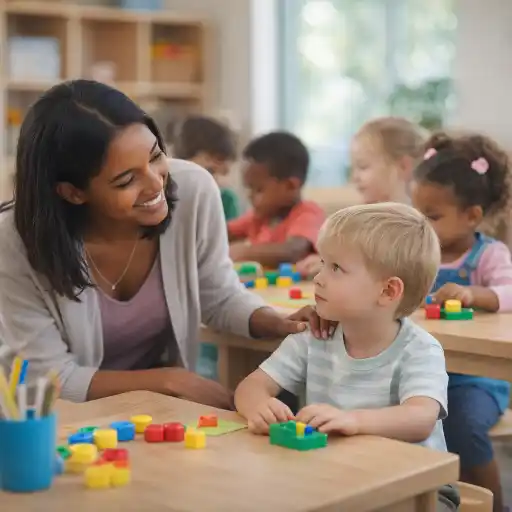
Observe whether the activity actually creates reciprocal interaction. One child completing a task while another watches may still be an early step, but it may signal that the roles or materials need adjustment. Pairing children intentionally and practicing friendship skills through books, modeling, and guided play are useful approaches described by the ECE Resource Hub’s peer relationships resources. The goal is authentic contribution—not a photo-worthy group activity.
How can peers learn to welcome someone while keeping play fair?
Children learn inclusion by seeing and practicing it, not only by hearing adults say “be kind.” Teach peers simple ways to invite someone in, make room, or offer a role. At the same time, help them understand that inclusion does not require surrendering every toy or abandoning a game. Children can preserve a play idea while creating a fair path to participate.
Practice phrases in stories, puppet scenarios, and ordinary center time:
- “We’re playing restaurant. You can be the customer.”
- “We’re using these blocks now. You can build beside us.”
- “You can have the next turn when the timer rings.”
- “Let’s make space for one more builder.”
When exclusion happens, respond calmly and clearly rather than shaming children: “I hear that you said, ‘You can’t play.’ In our classroom, we work out a way for people to participate. What role could fit this game?” Help children find a workable option, then step back as soon as they can continue together. Avoid forced apologies or publicly identifying one child as the problem; those responses can increase embarrassment without teaching a useful alternative.
Notice inclusive behavior specifically: “You moved the basket and showed Sam where the food goes. That made room for another cook.” Cooperative classroom jobs and planned partner tasks create regular, natural opportunities to practice. Research and practice resources emphasize that simply placing children together does not ensure friendship; intentional support and meaningful shared activity matter. Keep #belonging visible as a group value, not a special project for one child.
How can you adapt support for different communication, sensory, and access needs?
First ask what is getting in the way rather than assuming why a child is on the edge. A child may need time to observe, accessible materials, a quieter play area, visual information, support in a home language, or a way to communicate without speech. One child may prefer a predictable role; another may want to watch before joining. Responsive practice starts with the child’s strengths and interests and adjusts the environment—not with an expectation that every child will socialize in the same way.
- Offer multiple ways to participate: speech, gesture, pointing, drawing, sign, or communication technology.
- Use picture choices, simple role cards, visual schedules, or a timer when these supports help clarify the activity.
- Make materials reachable and manageable; consider larger pieces, stable surfaces, or adapted tools as needed.
- Reduce noise, crowding, or group size if these factors make participation difficult.
- Allow a child to watch first, then join through a small, meaningful contribution.
- Ask families about the child’s interests, communication approaches, home language, and successful strategies.
Never require eye contact, touch, public speaking, or personal disclosure as proof that a child is participating. Looking closely, passing a material, or using a picture to communicate can be meaningful participation. Head Start notes that dual language learners may demonstrate social-emotional skills in their home language, English, or both; family knowledge can help educators recognize these strengths. Document patterns objectively—what happened before, during, and after a play attempt—and share observations with families in a strengths-based way. If concerns persist, collaborate with your program’s inclusion supports or relevant specialists. State requirements vary - check your state licensing agency.
How can you avoid common pitfalls and sustain progress?
Even caring intentions can unintentionally spotlight a child or make peer connection feel like an assignment. Avoid repeatedly telling the same child to “go ask to play,” arranging a buddy who is always responsible for helping, or insisting that every group activity include everyone in the same role. Instead, offer choices, teach skills to the whole group, and create several routes into shared experiences.
- Forcing participation: Offer “watch, help, or try a part” rather than requiring a child to join immediately.
- Overhelping: Give a brief cue or model, then allow children time to manage the interaction.
- Expecting a quick fix: Track gradual changes—approaching, communicating, participating, or returning to play—not only instant friendship.
- Using a permanent helper role: Rotate partners and roles so relationships can be reciprocal.
- Ignoring repeated exclusion: Review the activity, schedule, materials, and peer dynamics; plan support and communicate with families.
- Using labels: Record observable actions instead of judgments. For example: “Ari watched the block play, then carried two pieces after the teacher offered a role.”
Make the effort sustainable with a short team reflection each week: Who found a way into play? Who remained on the edge? Which invitation or environmental change helped? Share successful phrases and strategies across staff so children hear consistent, respectful guidance. Progress may be modest at first, but repeated opportunities and responsive adult support can help peer interaction grow over time.
Conclusion: What helps every preschooler feel included?
Helping a child who is often left out begins by treating the child’s behavior as information, not a character flaw. Observe carefully, offer low-pressure ways to enter play, design shared activities with meaningful roles, and teach peers concrete welcoming language. Adapt communication and materials to each child, partner with families, and recognize small steps toward connection.
Most of all, inclusion is the work of the whole classroom community. Children do not need to become alike to belong; they need genuine opportunities to contribute, be recognized, and connect on their own terms. Consistent, thoughtful practice can turn “Everyone belongs” from a slogan into something children experience during play every day.
Additional ChildCareEd learning: Explore Supporting Social Learning: Creating Classrooms that Care Buy Now $35.00, Inclusive Lessons for Preschoolers Buy Now $16.00, Building Bridges for Dual Language Learners Buy Now $25.00, and You’re Not My Friend Anymore: Learning Conflict Resolution Buy Now $16.00 for additional professional learning related to classroom community, access, language-responsive practice, and peer problem-solving.
- Bienvenido! Welcoming All Families
- CDA Bridge Bundle: Preschool
- Pediatric RSV First Aid & CPR/AED
- CDA Bridge Bundle: Family Child Care
- CDA Bridge Bundle: Family Child Care without Portfolio Review
- CDA Bridge Bundle: Infant/Toddler without Portfolio Review
- CDA Bridge Bundle: Preschool without Portfolio Review
- CDA Bridge Bundle: Infant/Toddler
- Texas Director Credential
- Frequently Asked Questions
- Mirror Mirror on the Wall: Whimsical Ways to Prevent Bullying Tendencies in Kids, Inspired by Fairy Tales
- Holiday Hazards 101: The Childproofing Guide to Tinsel, Toys, and Tiny Tree Lights
- CDA Certification en Español: Recursos y Consejos para Educadores Bilingües
- Play, Explore, Grow: Fresh Curriculum Ideas to Spark Joy in Your Preschool or Daycare
- Illinois Child Care Staffing Plan: How to Cover Breaks and Stay in Ratio
- Child Care Sign-In and Sign-Out: Time In and Time Out Records
- Get to Know You Activities for Preschool: 12 Easy First-Week Ideas
- Examples of Anecdotal Notes for Preschoolers: 10 Real Classroom Moments, Written the Right Way
- Child Keeps Hitting Other Kids? Look for These 7 Patterns Before Reacting
- Belonging Activities for Kids Who Feel Left Out: Simple Ways to Help Them Join In
- What Morning Meeting Activities Build Belonging?
- How Can Teachers Supervise Children Safely During Transitions?
- When Does Exclusion in an After-School Group Become a Pattern?
- How Can You Help a Preschool Group Include the Child Who Is Often Left Out?
- Why Does MOM Look the Same Backward? Exploring Reversible Letter Patterns
- How Can Educators Support Fair Membership When Children Invent a Club?
- How Can Early Childhood Educators Write Better AI Prompts for Lesson Planning?
- What Are 7 AI Prompts Every Busy Preschool Teacher Should Keep Handy?
- How Can Child Care Programs Use AI for Documentation Without Risking Children’s Privacy?
