After-school hours work best when children can choose among calm, creative, and active experiences that match how they feel that day. Use this guide to build a predictable, inclusive rotation, and consider Designing Your School Age Classroom Buy Now $35.00 to strengthen daily scheduling, multi-age planning, and classroom accommodations. The course can help you translate these ideas into practical routines and lesson plans for your program.
Why does an energy-balanced after-school program matter?
Children arrive after a full school day with very different needs. Some need quiet recovery, while others need movement before they can focus. Treating energy as information—not misbehavior—allows providers to respond more thoughtfully and preserve children’s dignity.
A balanced program also supports the whole child. Quality after-school experiences can promote physical health, academic engagement, social competence, creativity, and confidence. The After-School Activities for School-Age Children guide recommends combining quiet time, active play, hands-on learning, literacy, arts, STEM, and community projects rather than relying on one type of activity.
- Calm experiences support regulation, reflection, and focused attention.
- Creative experiences develop imagination, communication, and problem solving.
- Active experiences build coordination, cooperation, stamina, and confidence.
When children have meaningful choices, they are more likely to participate willingly. Choice also helps mixed-age groups feel respected and gives older children opportunities to practice leadership.
Which calm activities help children decompress after school?
Calm activities should not feel like extra schoolwork. They should offer a gentle transition from the demands of the school day into a setting where children can reconnect, snack, and regain a sense of control.
- 📚 Create a reading nook with books, magazines, audiobooks, and comfortable seating.
- Offer puzzles, strategy games, drawing journals, origami, or quiet construction materials.
- Use a short mood check-in, breathing exercise, or guided visualization.
- Provide homework support in brief, focused periods with access to an encouraging adult.
- Invite children to listen to music, sketch, or write about one positive moment from the day.
A calm area should be a supportive option, never a punishment. Use a visual schedule, low shelves, soft lighting when possible, and clear boundaries for materials. The calm classroom guidance emphasizes predictable routines, cozy spaces, reduced noise, and consistent adult language.
Keep calm activities flexible. A child may begin with a puzzle and later join a group project; another may need movement before quiet work. Staff can say, “Would you like a quiet start or a movement start?” This language communicates trust while maintaining structure.
How can creative activities engage different ages and interests?
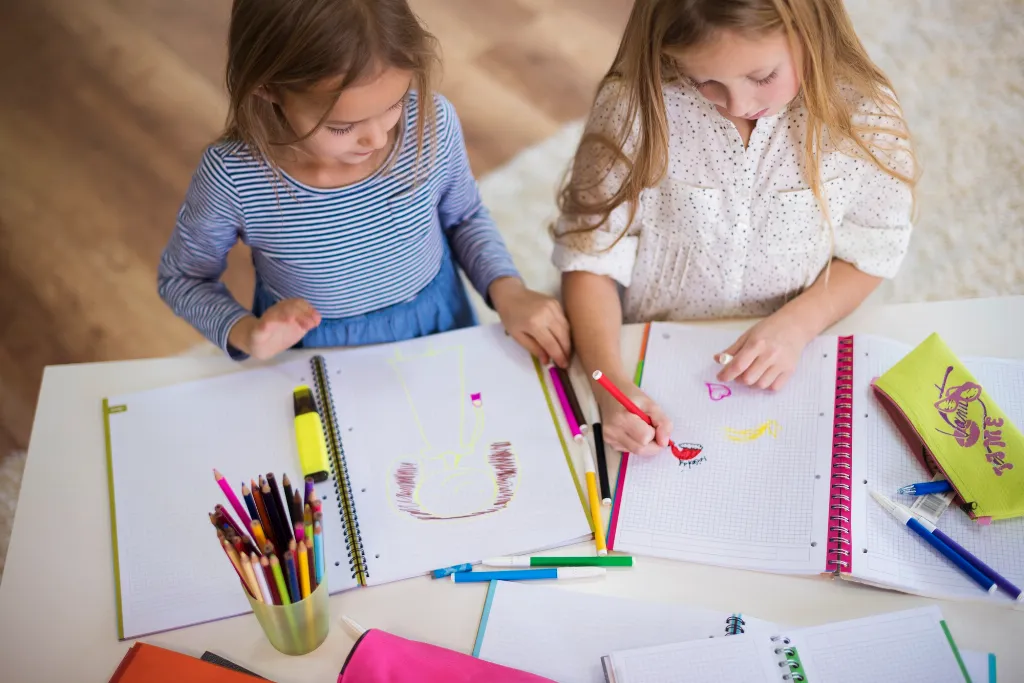
Creative activities are most effective when children can make decisions rather than reproduce an identical product. Open-ended work supports agency, identity, communication, and persistence. It also makes differentiation easier because children can participate at varied levels of complexity.
- Build a collaborative mural in which each child contributes a section.
- Use recycled materials for sculpture, bridge building, or imaginary inventions.
- Invite children to create comic strips, zines, puppets, or short performances.
- Offer photography, music, dance, drama, or storytelling clubs based on group interests.
- Develop a multi-day project such as a garden journal, classroom gallery, or community map.
Use a three-level challenge structure: try, improve, and design. For example, younger children may build a simple cardboard structure, while older children design one that must support weight and explain their choices. Peer partnerships can provide leadership without turning older children into unpaid teachers.
Staff facilitation matters more than elaborate materials. Ask open-ended questions such as, “What are you noticing?” “What could you change?” and “How might your group solve that problem?” Display process work—not only polished products—to communicate that experimentation is valuable. The creative activities guide offers additional ideas for art, STEM, projects, and mixed-age adaptations.
What active activities safely channel high energy?
Active play gives children a constructive way to release energy, practice cooperation, and return to quieter tasks with improved readiness. Movement does not have to mean competitive sports; it can include imaginative games, short challenges, and accessible options for different abilities.
- Run relay variations, cooperative obstacle courses, or scavenger hunts.
- Use painter’s tape for balance paths, indoor hopscotch, or movement patterns.
- Try balloon keep-up, beanbag toss, animal walks, dance, yoga, or freeze movement.
- Offer team challenges such as cup stacking, parachute games, or group target throws.
- Connect movement with learning by using alphabet action cards, math relays, or story-based movement.
School-age children generally benefit from regular opportunities for movement, and active play can support attention, mood, coordination, and social development. Outdoor play requires intentional supervision and environmental checks. The CDC recommends checking equipment, surfacing, heat, hydration, sun exposure, water hazards, and traffic risks; review its outdoor play and safety guidance before planning higher-risk activities.
Use active supervision: position adults strategically, scan continuously, listen, count children during transitions, and anticipate problems. Modify rules, equipment, distance, and pace so participation does not depend on athletic ability. State requirements vary - check your state licensing agency.
How should providers match activities to energy level, ability, and choice?
A strong rotation offers several entry points rather than labeling children as “high energy” or “quiet.” Observe what each child needs, then provide options that preserve belonging and agency.
- Offer a calm, creative, and active choice during the same block.
- Provide seated, standing, slower-paced, and higher-challenge versions of activities.
- Use picture directions with three to five steps.
- Pair children strategically for encouragement, collaboration, or peer leadership.
- Include sensory breaks, quiet spaces, and helper roles without stigmatizing them.
A practical daily rhythm might include arrival and snack, homework or quiet support, two activity rotations, and free choice with a closing reflection. Give five-minute and two-minute transition warnings, then use one consistent cue such as a song, bell, or clap pattern. The school-age lesson planning guide recommends concise plans with a goal, materials, timing, steps, questions, adaptations, and a quick assessment note.
Do not assume that a child’s energy level is fixed. Hunger, fatigue, sensory overload, social conflict, or a difficult school experience may influence participation. Staff can document patterns without making judgments and communicate strengths-based observations to families.
What common mistakes should programs avoid?
Even thoughtful programs can become stressful when activities are too long, transitions are unclear, or children have no meaningful choice. The goal is not perfection; it is a system that helps staff notice, adjust, and try again.
- Mistake: Scheduling only high-energy games. Fix: Follow movement with calm options and build recovery time into the routine.
- Mistake: Treating quiet time as punishment. Fix: Present calm spaces as normal choices available to everyone.
- Mistake: Using one activity for every age and ability. Fix: Prepare layered challenges, flexible roles, and adaptive materials.
- Mistake: Giving directions only verbally. Fix: Post visual steps and model the first round.
- Mistake: Ignoring supervision during transitions. Fix: Assign staff positions, complete headcounts, and review hazards before movement.
Directors can support consistency through short staff huddles. Review the day’s energy plan, identify children who may need additional support, assign leads and floaters, and clarify safety expectations. The Safe Supervision in Child Care: Birth to School Age  Buy Now $24.00 course provides focused professional learning on supervision, transportation, field trips, and school-age safety.
Measure success simply: record attendance, note one observed skill, and invite children to share what helped them participate. Share brief, permission-based updates with families. Small data points can reveal which activities support engagement and which need redesign.
How can programs begin using these ideas this week?
Start with a manageable three-choice menu rather than redesigning the entire program. Prepare one calm activity, one creative project, and one active option. Keep materials in labeled tubs and write one-page plans that any staff member can follow.
- Ask children how they are arriving: tired, ready to move, curious, or somewhere in between.
- Offer a predictable arrival routine with snack and a short connection opportunity.
- Provide three activity choices and allow children to select one.
- Use a consistent transition cue and give advance warnings.
- End with a brief reflection: “What did you enjoy?” or “What helped you feel ready?”
Review the plan with staff at the end of the week. Which activities drew sustained engagement? Which children needed adaptations? Were transitions safe and respectful? Use the answers to adjust—not to criticize—the next week’s plan.
Professional learning can deepen this work. In addition to Designing Your School Age Classroom Buy Now $35.00, providers may explore Lesson Planning to Meet School Age Needs Buy Now $16.00, Supporting School Age Development ONLINE Buy Now $24.00, and Balancing Physically Active Play in Child Care Buy Now $25.00. These courses address scheduling, developmentally appropriate planning, inclusion, and balance among active, creative, and sedentary experiences.
Summary: How can after-school activities meet every energy level?
The most responsive after-school programs offer a deliberate balance of calm, creative, and active experiences. Begin with predictable routines, provide genuine choices, adapt activities for age and ability, and use active supervision wherever children move or explore.
Calm activities help children recover and focus. Creative projects build agency and problem solving. Active play supports health, coordination, cooperation, and readiness to learn. When staff observe children’s needs and adjust without judgment, after-school care becomes more inclusive and joyful.
Choose three options this week, prepare simple visual plans, practice transitions, and collect one brief observation per activity. With steady reflection and targeted professional development, providers can create after-school experiences where every child finds a meaningful way to relax, create, move, and belong.
- CDA Home Visitor Subject Area 3 Part 3 Birth to 5
- CDA Home Visitor Subject Area 2 Part 3 Birth to 5
- Balancing Physically Active Play in Child Care
- TEAM: Together Everyone Achieves More
- Bienvenido! Welcoming All Families
- 45 Hour School Age Methods and Materials
- Art from the Heart for Preschoolers: Open Ended Art Projects that Build Self-Esteem
- 45-Hour Infant and Toddler Curriculum
- Texas Director Credential
- Balancing Active Play in Child Care
- Healthy Lunchbox Ideas for the New School Year: Keep Kids Energized & Excited about Their Meals
- ⏰ Cómo puedo facilitar las transiciones y las rutinas diarias en mi aula?
- ¿Cuáles son las mejores actividades del Día de la Tierra para niños en casa o en el aula?
- ¿Cómo puedo usar escenarios de juego de roles de primeros auxilios en mi aula?
- ¿Cómo pueden los equipos de cuidado infantil practicar habilidades rápidas de primeros auxilios en situaciones reales?
- ¿Cómo puedo enseñar habilidades de primeros auxilios con escenarios de juego de roles?
- Actividades de Motricidad Gruesa que Desarrollan el Equilibrio, la Coordinación y la Fuerza
- Calabazas, hojas y manzanas: actividades de otoño para preescolares
- What indoor activities help New York child care programs stay safe and happy during a heat wave?
- What indoor activities work best for school-age children in daycare?
- What creative activities work best for school-age daycare programs?
- What are fun, practical school-age activities for my daycare program?
- How can we plan fun, safe outdoor activities for school-age daycare programs?
- How can school-age daycare use outdoor activities to teach, play, and stay safe?
- How can I plan activities for school-age children in daycare?
- How can we create screen-free activities that truly engage older children?
- After-School Activities for Kids: Calm, Creative, and Active Ideas for Every Energy Level
- Common After School Activities Kids Get Bored With—and What to Try Instead
- What School-Age Activities Create Engaging, Inclusive, and Well-Managed Programs?
- How Can Providers Plan Meaningful After-School Choices for Seven- and Eight-Year-Olds?
