When a child watches a song, story, or classroom activity instead of stepping into the spotlight, that quiet attention may be a meaningful way of taking part. Learn how to honor children’s readiness while creating gentle, practical pathways into participation with the Creating Engaging and Meaningful Learning Experiences  Buy Now $55.00 course; it explores purposeful play, choice, independence, and adaptations for children’s diverse needs. For a ready-to-use companion, explore the Many Ways to Participate Activity Cards resource and discover approaches you can bring into your classroom right away.
In many early childhood settings, adults plan a performance, group game, demonstration, or art activity expecting everyone to join in the same way. But some children would rather observe first—and that preference deserves respect. Providers can keep the invitation open without making participation a test of confidence, language, or compliance.
Why can watching be a meaningful form of participation?
Children learn by watching peers, studying what materials do, anticipating the routine, and deciding whether an experience feels comfortable. Observation can help a child understand a new game, notice how others take turns, process language, or regulate sensory input before acting. As NAEYC notes in its guidance on fostering engagement in inclusive settings, classroom conditions and adult interactions influence whether children can engage meaningfully.
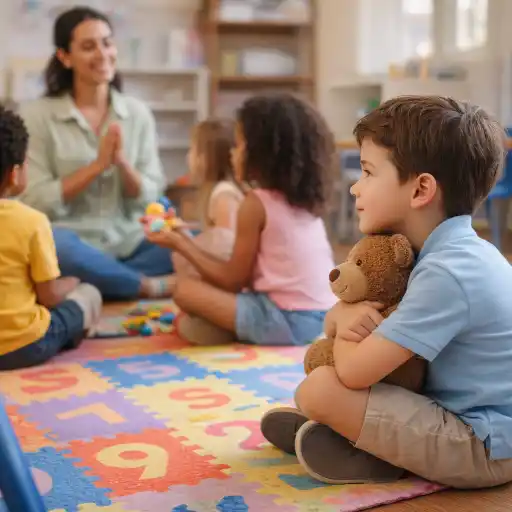
Participation is broader than performing in front of a group. A child might be engaged by smiling, following a story with their eyes, pointing to a prop, sitting near the group, holding a material, or returning later to try one step. Recognizing these contributions protects belonging and helps adults see children’s strengths rather than focusing only on what they have not done.
This matters especially during performances, songs, dramatic play, and group activities, where children may feel watched by peers. When providers treat watching as a valid choice, they communicate that each child belongs without having to prove it. That message can support #confidence, connection, and a growing willingness to explore.
- Observation may reflect curiosity or careful processing, not disengagement.
- A child can take part through gesture, proximity, material choices, or a helper role.
- Readiness varies with the activity, relationships, sensory environment, language, and the child’s experiences.
How can educators understand what a child’s watching communicates?
Start with specific, objective observation instead of labels such as “shy,” “uninterested,” or “refusing.” Record what the child does before, during, and after the activity. For example: “During the puppet song, Eli stood beside the shelf, watched the puppets, tapped one finger during the chorus, and later carried a puppet to the book corner.” This note reveals attention and possible entry points more clearly than a judgment about motivation.
Look for patterns across activities and days. Does the child watch more in a large, noisy group but join a familiar song with one trusted adult? Do they approach when they can hold a prop or participate beside a friend? Consider the pace, group size, predictability, sensory demands, communication options, fatigue, and the child’s familiarity with the experience. NAEYC’s resource on using observation to guide teaching emphasizes using what educators notice to adjust their approach and plan responsive learning experiences.
- What seems to draw the child’s attention or bring a smile?
- Do they move closer, imitate, point, offer a material, or return later?
- What changes when the group gets smaller or the activity becomes more predictable?
- Which communication methods does the child use comfortably, including home language, gesture, sign, or communication supports?
Ask families what helps their child warm up and what interests invite participation. Share objective observations, not diagnoses. If persistent distress or withdrawal interferes with the child’s daily experiences, collaborate with the family and director and follow program procedures. State requirements vary - check your state licensing agency.
How can providers invite participation without pressure?
A helpful invitation is warm, specific, and genuinely optional. Instead of asking, “Why aren’t you joining?” try, “You can watch first. If you’d like, you could hold the picture or sit beside me.” This lets the child know what is possible without implying that they must accept. Give time for processing, and avoid repeating the invitation until it becomes pressure.
Think of participation as a flexible pathway, not a ladder the child must climb. A child may move from watching to sitting closer, choosing a prop, trying one brief action, joining with a partner, or participating more fully. They may also return to watching on another day. Both are reasonable responses to changing circumstances.
- Offer two or three meaningful choices: “Would you like to watch, hold the drum, or tap once?”
- Provide nonverbal options, such as pointing, signing, drawing, or selecting a visual.
- Offer a brief role with a clear purpose: page turner, materials helper, prop holder, or song chooser.
- Say, “You may pass today and come back later,” then respect that choice.
Keep the focus on access, not performance. Avoid calling attention to a child’s hesitation in front of peers, comparing participation, or praising only visible, verbal contributions. The NAEYC discussion of individuality and inclusive practices supports planning for children’s different strengths, experiences, and needs. The Many Ways to Participate Activity Cards can help make options visible; introduce them to everyone so no child is singled out.
How can activities create easy entry points for watchers?
Design the activity with a shared purpose and several ways to engage. A song might include listening, choosing the next verse, holding a shaker, moving one hand, or singing along. During a puppet story, a child could watch, select a character, hold a prop, point to a picture, or offer a prediction privately. In collaborative building, children might observe, bring blocks, test a structure, or suggest an idea to a trusted adult.
Play-based activities are especially useful because children can join gradually and repeat actions without being the center of attention. Providers can model a simple action, offer a prop, or suggest a role, then pause and let the child decide what happens next. The goal is to make participation possible while preserving the child’s agency. For more on how play can support learning, see NAEYC’s article on observing, planning, and guiding through play.
- For music: listen, choose an instrument, tap once, move a scarf, or join the refrain.
- For art: watch a demonstration, choose a material, make one mark, or work beside a peer.
- For dramatic play: observe, hold a prop, deliver an item, or take a quiet supporting role.
- For group games: watch a round, point to the next player, keep score with pictures, or try a turn with a partner.
Make the environment welcoming: keep materials within reach, provide predictable cues, and offer a quieter place near—not outside—the group. Adjust sound, pace, seating, and group size when those factors create barriers. These small adaptations can benefit the whole class, including children who are ready to perform and children who prefer to be the audience.
What common mistakes should teams avoid?
Well-intentioned adults can accidentally turn participation into a demand. A child may be asked repeatedly to join, spotlighted in front of peers, or told that watching “doesn’t count.” These responses can make a new activity feel less safe and obscure the learning already taking place. Reflect as a team on whether your routines leave room for choice and more than one way to contribute.
- 🚦 Avoid forcing an immediate turn. Offer a clear option to observe and a later opportunity to try.
- Avoid treating quietness as a problem. Notice attention, gestures, choices, and learning during play.
- Avoid overprompting. Give one invitation, pause, and allow time for the child to respond.
- Avoid defining success as speaking or moving on cue. Accept nonverbal contributions and brief participation.
- Avoid using activity cards as a compliance chart. They are tools for communication and choice, not rewards or scores.
After an activity, document what helped rather than whether the child “performed.” Note the child’s interest, chosen role, response, and any environmental support that made engagement easier. Share useful observations with colleagues and families, and revisit the activity without suggesting that the child failed earlier. This strengths-based approach helps providers adjust their practice and recognize small but meaningful steps.
How can providers make audience-friendly participation part of everyday practice?
Plan for different participation styles before an activity begins. Decide what children may learn, what materials and roles will be available, and how a child can observe or join later. Teach the choices during calm moments; for example, explain that children may watch, try one part, or join in a bigger way. The options become familiar and feel like normal classroom practice, not a special response to one child.
Afterward, reflect on the experience with colleagues: Who had a comfortable way to enter? Which children needed more time? Did the activity’s noise, pace, or format make access harder? Use those answers to make one practical adjustment next time. Invite families to share interests, familiar songs, or ways their child communicates readiness. This helps keep invitations relevant to the child and consistent across relationships.
For deeper professional learning, explore these English-language ChildCareEd courses:
- Creating Engaging and Meaningful Learning Experiences Buy Now $55.00 — planning purposeful, choice-rich activities.
- Building Equity: Inclusionary Practices in Preschool Buy Now $10.00 — practical ways to create an inclusive classroom.
- Tailoring Instruction to Children’s Needs Buy Now $24.00 — differentiation and scaffolding strategies.
- Role of Play in Learning Buy Now $16.00 — how play contributes to children’s learning and development.
- Planning for Every Child: Responsive Strategies in Action Buy Now $55.00 — using observation to plan responsive experiences.
Conclusion: How can providers support a child who prefers the audience role?
Providers can support these children by treating watching as a valid starting point, observing without labeling, making gentle invitations, and designing activities with multiple ways to contribute. Offer time, accessible roles, and the freedom to pass or return later. The central goal is not to move every child onto the stage; it is to make sure every child belongs, has meaningful access to learning, and can participate in a way that feels manageable today. Small, respectful choices can open the door to deeper engagement over time.
- 45 Hour Child Growth and Development
- CDA Home Visitor Subject Area 3 Part 3 Birth to 5
- CDA Bridge Bundle: Preschool
- Pediatric RSV First Aid & CPR/AED
- CDA Bridge Bundle: Family Child Care
- Positive Attention: Interactions & Supervision for Infants & Toddlers
- Creating Environments that Nurture Growth and Community
- Texas Director Credential
- CDA Certification en Español: Recursos y Consejos para Educadores Bilingües
- Your Guide to the 45-Hour Child Care Courses Online in Florida
- How can I market my child care program effectively on social media?
- When Should Maryland Child Care Staff Take the Including All Children and the ADA Course?
- ADA Training Maryland: Does Your Certificate Expire or Do You Need to Take the Course Again?
- What Should Providers Do When Children Copy Each Other’s Challenging Behaviors?
- How Can Handmade Gifts Help Children Express Appreciation?
- How Can Writing and Art Activities Help Children Name What They Appreciate?
- How Can Providers Support Children Who Prefer to Be the Audience?
- Should You Ask Children’s Permission Before Displaying Their Artwork?
- How Can Child Care Providers Protect Privacy When a Child’s Story Includes Sensitive Family Details?
- How Can a Preschool Community-Helpers Theme Respond to Real Local Needs?
- Who Checks AI-Generated Child Care Training for Accuracy?
- How Can Educators Protect Family Privacy When Using AI to Draft Newsletters?
- How Can a Three-Object Museum Help Children Curate, Describe, and Explain Their Choices?
- How Can Restaurant Order Tickets Give Preschool Writing a Real Audience?
- How Can Preschoolers Join the Editorial Team of a Classroom Newspaper?
- Before Posting a Funny Child Quote, What Should Child Care Providers Consider?
- How Can Gratitude Activities Build Kindness and Teamwork in School-Age Children?
