Children who grow up with more than one language are a gift to our classrooms. This article is for directors and child care providers who work in North Dakota. You will find simple, ready ideas to help Dual Language Learners (DLLs) feel safe, learn, and belong. We use easy steps you can use today and point to trusted resources from ChildCareEd and related trainings. Remember: state requirements vary - check your state licensing agency.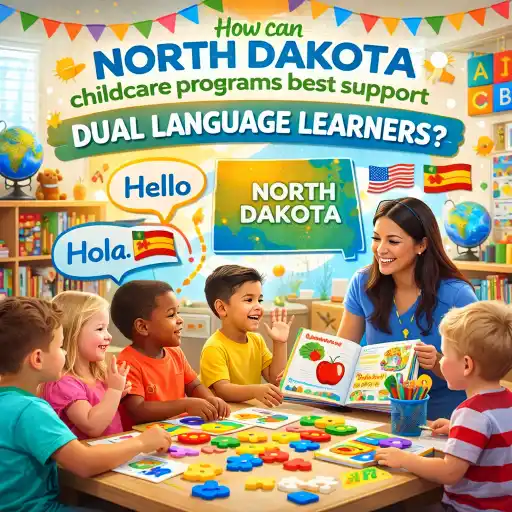
How can my program make DLLs feel welcome in North Dakota?
Why it matters: Children learn best when they feel safe and proud of who they are. A welcoming room helps children try new words and take part in class. It also helps families trust your program.
- Label the room in both languages. Use photos + words on shelves and centers. See examples in ChildCareEd's guide.
- Display family photos and cultural items so children see themselves in the space.
- Include books and songs in home languages. Check Many Languages, One Classroom for book ideas. For seasonal programming and culturally relevant activities you can use to celebrate Latinx cultures in your classroom, see our Hispanic Heritage Month resources.
- Use a picture schedule so routines are predictable. Predictable routines calm children and help language learning.
- Train staff to greet children in their home language; even small efforts show respect.
Tip: A quick welcome card for families in their home language builds trust. For training that dives deeper, see Building Bridges for Dual Language Learners  Buy Now $16.00.
What simple classroom strategies help children learn both English and their home language?
Keeping the home language strong helps children learn English faster. You don’t need to speak every language to help. Try these easy moves:
- 😊 Model short, clear sentences and repeat key words. Use self-talk and parallel talk so children hear language tied to action (see language modeling Buy Now $0.00).
- 📷 Use visuals and gestures. Point to objects, show real items, and act out words.
- 🔁 Repeat and expand. If a child says "ball," say "Yes—big ball!" This grows vocabulary slowly.
- 👫 Pair children together. Peer helpers can model words in play and make learning natural.
- ✍️ Support print knowledge. Name cards and posters help all children notice letters and words.
These steps are backed by practical resources on ChildCareEd. Keep activities short, use the same words in routines, and celebrate attempts—effort matters as much as perfect speech. Use songs and simple stories in both languages to make learning fun.
How can I build strong family and community partnerships in North Dakota?
Families are experts on their child’s language and culture. Strong partnerships help children learn and keep families involved. Use these steps:
- 📩 Ask families to share words, songs, and photos. Keep a small folder with key phrases written phonetically so staff can use them.
- Invite parents to lead a story or song in their home language. This values family knowledge and helps other children learn.
- Provide simple home activities: 1–3 ways families can practice language at home (read a picture book, sing, or name foods during meals).
- Link families to local supports like Head Start in North Dakota (SENDCAA Head Start and CAP Region VI Head Start).
- Offer translated handouts or visual messages. State requirements vary - check your state licensing agency for translated record rules.
Use your program newsletter and quick phone or text messages. The Family Engagement resources on ChildCareEd give simple scripts and activity ideas you can share with families.
How do I track progress and follow rules in North Dakota childcare programs?
Tracking growth for DLLs means watching language skills in both home language and English. Follow these steps:
- Observe and note what children do and say during play and routines.
- Ask families about the child’s language at home—family reports matter.
- Use informal checklists and samples of children’s work in both languages.
- Seek training and assessment tools. For classroom strategies and formal training, see Building Bridges Buy Now $16.00 and free resources on ChildCareEd.
Common mistakes and how to avoid them:
- Don't tell families to stop their home language. Instead, encourage home language use—it supports learning.
- Don't label quiet periods as a problem. Children often have a silent period when learning a second language.
- Don't rely on one measure. Use observations, family input, and samples over time.
FAQ (short):
- Q: Do I need to speak the child’s home language? A: No. Use gestures, visuals, and a few key words. Invite family help. See ChildCareEd language options.
- Q: Will two languages confuse a child? A: No. Bilingualism is a strength and supports learning.
- Q: Where can I get North Dakota-approved training? A: Start with ChildCareEd North Dakota training.
For more on language strategies, visit the Language Modeling Buy Now $0.00 PDF. For group workshops, consider the instructor-led Building Bridges Buy Now $25.00 training.
Key ideas: support the child’s home language, use visuals, work with families, and keep simple records. These steps help children feel proud and learn faster. Your work matters—every small change helps a child thrive in your #NorthDakota program. Celebrate #DLLs, respect #language, partner with #families, and build #inclusion in everyday routines.
Conclusion
Supporting Dual Language Learners in North Dakota is practical and powerful. Use labels, visuals, family partnerships, and short observations. Tap into ChildCareEd courses and local Head Start partners when you need help. Little steps each day build strong language skills and trust with families. Thank you for the caring work you do for children and communities.
- Building Bridges for Dual Language Learners
- Building Bridges for Dual Language Learners: For Workforce Solutions
- 45 Hour Infant and Toddler Methods and Materials
- CDA Bridge Bundle: Family Child Care without Portfolio Review
- CDA Bridge Bundle: Infant/Toddler without Portfolio Review
- CDA Bridge Bundle: Preschool without Portfolio Review
- Texas Director Credential
- Building Bridges for Dual Language Learners
- CDA Certification en Español: Recursos y Consejos para Educadores Bilingües
- Can Continuing Education in North Dakota Directly Impact Child Outcomes?
- 🚌❄️ Field Trip Ideas in North Dakota for Childcare Providers
- What Training Is Required to Be a Childcare Director in North Dakota?
- Supervision Basics in Child Care: Active Supervision Tips for North Dakota Programs
- Apoyo en Español para Capacitaciones Grupales Presenciales y por Zoom en Cursos Selectos
- Lista para Abrir una Guardería en Casa en Dakota del Norte: Cómo Empezar
- How Do Art Activities Support Cognitive Growth in North Dakota Preschoolers?
- How Can North Dakota Caregivers Help Toddlers with Speech Delays?
- How can North Dakota childcare programs best support Dual Language Learners?
- How can North Dakota early childhood programs teach children about nature and wildlife?
- How can childcare programs support farm families with flexible care in rural North Dakota?
- How Do Art Activities Support Cognitive Growth in North Dakota Preschoolers?
- How Does ChildCareEd Map Courses to North Dakota’s Core Competency Areas?
- Canciones, juegos y preguntas de círculo para niños
- How Can North Dakota Providers Show Quality and Attract Families?
- How can North Dakota child care programs lay reading foundations the right way?
