Making a childcare room feel like home helps children relax, learn, and trust adults. This short guide is for directors and providers in #NorthDakota who want simple, doable ideas. You will find steps to change the room, routines to practice, ways to work with families, and tips to avoid common mistakes. Small changes can make a big difference for your #children and staff. Remember: state requirements vary - check your state licensing agency.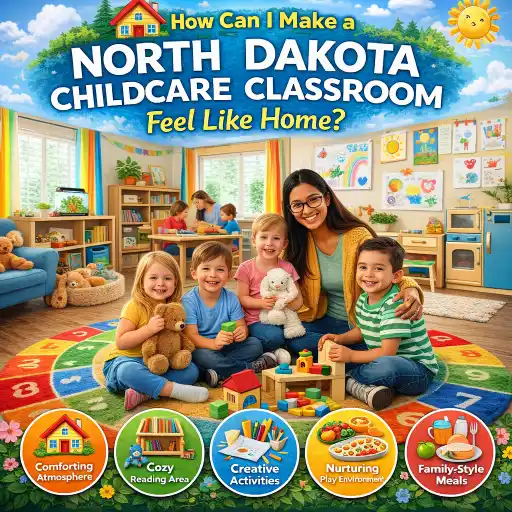
Why it matters:
1) Children who feel safe and cozy are more likely to play, share, and learn. 2) A home-like room lowers stress for children and staff. For easy design ideas, see Creating a Positive and Calm Classroom Environment and Building a calm classroom. These resources show how light, sound, and simple cozy corners help everyone.
1) What small room changes make my classroom feel like a home?
Try these numbered steps. They are low-cost and fast to do.
- 🟠 Soft lighting and natural light
- Turn on blinds to use daylight when possible.
- Add one lamp or string lights in a quiet spot to make a soft glow. See Building a calm classroom for tips on light and cozy corners.
- 🔹 Reduce noise
- Put rugs, curtains, and soft cushions to soak up sound.
- Move loud centers (blocks, dramatic play) away from calm areas like books and puzzles.
- 🔸 Use home-like materials
- Add a small rug, pillows, soft dolls, and a few family photos (with permission).
- Keep toys in baskets on low shelves so children can reach them and help clean up (see How should I set up a classroom).
- 🏫 Classroom setup and design: To help staff make intentional, research-backed decisions about room arrangement and materials, ChildCareEd's Classroom Setup for Child Care
 Buy Now $24.00 is a 3-hour online course covering how to organize spaces that support learning, reduce stress, and create a warm, home-like feel — a direct match for the lighting, zoning, and cozy corner steps outlined in this guide.
- 🔹 Keep displays simple
- Show current work and family photos. Rotate art so walls do not feel busy. For why this helps learning, read How Does Classroom Design Impact Behavior and Learning?.
Quick tips: 1) Pick one spot to make extra cozy this week. 2) Limit items in the cozy spot to 3–5 low-stim tools. This keeps the space calm and useful. These small steps make the room feel more #homey and welcoming to every child.
2) How can routines and staff habits build a home-like feel?
Routines make days predictable. Predictability feels like the safety of home. Use these steps to build strong, simple routines.
- 🔔 Post a simple picture schedule at child height.
- Review it every morning, so children know what comes next. Visuals help even non-readers. See ideas at Building a calm classroom.
- 🎵 Teach a few calm cues
- Use the same clean-up song, bell, or clap pattern for transitions.
- Give warnings (5, 2, 1 minutes) so children can finish play without surprise.
- 🧑🤝🧑 Use consistent staff language
- Pick two short phrases staff will use (example: “I’m here with you,” and “Breathe with me”).
- Practice them in staff huddles so everyone uses the same words.
- 😌 Add short calm moments
- Try 1–3 minute breathing breaks: “smell the flower, blow the candle.”
- Use cozy corner practices during calm times so children know the space is a choice, not a punishment (see How Do I Create a Calm-Down Corner).
- 💛 Children's mental health and emotional wellness: For staff who want to deepen their understanding of how environment and routine support emotional regulation, ChildCareEd's A Thoughtful Approach to Children's Mental Health Buy Now $24.00 is a 3-hour online course covering how to recognize emotional needs, use calming strategies, and build supportive classroom practices — directly supporting the cozy corner, calm cues, and staff scripting steps described throughout this article.
Why this works: steady #routines help children predict their day and feel secure. When adults model calm behavior, kids copy it. Track simple wins: fewer long meltdowns, quicker clean-ups, and more children using feeling words.
3) How do I make the cozy corner and choose materials that feel like home?
A cozy corner is a small, low-stim area where a child can calm down and return to play. Keep it simple and supervised.
- 🛋️ Basic cozy corner setup
- 1 rug or mat, 1 pillow or small chair, 1 feelings chart, and 2–4 calm tools (sensory bottle, breathing buddy, soft toy).
- Place the corner away from heavy traffic but where staff can still see it. For setup details, see How Do I Create a Calm-Down Corner.
- 🎒 Teach how to use it
- Introduce the corner during circle time and role-play visits when the group is calm.
- Use a three-step script: Connect → Calm → Coach ("I’m here with you" → breathe together → talk about what helped).
- 🔁 Keep it voluntary and short
- Visits start at 2–5 minutes. Staff stays nearby for longer support.
- Log visits to spot patterns and share with families when helpful.
- 📚 Rotate materials and include familiar items
- Include books, puppets, or photos from home (with family permission) so the corner feels personal.
- Rotate items weekly to keep interest without overstimulating.
Common mistakes to avoid: 1) Using the corner as punishment — teach it during calm times instead. 2) Putting too many items — limit tools to keep the space low-stim. For more calming corner checklists, see Building a calm classroom.
4) How can I partner with families and follow North Dakota rules?
Working with families and knowing state rules help the classroom truly feel like an extension of home. Use clear, kind steps to build trust.
- 📞 Communicate early and often
- Send short notes at pickup with one positive and one brief update. Invite family words and photos for the room. ChildCareEd tips on family partnerships are helpful: Creating a Positive and Calm Classroom Environment.
- 🤝 Ask about home routines
- Learn how families comfort and calm their child. Use the same words and routines when possible so children see consistency between home and care.
- 📋 Know North Dakota rules
- Follow ratios and group sizes. North Dakota lists required ratios by age in What Child-to-Staff Ratios Are Required in North Dakota Childcare?. Always keep licensing rules in mind when changing room layout or routines — state requirements vary; check your state licensing agency.
- 👪 Invite families into story and culture
- Ask families to share a favorite story, song, or a photo. Storytelling helps children feel known — see How can storytelling support teaching in North Dakota.
Why this matters: when families feel included, children feel safer and more connected. Keep options voluntary and respect privacy. Use small family-sharing moments that celebrate each child’s culture and routines.
Conclusion
Making a classroom feel like home is about three big ideas: calm space, steady #routines, and strong family partnerships. Try this 1-week plan:
- Day 1: Add one soft lamp or open blinds to bring in natural light.
- Day 2: Post a simple picture schedule and teach it to the children.
- Day 3: Create a tiny cozy corner with 3 calm tools and introduce it at circle time.
- Day 4: Choose one calm cue (song or bell) and use it for clean-up each day.
- Day 5: Send a short positive note home and ask for one family photo or favorite song.
Common mistakes: 1) Trying to change everything at once (do one step at a time). 2) Using the cozy corner as punishment (teach and model its use). 3) Forgetting licensing rules (state requirements vary - check your state licensing agency).
For more tools and printable checklists, visit ChildCareEd resources like How Should I Set Up a Classroom and How Do I Create a Calm-Down Corner. Your small steps build a warm, safe, and learning-filled #classroom where every child belongs. You’re doing important work. Keep trying one small change at a time.
Hashtags: Make sure your room shows your values — your #homey choices will help your #children thrive in a kinder, calmer #classroom.
- CDA Home Visitor Subject Area 3 Part 3 Birth to 5
- CDA Home Visitor Subject Area 2 Part 3 Birth to 5
- Bienvenido! Welcoming All Families
- Birth to Five CDA Credential with Portfolio Review
- CDA Family Child Care Credential with Portfolio Review
- Pediatric RSV First Aid & CPR/AED
- Texas Director Credential Renewal
- CDA Home Visitor Credential Birth to 5
- Texas Director Credential
- UNITED STATES OF AMERICA - North Dakota
- 📋🧸 What Do You Need to Work in Childcare in North Dakota?
- 👶 ¿Cuáles son las proporciones y grupos requeridos en Dakota del Norte? 🏫
- What Training Is Required to Be a Childcare Director in North Dakota?
- How to Open A Home Daycare In North Dakota
- Child Growth and Development Training North Dakota
- North Dakota Child Care Rule Updates: How to Participate and How to Prepare Your Program
- North Dakota Child Care Training Hours: What You Need Each Year
- Flexible 120 Hour CDA Training Online for North Dakota Child Care Professionals
- Free ECE Units Online in North Dakota: Start Here!
- North Dakota Child Care Rules: A Guide for Family Child Care, Group Child Care, and Center Child Care Providers
- North Dakota Home Daycare Checklist: How to Start a Daycare at Home
- Lista para Abrir una Guardería en Casa en Dakota del Norte: Cómo Empezar
- How to Become a Preschool Teacher in North Dakota
- How can childcare programs support farm families with flexible care in rural North Dakota?
- Cómo simplificar la capacitación para sus empleados de daycare
- How do I open a licensed group child care home in North Dakota?
