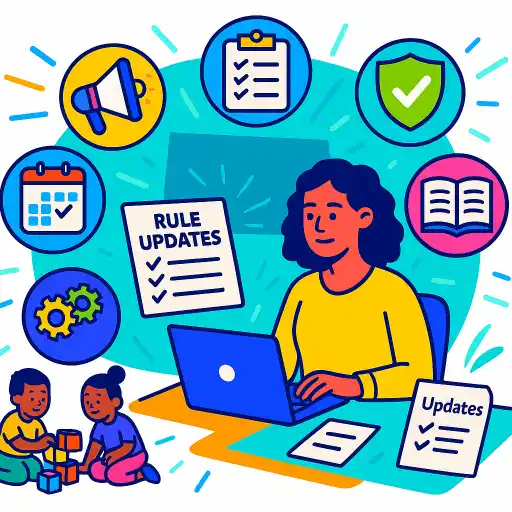
 When child care rules change, it can be hard to know what matters most. The good news is you don’t have to figure it out alone. This short guide shows North Dakota providers and directors how to join the rule update process and how to prepare their programs step by step—so you can keep children safe and families confident.
What rule changes are happening?
Rule updates can feel confusing because they may touch many parts of your program. In North Dakota, changes often show up in areas like training, emergency planning, and food program paperwork. The safest approach is to watch official ND HHS licensing pages and the ND Administrative Code for your provider type.
Training hours and tracking
Rule changes may affect how training hours are counted or recorded. For example, SB 2107 updates how department-approved training completed after submitting an application/fees can count toward the following year’s licensing annual requirements (effective date noted in the bill text).
For planning tips written for providers, you can reference ChildCareEd’s SB 2107 guide.
Safety and emergency plans
You may see updates (or stronger enforcement) around written emergency procedures, including plans and practice for different situations. North Dakota HHS provides an Early Childhood Emergency Preparedness Plan and related guidance for licensed and self-declared programs.
North Dakota child care organizations also share emergency response resources that link back to licensing rules and required forms.
Food programs and federal updates
If you use CACFP, rule or guidance updates can change forms, monitoring, and compliance steps. North Dakota DPI posts CACFP materials (including forms and household letters) and updates by school year.
At the federal level, USDA has updated/posted CACFP guidance on the serious deficiency process and has also published proposed rulemaking on serious deficiency procedures.
See: ChildCareEd’s CACFP article
How can providers take part in the rule update process?
You have a voice. You do not have to wait until an inspection to learn about changes. Use these simple steps to stay informed and share your input.
You have a voice. Here are steps you can take to participate and make sure your program is heard:
Start with simple actions your whole team can follow. Use this 7-step plan to get ready now:
-
📚 Update staff training
Make a yearly training plan so no one is scrambling later. Use planning tools and trainings like ChildCareEd’s SB 2107 training guide. -
🗂️ Check records
Keep key items easy to find:
-
background checks
-
training certificates
-
health forms
-
emergency contacts
-
🧰 Do a facility audit
Do a quick walk-through each month and fix small issues early. Use a checklist like ChildCareEd’s facility walk-through audit. -
🛟 Update emergency plans
Make sure your plan includes:
-
relocation
-
lockdown
-
reunification with families
Practice drills so staff know what to do.
-
👥 Review ratios and staff coverage
Double-check your staffing plan for busy times (opening, closing, breaks). Use ND ratio and group size guidance (ChildCareEd ratios page can help). -
💊 Tighten medication and health procedures
Use consistent medication logs and clear documentation steps. Train staff on the same process so it’s done the same way every time. See medical admin tips -
📣 Communicate with families
Send short updates that explain what you’re doing and why. Families feel safer when they know your plan.
These steps reduce stress at inspections and help your staff feel confident. For director-level support, a director administration training like ChildCareEd’s 45-hour director course can help you build strong systems.
FAQ (short answers)
-
Q: Who checks rule updates?
A: Your state licensing agency and DHS. -
Q: Can online courses count?
A: Yes—if the course is approved for North Dakota. Use ND-approved training sponsors and save/upload any required registry IDs (as shown in ChildCareEd). -
Q: How do we submit comments on federal rules?
A: Use regulations.gov and include 1–3 real examples from your program (costs, staffing, time, paperwork). -
Q: What if I need more staffing to meet new ratios?
A: Plan early: update budgets, build a substitute list, and share staffing needs during meetings and public comment periods. -
Q: Who can help with CACFP questions?
A: North Dakota CACFP contacts and local sponsors (see the CACFP sponsor list in ChildCareEd CACFP.).
Conclusion
You can prepare for rule updates without panic. Start small and stay consistent. Use this quick checklist today:
-
Read rule notices and mark comment deadlines. 📅
-
Make a training plan and save certificates. 📚 #Training
-
Do a monthly facility walk-through and fix “red items.” 🛠️ #Safety
-
Update emergency plans and CACFP paperwork (if you participate). 🧾 #Licensing
-
Join other providers and speak up during public comment periods. 🗣️
Use ChildCareEd guides (training and planning) and your state DHS pages to stay up to date. Your work makes a big difference for children and families.
- 45 Hour Child Growth and Development
- 45 Hour Preschool Methods and Materials
- Birth to Five CDA Credential with Portfolio Review
- 45 Hour Infant and Toddler Methods and Materials
- 45 Hour School Age Methods and Materials
- CDA Bridge Bundle: Family Child Care
- CDA Bridge Bundle: Family Child Care without Portfolio Review
- CDA Bridge Bundle: Infant/Toddler without Portfolio Review
- CDA Bridge Bundle: Preschool without Portfolio Review
- Texas Director Credential
- Elevate Your Career: From CDA Credential to Child Care Center Director in North Dakota with ChildCareEd
- 🚀How Can New Staff Quickly Get Oriented to North Dakota’s Childcare Standards?
- Child Growth and Development Training North Dakota
- North Dakota Child Care Rule Updates: How to Participate and How to Prepare Your Program
- North Dakota Child Care Ratios and Group Sizes by Age (Center + Home Quick Guide)
- North Dakota Child Care Rules: A Guide for Family Child Care, Group Child Care, and Center Child Care Providers
- North Dakota Home Daycare Checklist: How to Start a Daycare at Home
- Lista para Abrir una Guardería en Casa en Dakota del Norte: Cómo Empezar
- Preservice Training Requirements for Child Care Providers in North Dakota
- How can North Dakota programs climb the Bright & Early ND steps before the July 2026 update?
- What is the Infant & Toddler Bonus and how can ND providers use it to improve care?
- How can I manage North Dakota’s new 40-Hour CCAP attendance rule?
- How do I become a licensed child care provider in North Dakota?
- How can North Dakota childcare workers use positive discipline every day?
- How can North Dakota child care programs plan now for tourism and population surges?
- How can I explain CCAP changes to families at my North Dakota program?
- How can I prepare my North Dakota program for the July 13 CCDF rule changes?
- How Can North Dakota Providers Show Quality and Attract Families?
