Introduction: What is a classroom setup and why it matter?
A good classroom setup helps teachers teach and helps children learn. A thoughtful room is more than furniture — it is a place that shows children how to play, explore, and behave. When you plan the space, you ma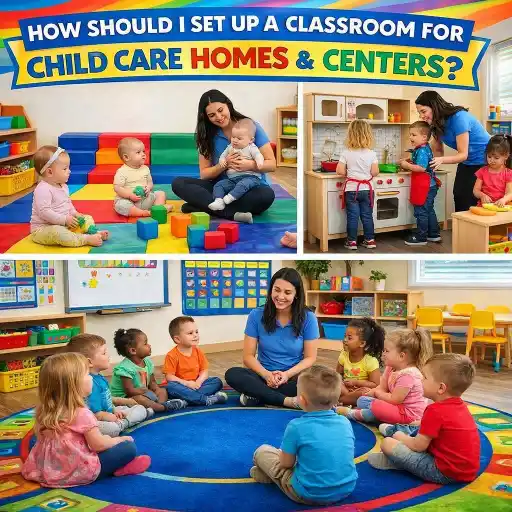 ke the day smoother for everyone: staff, families, and the #children in your care.
Why it matters:
1) Children feel safe and try new things when spaces are clear and predictable. See ideas about the room as a “second teacher” at Classroom Arrangement.
2) A good layout gives teachers freedom to observe and guide instead of chasing problems. For center design tips, check How to Design Centers That Promote Both Play and Learning.
Quick note: state requirements vary - check your state licensing agency.
1) Why should I zone my space and how do I start?
Zoning means making clear areas for different kinds of play and learning. Think of the room as a simple map with special spots for each activity. Zoning helps children find things, play safely, and move without bumping into each other. ChildCareEd calls good layout the "second teacher" because the room itself teaches routines and choices (Classroom Arrangement).
Steps to zone your space (use numbers to teach the team):
- 🔹 Pick 4–6 main zones: 1) Quiet/reading, 2) Blocks/building, 3) Art/creation, 4) Dramatic play, 5) Sensory table, 6) Table work. For center ideas see Spicing Up the Classroom: Learning Centers
 Buy Now $16.00.
 - 🔹 Use shelves, rugs, or low furniture to mark each zone so children can tell where one area ends and another begins. Montessori layout tips on shelves and rugs are helpful: Shelves, Rugs, and Trays.
- 🔹 Keep wide traffic paths so children walk without crossing work areas. Consider space rules from Guidelines for Measuring Space Buy Now $0.00.
Why this helps: zoning reduces interruptions, keeps materials tidy, and supports independence. Label each zone with pictures and a short rule so non-readers and new staff know what belongs where.
2) How do I design centers that promote play and learning?
Centers are small learning stations where children play and practice skills. Good centers balance play with clear learning goals. ChildCareEd suggests making themed centers with simple materials and clear choices (Design Centers).
Design checklist (use this as a team tool):
- 🟢 Choose a clear theme for each center (e.g., block center, art center, science table).
- 🟢 Limit choices: 2–4 activities per center to avoid overwhelm. Rotate extras weekly.
- 🟢 Make trays or kits so each activity is a complete set. This helps with clean-up and keeping pieces together — see Montessori tray ideas at Shelves, Rugs, and Trays.
- 🟢 Add simple learning goals: literacy, math, fine motor, or #sensory play prompts in each center. For planning tools, see the Infant and Toddler Weekly Lesson Plan Template Buy Now $0.00.
- 🟢 Post quick rules and a visual routine so children know how long to stay and how to clean up.
Why it matters: centers help children choose, practice skills, and grow social play. Keep materials safe, age-appropriate, and labeled so children can work with minimal adult help. This increases teacher time for observation and support.
3) How should I arrange shelves, rugs, and materials for independence?
Arrange materials so children can reach what they need and return it when done. Use low shelves, clear baskets, and picture labels. Montessori-style setups work well in many programs and reduce adult reminders (Montessori Layout Basics).
Practical steps (numbered actions you can try this week):
- 🔍 Put most-used materials on child-height shelves. Keep extras in a teacher cabinet.
- 📦 Use trays or baskets so one tray = one activity. This cuts missing pieces and makes reset easy.
- 🧭 Label with photos and words at children’s eye level; teach kids the clean-up routine with a short song.
- 🧺 Store rugs in one place and teach children how to roll and carry them safely.
- 📏 Keep aisles clear. Measure usable space against local guidelines like space measurement guidelines Buy Now $0.00.
Common mistakes and how to avoid them:
- ❌ Too many toys out at once — fix: rotate and limit choices.
- ❌ Materials too high — fix: lower shelves or move preferred items down.
- ❌ Unclear cleanup spots — fix: make labeled homes for every item and practice daily.
Small changes create big gains in independence. When children find and return items, staff get more time for teaching and observation.
4) How do I build routines, transitions, and staff habits that keep the setup working?
Routines make the room work. Clear schedules and practiced transitions help children feel calm and perform tasks. ChildCareEd has tools for schedules and transitions that can help your team (Create Your Classroom Schedule Buy Now $0.00, Organizing Materials and Routines).
Steps to a steady day (use with staff and families):
- 🔔 Make a simple visual schedule with pictures for each part of the day. Post it low for children to touch.
- 🎵 Choose one clean-up cue (song or bell) and use it every day. Keep consistent across staff.
- 👥 Assign short helper jobs: rug roller, tray checker, shelf straightener. Rotate roles.
- ⏳ Teach transition steps as mini-lessons: give 5-min and 1-min warnings and model the steps.
- 📣 Communicate with families: send a picture schedule home so drop-off is calm.
Staff habits and coaching: 1) Hold quick weekly huddles to practice one routine. 2) Do brief walk-throughs and praise correct setup habits. 3) Use easy checklists so everyone knows expectations.
Safety note: include cleaning and diapering rules from the CDC into routines to keep kids healthy — see CDC cleaning guidance and diaper steps at CDC diapering.
Conclusion: What are the first steps to try this week?
Quick plan you can use now (numbered and doable):
- 🟢 This week: pick one shelf and make it child-ready with labeled trays.
- 🟢 Next week: set up a two-item center rotation and teach the cleanup song.
- 🟢 Within two weeks: post a simple visual schedule and practice one transition daily.
FAQs (short answers):
- Q: How much space per child? A: Follow state rules and the space guidelines Buy Now $0.00.
- Q: How often rotate materials? A: Every 1–2 weeks to keep interest high.
- Q: Where to learn more? A: ChildCareEd courses like Classroom Setup for Child Care Buy Now $24.00.
- Q: What about cleaning? A: Use CDC cleaning and disinfecting steps (CDC).
Keep changes small, celebrate wins, and involve your team. Your room can become a calm, inviting place where children learn and staff feel supported. Remember: state requirements vary - check your state licensing agency. #classroom #centers #children #safety #routines
- Bienvenido! Welcoming All Families
- Children at the Wheel: Emergent Curriculum
- Pediatric RSV First Aid & CPR/AED
- CDA Bridge Bundle: Family Child Care without Portfolio Review
- CDA Bridge Bundle: Infant/Toddler without Portfolio Review
- Classroom Setup for Child Care
- CDA Bridge Bundle: Preschool without Portfolio Review
- CDA Infants/Toddlers: Classroom Setup
- Texas Director Credential
- Spicing Up the Classroom: Learning Centers
- Proporciones de Cuidado Infantil y Tamaños de Grupo por Edad en Nueva Jersey (Guía Rápida para Centros y Hogares)
- How to Open a Home Daycare in Maryland
- How to Get a Daycare License in Maryland
- DCF Training Requirements for Child Care Centers vs. Family Child Care Homes
- How can I create learning centers that work for mixed ages in Minnesota?
- Starting an In-Home Daycare in Maryland: Requirements and Tips
- How can grants and vouchers in Michigan help child care providers?
- How Many Kids Can You Watch in Maryland Without a License?
- How Many Kids Can You Watch Without a License in Texas?
- How Many Kids Can You Watch Without a License in Virginia?
- How Many Kids Can You Watch Without a License in California?
- New Mexico Child Care Ratios and Group Sizes by Age: Daycare Center Guide
- Oregon Child Care Ratios and Group Sizes by Age: Home Daycare Guide
- What are Oklahoma's child care ratios and group sizes by age for centers and homes?
- What are New York child care ratios and group sizes by age for centers and homes?
- Which Texas Daycare License Do You Need: Center, Licensed Home, or Registered Home?
- Food Program for Childcare Providers: Are You Missing Out on Meal Reimbursement?
- Childcare License Texas: Which Permit Do You Need for the Program You Want to Open?
- Rule 407 Licensing Standards: How to Find the Illinois Day Care Rule You Need Fast
- Can You Open a Daycare Just for Children With Special Needs? Licensing, Training, and Staffing Explained
