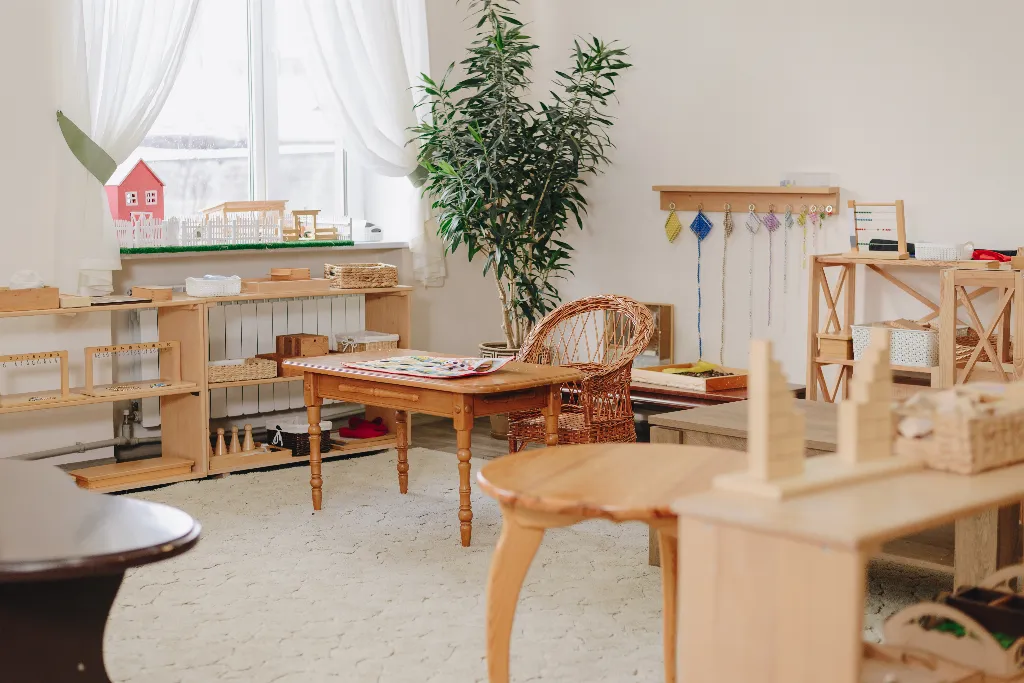
 Your #classroom can be a quiet helper for teachers and a big invitation for #play and #learning for every #child. Small changes in shelves, light, materials, and routines help children explore, make choices, and build skills. This article gives easy steps you can use today. Many of the ideas come from practical guides like Tips for designing your early childhood classroom space and How to Design Centers That Promote Both Play and Learning. State requirements vary - check your state licensing agency.
Why does designing the room matter?
1) A room is a silent teacher. The layout tells children what to do and how to behave. When zones are clear, children spend more time learning and less time asking "where?" or waiting for help. Read more about how the room becomes the “second teacher” in this ChildCareEd post.
2) A good design helps staff. With wide sight-lines and clear paths teachers can observe, support, and join play instead of constantly moving furniture. This idea is explained in Designing Learning Spaces that Inspire Curiosity, Not Chaos.
3) It supports relationships and routines. A predictable room helps children feel safe and choose their own activities—key for independence and social skills.
Why it matters:
- Children who can choose and repeat activities practice skills more deeply. - Staff can coach and extend play when the space supports independence. - Families see a calm, well-planned program and trust your work.
How should I arrange zones, furniture, and traffic so children can learn and play?
1. Define clear zones:
- 📚 Reading/quiet area
- 🧱 Blocks/build area
- 🎨 Art and sensory
- 🎭 Dramatic play
- 🔬 Math/STEAM table
2. Use low shelves and labeled bins so materials are at child height. This helps children choose and put things away by themselves. For ideas on centers and labels see How to Design Centers.
3. Keep paths wide and sight-lines open so adults can see most of the room. Avoid tall furniture in the middle of walkways. The ChildCareEd checklist in Tips for designing shows simple layout ideas.
4. Balance active and calm spaces: place noisy centers (blocks, dramatic play) away from quiet areas (books, puzzles). This lowers conflict and helps focus.
5. Rotate and simplify: limit choices at each invitation to 3–7 items. Fewer, well-chosen materials invite deeper play and learning, a tip you can find in What classroom materials best foster learning and creativity?.
What materials and center designs best support development and creativity?
1) Choose open-ended, multiuse materials. Open-ended items let children use imagination and solve problems. Examples: blocks, fabric, loose parts, clay, and recycled boxes. ChildCareEd explains these choices in this article.
2) Stock five useful categories:
- 🌊 Sensory (sand, water, play dough)
- 🧱 Building (wooden blocks, loose parts)
- 🎨 Art (paints, collage materials)
- 🔬 STEAM tools (magnifiers, droppers)
- 📚 Literacy props (books, story sacks)
3) Make provocations: small invitations that spark thinking like "Can you build a bridge for this toy car?" These are great for guided play and are featured in How can I create engaging learning centers.
4) Use simple teacher moves: observe, ask one open question, then offer a tiny challenge. Let children repeat and return to projects over days—this builds memory and skills.
5) Document learning with quick photos and short notes. That shows families how play links to goals.
How do I make the space calm, safe, and inclusive for every child?
1) Light and sound: Use natural light when possible and a low-light calm spot for rest or reading. Research on daylight shows benefits for wellbeing and focus; practical tips are in studies like natural light optimization (Natural light optimization) and in ChildCareEd’s Building a calm classroom.
2) Cozy corner: create a small, supervised calm space with a rug, pillow, feelings chart, and a sensory bottle. Teach children how to use it and keep visits short at first.
3) Safety and health: follow cleaning and supervision checklists. The CDC offers broad strategies for healthy ECE settings; see CDC Strategies for Early Care and Education. And remember: state requirements vary - check your state licensing agency.
4) Inclusion and UDL: plan for multiple ways children can engage and show learning. Universal Design for Learning gives easy ideas for offering choices, using visuals, and adding movement. See a practical guide at UDL in Preschool Science.
5) Outdoor and nature: add a nature table, container gardening, or sensory stations. Outdoor learning boosts exploration—ChildCareEd explores this in Designing Learning Spaces.
Common mistakes and how to avoid them
- ❌ Overcrowded shelves — ✅ Rotate and simplify to 3–7 items per invitation.
- ❌ No clear traffic flow — ✅ Move big centers apart and keep pathways open.
- ❌ Too many transitions — ✅ Combine steps and use visual schedules and cues.
- ❌ Ignoring diverse needs — ✅ Use low shelves, visuals, and UDL strategies; consult families and specialists.
FAQ for busy providers
- Q: How many centers should I have? A: Aim for 5–8 depending on room size and group age. Fewer centers work well for small spaces.
- Q: How often rotate materials? A: Every 1–3 weeks or when interest wanes.
- Q: How long should center time be? A: 20–40 minutes for preschool; shorter for toddlers.
- Q: Where can I learn more? A: ChildCareEd courses like Classroom Setup and many center-design articles linked above.
Conclusion: Quick checklist to try this week
- 🔹 Define and label 5–7 zones; use low shelves.
- 🔹 Add one open-ended provocation to a center.
- 🔹 Create a tiny cozy corner with 3 calm tools.
- 🔹 Turn off one bright light or add a soft lamp near quiet areas.
- 🔹 Post a simple visual schedule and practice one transition daily.
Small, steady changes turn your room into a partner for teaching. For many ready-to-use ideas and training, explore ChildCareEd resources such as How to Design Centers and Tips for designing your early childhood classroom space. You can also follow ChildCareEd on Pinterest for visual inspiration—ready-to-use room-arrangement images, activity ideas, and book lists. Your #children and team will thank you as the space becomes more inviting, calm, and full of learning.
- CDA Certification en Español: Recursos y Consejos para Educadores Bilingües
- ❄️ ¿Qué actividades al aire libre funcionan bien para los niños de Illinois en cada estación? 🌷🍂
- Actividades de Otoño Fáciles para Preescolares esta Temporada
- How can we teach children through play?
- How can learning environments support children's development?
- Canciones, juegos y preguntas de círculo para niños
- Designing Classroom Spaces That Support Learning and Play
- How can we explore sand, space, and science with young children in preschool settings?
- Why Can Fewer Toys Lead to Richer Play in the Minimalist Classroom?
- How can I create engaging learning centers for preschoolers?
- How can you design childcare spaces for flexible learning?
- How Can Early Educators Help Children Build a Lifelong Love of Learning?
- When Play Gets Messy: Why Does the Best Learning Often Look Like Chaos?
- Your Classroom Is Teaching Too: How the Environment Supports Children’s Learning
- How Can Child Care Providers Make Outdoor Learning Meaningful, Safe, and Inclusive?
- How Can Child Care Providers Design Learning Centers That Support Play and Development?
- How Can You Set Up Learning Centers in a Preschool Classroom?
- What Learning Centers Should Every Preschool Classroom Have?
- How Can Child Care Providers Make Room for Floor Projects That Grow Beyond Their Starting Area?
- How Can Learning Spaces Encourage Independent Problem-Solving?
