What if a simple greeting, shared song, or weekly gathering could help children feel that your classroom is truly theirs? Thoughtfully designed traditions give children predictable anchors, meaningful roles, and joyful memories while strengthening relationships with families and peers. To deepen your practice, explore Creating Environments that Nurture Growth and Community  Buy Now $55.00, which offers practical training on inclusive spaces, family representation, cultural responsiveness, and classroom community.
Why do classroom traditions matter for belonging?
Belonging is more than children being physically present. It means they experience themselves as valued members of the group whose ideas, identities, relationships, and contributions matter. Early learning settings are often among children’s first communities beyond home, so repeated experiences of welcome and participation can shape how they understand relationships and their own place in a group.
Traditions support this process because they combine predictability with emotional meaning. A routine tells children what happens next; a tradition communicates, “This is something we do together.” NAEYC describes rituals and traditions as experiences that can unite people, provide comfort during stress, strengthen school-family relationships, and create memories that last beyond the classroom year. Similarly, the NAEYC guidance on creating a caring, equitable community emphasizes that every member should be valued for the strengths they bring.
For busy providers and directors, traditions also offer a practical framework for building #belonging without adding an entirely new curriculum. A consistent welcome, collaborative project, or closing reflection can become a dependable thread woven through the day.
How can educators distinguish routines from traditions?
Routines organize daily life: arrival, meals, diapering, cleanup, rest, and transitions. They reduce uncertainty and help children anticipate what comes next. Traditions may grow from routines, but they carry additional symbolic or relational meaning. A cleanup song used every day can become a cherished classroom tradition when children help choose it, lead it, and connect it with caring for their shared space.
Effective traditions usually include several features:
- They occur at a predictable time or within a familiar sequence.
- They communicate a shared value, such as welcome, cooperation, gratitude, or remembrance.
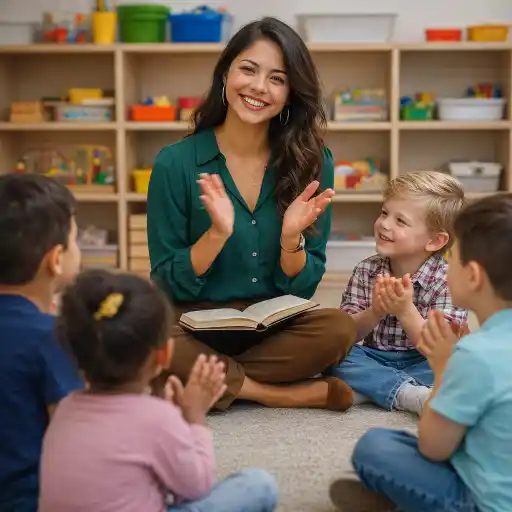
- They invite active participation rather than requiring children to watch adults perform.
- They are flexible enough to accommodate developmental, sensory, cultural, and communication differences.
- They can be repeated without exhausting staff or families.
The distinction matters because traditions should not become rigid obligations. A child may participate through movement, observation, gestures, home language, drawing, or assistive communication. The goal is not identical performance; it is meaningful membership.
Begin with one or two sustainable practices. For example, greet each child using their preferred name and offer a choice of wave, verbal greeting, sign, or high-five. Over time, children may add their own ideas, transforming a teacher-designed practice into a shared class tradition.
How can children help create and lead classroom traditions?
Children develop stronger ownership when they help shape what the group repeats. Their participation also provides valuable information about interests, comfort, and emerging social skills. Rather than deciding every detail in advance, invite children to contribute ideas and observe how they respond.
Try a simple design process:
- Identify a purpose: Decide whether the tradition will welcome children, support transitions, celebrate effort, connect families, or strengthen peer relationships.
- Offer choices: Let children select between songs, motions, materials, or names for the tradition.
- Assign rotating roles: A child may hold a visual cue, distribute materials, welcome a peer, or choose the closing question.
- Reflect together: Ask, “What did we enjoy?” “How did we help?” or “What should we try next time?”
For toddlers, leadership may look like carrying a basket or placing a picture on the schedule. Preschoolers might help create a class book, lead a movement pattern, or decide how to display a collective project. Children with disabilities should have genuine roles supported by adaptations, not merely symbolic assignments.
Shared pretend play can also become a tradition. The NAEYC account of a toddler classroom shows how an educator’s curiosity about children’s large-scale pretend play created invitations for peers to negotiate space, materials, and ideas. When adults preserve safe, open-ended play rather than correcting every unexpected use of materials, children can build community through shared meaning.
How can traditions reflect culture, language, and family life?
A tradition strengthens belonging when children recognize their lives, languages, and relationships in it. This requires more than adding occasional holiday activities. Culturally responsive practice involves learning from families, examining classroom materials, and treating children’s lived experiences as assets for curriculum planning.
Invite families to contribute in low-pressure ways:
- Ask for a favorite greeting, lullaby, story, movement game, or saying.
- Invite a family member to share a tradition in person, by recording, or through a short written description.
- Display children’s family drawings, home-language labels, or photographs with permission.
- Use flexible terms such as “family,” “caregiver,” and “grown-up” rather than assuming one family structure.
- Offer alternatives when families prefer privacy, cannot attend, or do not celebrate a particular event.
Representation should be accurate and ongoing. Avoid asking one child to speak for an entire culture or turning cultural identity into a costume or performance. NAEYC’s discussion of culture and behavior reminds educators that expectations about sharing, personal space, communication, and participation are culturally shaped. A child’s behavior may reflect a difference in cultural experience rather than defiance.
Use home languages naturally in greetings, songs, labels, and books. Never require a child to translate for others. State requirements vary - check your state licensing agency before incorporating food, collecting personal items, or sharing photographs.
How can educators make traditions inclusive and emotionally safe?
Traditions should create connection, not pressure. Some children enjoy group attention; others experience crowds, noise, touch, transitions, or public performance as overwhelming. An inclusive tradition anticipates these differences and provides multiple pathways for participation.
Consider the following supports:
- Preview the tradition with photos, objects, or a brief social narrative.
- Use a visual sequence such as “welcome, activity, goodbye.”
- Provide a quiet observation space or an option to participate from the edge of the group.
- Offer sensory alternatives, including quieter instruments, movement choices, or non-food materials.
- Keep celebrations free from ranking, forced affection, or public comparison.
- Ensure each child’s contribution is recognized without requiring a particular skill or temperament.
Psychological safety also depends on adult responses. If conflict occurs during a shared activity, pause and investigate what children are communicating. The goal is to maintain boundaries around physical safety while preserving children’s agency and dignity. A tradition can be a context for teaching children how to request a turn, solve a problem, repair harm, and invite someone into play.
Directors can support consistency by creating a one-page description of each tradition: its purpose, sequence, materials, adaptations, and family communication plan. This helps substitutes and new staff maintain the experience while leaving room for children’s ideas.
How can programs sustain and evaluate meaningful traditions?
Traditions become meaningful through repetition, but repetition alone is not enough. Teams should periodically ask whether a practice still serves children and families. A tradition that once created joy may need modification as the group’s ages, abilities, interests, or cultural composition changes.
Use a simple reflection cycle:
- Observe: Note who participates, how children communicate, and when excitement or stress appears.
- Listen: Ask children and families what they remember, enjoy, or would change.
- Adjust: Modify timing, materials, language, group size, or participation options.
- Document: Record the current version so the team can sustain it across staffing changes.
Useful indicators include smoother transitions, more peer invitations, increased child leadership, family references to classroom experiences at home, and children’s ability to describe what the group does together. These are not formal measures of developmental progress, but they offer practical evidence about connection and engagement.
Common mistakes include making traditions elaborate, scheduling too many events, treating participation as compliance, and representing culture superficially. Keep the structure simple, focus on relational meaning, and allow the tradition to evolve. A weekly family story circle may be more sustainable and influential than a large annual celebration that strains staff and excludes families who cannot attend.
Summary: What makes a classroom tradition belonging-centered?
Classroom traditions create a lasting sense of belonging when they are predictable, purposeful, participatory, inclusive, and responsive. They should help children experience three essential messages: “There is a place for me,” “I have something meaningful to contribute,” and “People here care about one another.”
- Start small with one daily or weekly tradition your team can sustain.
- Connect the tradition to a value such as welcome, cooperation, or care.
- Invite children to design, lead, and revise it.
- Reflect family cultures and home languages throughout the year.
- Provide flexible participation and protect emotional and physical safety.
- Use observation and family feedback to keep the practice relevant.
The most memorable traditions are rarely the most expensive or elaborate. They are the repeated moments in which children are greeted by name, trusted with responsibility, invited into play, and recognized as essential members of the community. For additional professional learning, explore Supporting Social Learning: Creating Classrooms that Care Buy Now $35.00, which focuses on relationships, community building, problem-solving, and open dialogue.
References: NAEYC, Rituals and Traditions; NAEYC, Creating a Sense of Belonging in a Toddler Classroom; NAEYC, Creating a Caring, Equitable Community of Learners; Head Start, Creating a Caring Community; ChildCareEd, How can I create classroom traditions that children remember for years?; Penn State Better Kid Care, Creating a Sense of Place.
- 45 Hour Child Growth and Development
- Beyond the Classroom: Connecting Families to Essential Services
- Bienvenido! Welcoming All Families
- Teach with Respect!
- 45 Hour School Age Methods and Materials
- CDA Home Visitor Credential Birth to 5
- Texas Director Credential
- Supporting Families and Caregivers in Language and Literacy
- Giggles and Learning: How Telling Jokes Can Boost Your Classroom’s Morale!
- Building a Back-to-School Routine: Balancing Homework, Extracurriculars, and Family Time
- Tiny Tots, Big Learning: Crafting Curriculums for the Littlest Learners!
- Deck the Halls with Emotional Wellness: Family Traditions That Foster Connection
- How Neurodivergent Kids Shine During the Holidays
- CDA Certification en Español: Recursos y Consejos para Educadores Bilingües
- 💛🧩 ¿Cómo puedo hacer que mi enseñanza sea inclusiva para los niños con autismo?
- 👶 ¿Cuáles son las proporciones y grupos requeridos en Dakota del Norte? 🏫
- Recursos en Español sobre el Sueño Seguro del Bebé
- 10 Ejemplos de Cómo la Cultura Influye en el Desarrollo Infantil
- Proporciones de Cuidado Infantil y Tamaños de Grupo por Edad en Maryland (Guía Rápida para Centros y Hogares)
- Proporciones de Cuidado Infantil y Tamaños de Grupo por Edad en Nueva Jersey (Guía Rápida para Centros y Hogares)
- Proporciones de Cuidado Infantil y Tamaños de Grupo por Edad en Virginia (Guía Rápida para Centros y Hogares)
- Canciones, juegos y preguntas de círculo para niños
- How can child care programs celebrate Latin rhythms and culture with young children?
- What Makes a Great Home Daycare? 10 Things Parents Notice First
- Why Do Bilingual Classroom Activities Matter for Dual Language Learners?
- Social Studies Activities for Toddlers: Start With Home, Helpers, and Their Little World
- How Can We Celebrate Every Family and Create a Classroom Where Everyone Is Represented?
- How Can Classroom Traditions Create a Lasting Sense of Belonging?
