Before a child can write a letter, they need chances to guide their hands, eyes, and ideas together—and a friendly worm’s journey to a leaf is a delightful place to begin. Try playful fall paths alongside Language and Literacy Foundations in Pre-K  Buy Now $16.00, which can help you strengthen everyday strategies for children’s communication and emerging literacy. Read on for practical ways to turn path play into purposeful, low-pressure pre-writing practice.
Why do path games matter before children write?
Following a line is more than pencil practice. When preschoolers track a route from a worm to its leaf home, they coordinate vision and movement, adjust the direction and pressure of their marks, and practice staying with a task. These experiences contribute to visual-motor integration and the hand control children will use for drawing and, later, early writing. The goal is not to produce perfect lines or force a particular pencil grasp; it is to offer meaningful chances to explore controlled movement.
Path games also invite language and imaginative thinking. Children can plan where the worm should go, describe a turn, predict what happens at the end, and tell a story about the destination. These conversations make the activity a small literacy experience as well as a motor invitation. For a broader view of how developmental foundations connect to writing readiness, see why pre-writing skills still matter in early childhood.
Fall themes offer familiar, concrete reasons to make marks: a worm needs shelter, a leaf has blown away, or a squirrel is collecting food. A playful purpose can help children persist, while choice and encouragement protect the activity from feeling like a test. Providers can use short path games in a small group, center, or transition, adapting them to the children in front of them.
How can you set up a worm-to-leaf path activity?
Keep the setup inviting and flexible. Draw or print a simple start-and-finish path, then let children choose how to travel it. Begin with a broad, straight line; move to curves, waves, and turns only when the child appears comfortable. A finger can explore the path before a crayon or marker is introduced. Some children may prefer to move a toy worm along a large route on the floor or table.
- Offer large paper, a washable marker or crayon, and a picture of a worm and leaf.
- Invite children to trace first with a finger, then choose a tool—or simply guide a toy worm.
- Model a slow, relaxed movement and describe it: “The worm follows the curve toward the leaf.”
- Use open-ended prompts: “Where might the worm go next?” or “Would you like a straight path or a wiggly one?”
- Keep the activity brief and let the child stop, restart, or invent a different route.
For ready-made ideas that build from easier lines toward winding routes, explore ChildCareEd’s Falling Leaf Paths: Pre-Writing Tracing for Ages 3–5 Buy Now $2.00. A teaching guide such as the featured Wiggly Worm Path Teaching Guide can also help staff organize variations for different ages and levels of readiness. Keep the emphasis on exploration, not completion.
Which skills do children practice while following a path?
Path games bring together several foundational skills. As children look ahead and move a finger or tool along a route, they practice visual tracking and eye-hand coordination. Staying within a wide path may encourage steadier movement and attention to boundaries. Grasping and maneuvering a crayon provides a chance to use small hand and finger muscles, although children also benefit from varied play—building, squeezing, drawing large marks, and manipulating materials.
These are connected developmental experiences, not a checklist that every child must master in a fixed order. Research and practitioner guidance describe pre-writing as broader than pencil control: posture, strength, coordination, motor planning, and visual skills all contribute. For example, handwriting readiness skills built through play highlights the range of foundations that support later writing.
- Visual tracking: looking along the route from start to destination.
- Motor planning: deciding how to move through a turn or curve.
- Hand control: making a mark with a tool or guiding a finger with intention.
- Language: naming directions and narrating the worm’s journey.
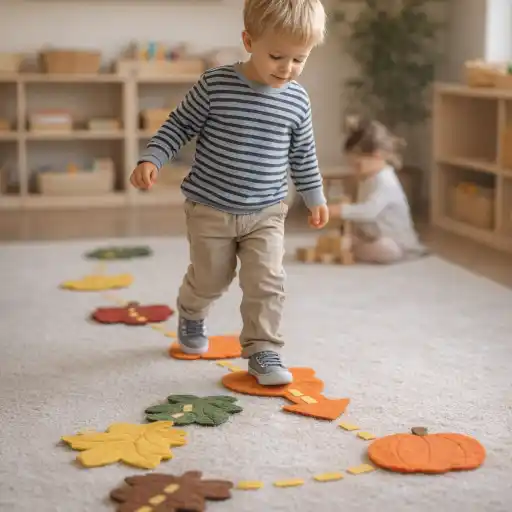
Children do not need to stay perfectly on the line for the activity to be worthwhile. A wide path, a hand-sized route, or a toy-based version can keep participation successful and joyful. The playful act of tracking a winding route supports emerging #writing without asking children to perform formal handwriting before they are ready.
How can you adapt the activity for different learners?
Offer a range of entry points rather than one “correct” version. A child who is new to path play might walk a toy worm along a broad route or use a finger on a large floor path. Another child may choose a crayon to follow a short curve, while a more experienced child invents a route and draws the worm’s destination. Reduce visual clutter, provide a thicker tool, or stabilize the paper with a clipboard or non-slip surface if these adjustments make access easier.
Let children select their tool and level of challenge. Some may enjoy tracing; others may prefer making a route with playdough, yarn, or blocks, then telling an adult where the worm is headed. This keeps the purpose—planning, direction, and mark-making—while honoring different sensory preferences and motor experiences. These ideas complement hands-on approaches described in hands-on ways to practice pre-writing lines.
- Make the path wider, shorter, or simpler when a child shows signs of fatigue or frustration.
- Offer a vertical surface, such as an easel, for a large-scale route.
- Use descriptive encouragement: “You slowed down at the turn,” rather than “Stay on the line.”
- Provide a non-pencil option, such as moving a toy, finger-tracing, or building the path with dough.
Watch the child’s engagement, not just the marks. Adaptation is responsive teaching, not lowering expectations. When concerns about development persist across activities, document observations and discuss them with the family and appropriate specialists.
How can path games become rich literacy experiences?
A worm’s route can become a story, a conversation, and an invitation to read and write for a reason. Before starting, ask children what a worm might look for in fall. During the activity, introduce words such as curve, turn, under, and toward. Afterward, invite each child to name the worm, dictate a sentence about its journey, or draw a leaf home. The adult can write the child’s words beneath the picture, connecting oral language with print without requiring independent spelling.
These simple exchanges help children hear, use, and connect vocabulary to an experience. They also create space for children who communicate in different ways: a child might point, gesture, use a home language, dictate, or draw. Build on their ideas and repeat key words naturally. The linked Language and Literacy Foundations in Pre-K course Buy Now $16.00 offers further professional learning on supporting communication and early literacy in everyday classroom experiences.
Seasonal context can extend the learning. Take a short walk to notice fallen leaves, compare colors, and wonder where small creatures might shelter. Then revisit the path and let children retell or change the story. This approach connects a motor activity with observation, imagination, and shared meaning—important ingredients in an engaging preschool classroom.
What common pitfalls should providers avoid?
Path activities are most useful when they remain playful and appropriately challenging. One common pitfall is treating them as handwriting tests: correcting every wobble or expecting precise pencil control can turn an invitation into a source of pressure. Instead, notice effort, decisions, and storytelling. The child’s route does not need to match the adult’s model to count as learning.
Another pitfall is relying only on paper tracing. Path sheets can be a convenient option, but they work best alongside movement, sensory exploration, drawing, and hand-strengthening play. The article simple activities that support fine-motor development offers further examples for embedding practice across routines. Avoid making the path too narrow or long at first, and offer breaks when attention or hands tire.
- Do not demand a specific grasp or perfect line-following; use the child’s comfort and engagement as guides.
- Do not compare children’s work; development and interests vary.
- Supervise any small loose materials, and choose age-appropriate, non-toxic tools.
- Keep activities optional and short; children can participate by observing, narrating, or moving a toy.
When a child has ongoing difficulty across everyday fine-motor or visual-motor tasks, avoid diagnosing from a single activity. Record what you observe, communicate respectfully with the family, and follow your program’s referral process. State requirements vary - check your state licensing agency.
Conclusion: How do fall path games prepare children for writing?
Fall path games give children a meaningful, enjoyable way to practice coordinated looking and movement before formal handwriting becomes the focus. As a worm follows a winding trail to its leaf home, children can explore visual tracking, motor planning, hand control, and language—all through a story they help create. Progress does not depend on perfect tracing; it grows through supportive repetition, choice, and developmentally responsive adaptations.
Start with a broad, simple route and let children move through it with a finger, toy, crayon, or material of their choice. Add conversation, storytelling, and child-dictated captions to connect movement with early literacy. Keep observing what engages each learner, and offer varied ways to participate. For a deeper foundation in children’s oral language and emerging literacy, explore ChildCareEd’s Language and Literacy Foundations in Pre-K Buy Now $16.00. With a little imagination, a small worm’s journey can become a welcoming first step toward confident #preschoolers who see marks as a way to express ideas.
Additional ChildCareEd learning: Science of Reading Foundations in the Pre-K Classroom Buy Now $16.00; Assessment of Language and Literacy Skills Buy Now $24.00; Reading Aloud and Storytelling Buy Now $16.00.
- Science of Reading Foundations in the Pre-K Classroom
- Writing Training Goals & Objectives
- Birth to Five CDA Credential with Portfolio Review
- 45 Hour Infant and Toddler Methods and Materials
- Working Together: Teachers & Preschoolers
- CDA Bridge Bundle: Family Child Care without Portfolio Review
- CDA Bridge Bundle: Infant/Toddler without Portfolio Review
- CDA Bridge Bundle: Preschool without Portfolio Review
- 45-Hour Infant and Toddler Curriculum
- Child Care Orientation
- CDA Certification en Español: Recursos y Consejos para Educadores Bilingües
- Actividades de Motricidad Gruesa que Desarrollan el Equilibrio, la Coordinación y la Fuerza
- Actividades de Otoño Fáciles para Preescolares esta Temporada
- Cómo Trabajar en el Cuidado Infantil en Carolina del Norte: Requisitos y Pasos
- Pumpkin, Leaves, and Apples: Fall Activities for Preschoolers
- Calabazas, hojas y manzanas: actividades de otoño para preescolares
- Celebrando la amistad en el cuidado infantil durante el Día de los Mejores Amigos
- Canciones, juegos y preguntas de círculo para niños
- Count It, Sort It, Find It! Fall Math Games for Preschoolers
- How Can You Plan an Engaging Fall Curriculum for Preschoolers?
- How Can Simple Fall Activities Support Kindergarten Readiness Through Play?
- Why Do Some Preschoolers Struggle to Listen and Follow Directions During Group Games?
- How Can a Pumpkin Delivery Game Turn Fall Movement Into Real Problem-Solving?
- How Can Missing-Number Games Strengthen Early Math Confidence?
- How Can Fall Movement Games Rescue Rainy Recess in a Small Child Care Classroom?
- How Can Leaf Piles Become Preschoolers’ Next Great Story Adventure?
- How Can Fall Path Games Help Preschoolers Prepare to Write?
- How Can You Build a Pretend Animal Burrow That Combines Fall Movement With Route Planning?
- How Can Woodland Mail Make Fall Dramatic Play a Meaningful Writing Experience?
- What Disappeared from the Fall Tray? How Can Preschool Detective Games Build Memory?
