Young children build the hand strength, coordination, and dexterity needed for writing, self-care, and classroom participation through frequent, playful practice. This article gives child care providers and directors practical, evidence-informed strategies for supporting fine motor development with low-cost activities that can be incorporated into learning centers, transitions, outdoor play, and everyday routines. It includes ideas such as manipulating playdough, using tongs and clothespins, stringing large beads, completing puzzles, practicing with child-safe scissors, and participating in dressing and feeding tasks. To strengthen staff understanding of how children’s skills develop across different ages, explore ChildCareEd’s self-paced online course 45 Hour Growth and Development Birth–Age 12 ONLINE  Buy Now
 $399.00$275.00, which covers developmental domains, milestones, play, learning materials, assessment, and strategies for supporting individual needs. Remember to adapt materials to each child’s age and abilities, supervise small objects carefully, and check your state licensing agency for applicable safety requirements.
Why it matters
1) Fine motor competence predicts school readiness in early childhood and supports handwriting, scissor use, and independent self-care — skills shown to link with later academic and social success (see the ChildCareEd guidance on building fine motor skills and the research summaries at Helping children develop Fine Motor Skills and the CDC milestone resources at CDC Milestones).
2) Practice is cumulative: short daily practice and purposeful embedding across routines produce stronger, transferable gains than occasional drills. The evidence-based framing of motor development (fine + gross interactions) is summarized in a recent review of motor competence and in practitioner resources such as evidence-based guides.
1) What simple, low-cost activities reliably build fine motor strength?
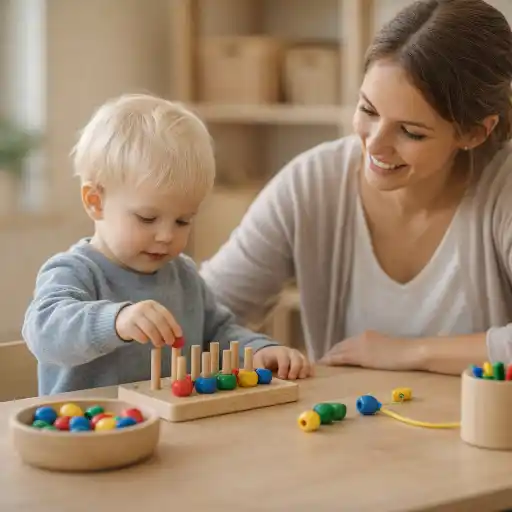
- 🔹 Threading & lacing: large beads, pipe cleaners, or pony beads for pattern work. See the ChildCareEd list of 25 simple ideas at What are 25 easy fine motor activities. #preschool
- 🧵 Sewing & plastic-needle cards: running stitch cards or burlap for bilateral hand use and hand-eye coordination.
- ✂️ Cutting practice: snipping paper strips, cutting playdough, and guided scissor paths (pair with the sample lesson plan Button, Bead, and Build! Buy Now $0.00).
- 🎯 Tweezer/clothespin transfers: move pompoms or clothespins between containers for pincer strength — inspiration in ChildCareEd tubs and in tweezer activities from occupational therapy blogs like OT Mom.
- 🥣 Scoop, pour, spray: sensory bins for bilateral coordination; spray bottles for sustained hand endurance — see sensory bottle and spray ideas on ChildCareEd: Make Your Own Sensory Bottles Buy Now $0.00.
- 🍝 Playdough & manipulative task cards: pinch, roll, and stamp to build intrinsic hand muscles (ChildCareEd task boxes and playdough cards are handy starters).
- 🧩 Puzzles & construction: small-piece puzzles and snap-blocks target precision and wrist rotation.
- 🎨 Stickers & peel-off art: fine peeling and placing practice that children love.
- 🍽️ Everyday routines: encourage self-feeding with utensils, buttoning, zipping, and shoe practice — practical practice is everywhere (see How to incorporate fine motor skills into daily activities).
- 🔎 Nature & sorting hunts: use tweezers or tongs to collect small natural items and sort by color or size (adapted from activity collections like Growing Hands-On Kids: Growing Hands-On Kids).
2) How can I weave fine motor practice into centers and daily routines?
- 🧭 Choose 3–4 rotating centers per day: 1) Fine Motor Table, 2) Sensory Bin (scoop/transfer), 3) Cutting & Glue, 4) Playdough/Construction. Rotate groups every 12–20 minutes to match attention spans (see organizational tips at ChildCareEd activity list).
- 📦 Prepare labeled tubs: place 1 activity + a laminated picture instruction card in each tub so children can be independent and staff can supervise efficiently. Use simple checklist goals on each tub (e.g., "thread 5 beads").
- 🔖 Use goal-focused visuals: attach the targeted skill to each center (e.g., "pincer grasp" or "scissor control") so staff link play to learning objectives (ChildCareEd task cards and lesson plans model this approach).
- 🧯 Safety and licensing: remove small pieces for mixed-age rooms and store them separately. State requirements vary - check your state licensing agency about age-specific material restrictions and supervision ratios.
- 🧰 Prep a weekly rotation: keep a cart with 1–2 new activities to introduce each week. Keep inexpensive materials—clothespins, pom-poms, beads—rotated to avoid boredom.
- 📊 Short documentation: track which children used which tub each week with a simple checklist or anecdotal note. The ChildCareEd lesson plan and task box resources can be adapted for progress tracking.
3) How do I adapt activities for different ages, abilities, and diverse learners?
- 🔧 Level of difficulty (3-step approach):
- Beginner: large beads, jumbo tweezers, thick crayons, and wide cutting lines.
- Intermediate: medium beads, standard tweezers, regular scissors, and two-step lacing.
- Advanced: small beads, precision tweezers, fine cutting tasks, and timed puzzles.
- 🧑🤝🧑 Provide adult modeling and hand-over-hand only when needed; fade support quickly so children build independence. Occupational therapy blogs (e.g., OT Mom) provide adaptation ideas and progressions.
- ♿ Use simple accommodations: clip-on grips on pencils, angled surfaces (vertical easel for writing), cushions for optim
 al wrist position, and seating supports to promote good wrist and shoulder posture.
 - 🧾 Differentiate with choice: offer three difficulty levels in every tub; children self-select and move up when comfortable—this prevents frustration and encourages challenge.
- 📣 Screen and refer when concerned: use milestone checklists (CDC) and program screens (BRIGANCE, local screening tools) to decide whether a referral is needed. If a child shows persistent difficulty despite tailored practice, consult parents, pediatricians, or early intervention services.
4) How should I assess progress and set measurable goals?
Make assessment practical, routine, and tied to functional outcomes. Use quick, observable measures and link them to classroom tasks.
- 📌 Define 1–2 target skills per child per month (e.g., pincer grasp for bead threading; scissor control for cutting a circle). Use SMART framing: Specific, Measurable, Achievable, Relevant, Time-bound.
- 📝 Use simple checklists and work samples: 1) brief weekly checklist of tubs used, 2) photo of completed work, 3) timed or counted trials (e.g., "threads 8 beads in 60 seconds"). ChildCareEd lesson templates can be adapted into documentation forms (sample lesson plan Buy Now $0.00).
- 🔍 Reference standardized milestones when necessary: consult the CDC milestone pages (CDC Milestones) and screening instruments like BRIGANCE for formal screening information. For classroom-level monitoring, low-burden trackers are usually sufficient.
- 🤝 Share progress with families: show photos, quick checklists, and one or two home activities. Encourage parents to practice targeted, short tasks at home (e.g., stringing cereal loops at snack time).
- 📈 Review monthly and adapt: if a child is plateauing, change materials (larger/smaller), increase frequency, or consult OT resources; if a child accelerates, increase challenge or add a new target skill.
5) What are common mistakes and how do I avoid safety or instructional pitfalls?
Avoid frustration, boredom, and unsafe practice by planning difficulty, supervision, and purposeful embedding.
- ❗ Mistake: Too-hard tasks → frustration. Fix: start large and progress in small steps. Offer three difficulty tiers in every tub so children self-select success.
- ❗ Mistake: Only worksheets or passive tracing. Fix: prioritize hands-on manipulation; use pencil tasks as short follow-ups to play-based practice (see the practice-first approach in ChildCareEd resources).
- 🧯 Safety pitfalls: small pieces are choking hazards. Fix: separate small-piece activities for under-3s, supervise closely, and store tiny materials securely (ChildCareEd safety notes recommend checking licensing rules: state requirements vary - check your state licensing agency).
- 📱 Overreliance on screens: replace idle screen time with tactile play (playdough, bead stringing) — digital tracing apps can supplement but should not replace hands-on practice (research summaries caution against excess screen time for motor development: motor skill review).
- ✅ Staffing & transitions: teach a 30-second demo, keep picture instructions, and use a clean-up song to reduce staff burden and make centers sustainable. ChildCareEd center organization articles include sample rotation plans and task box ideas (how to incorporate fine motor skills).
Summary
Action steps you can start this week:
- 📋 Pick 3 activities from the ChildCareEd 25-list and make 3 labeled tubs with picture instructions.
- ⏱️ Run 12–20-minute rotations daily and track one target skill per child each week.
- 🔁 Grade materials (easy/medium/hard) and adapt using grips, tweezers, or larger pieces for success.
- 📣 Share a photo and one home activity with families weekly; consult CDC milestones or BRIGANCE if concerns arise.
- 🧡 Start small, celebrate incremental progress, and keep play joyful — consistent short practice wins.
For ready-made lesson plans, printable task cards, and activity PDFs, begin with ChildCareEd resources: 25 simple activities, the sample lesson plan Buy Now $0.00, and sensory/spray activity ideas like sensory bottles Buy Now $0.00. Seasonal projects can be especially motivating for children; see a set of holiday-themed craft ideas that target pincer grasp, scissor control, and bilateral coordination. You're doing important, practical work — build it into routines, keep tasks playful, and document small wins.
Children arrive with a wide range of skills; good instruction meets them where they are and scaffolds progress. Use graded task levels, alternate materials, and adult support strategically. Use a rotating set of hands-on tasks that target pincer grasp, in-hand manipulation, bilateral coordination, and wrist stability. Numbered and picture-supported tubs help children self-select activities and staff implement them consistently. Make practice predictable, brief, and embedded. The classroom rhythm matters more than long, infrequent sessions. For an easy calming activity that supports sustained hand use and sensory exploration, see our step-by-step instructions for making sensory bottles: step-by-step instructions for making sensory bottles. Below are clear steps you can implement this week.
- 45 Hour Child Growth and Development
- Beyond the Classroom: Connecting Families to Essential Services
- 45 Hour Preschool Methods and Materials
- 45 Hour School Age Methods and Materials
- Texas Director Credential
- Building Bridges for Dual Language Learners
- Engaging Families for Child Success
- Environments That Inspire Independence and Exploration
- Terrible Two's Can Be Terribly Fun!
- Pencil and Paper Activiites
- Free Childcare Training
- Identifying Developmental Milestones in Children
- Montessori for Toddlers: Fostering Independence and Learning
- Pumpkin Spice and Sensory Delight: Easy Autumn Sensory Bins for Early Learners
- DIY Snow Globes: The Fine Motor Craft That’ll Keep Kids (and Adults) Busy for Hours
- Increasing Fine Motor Skills in the Early Childhood Education Classroom
- How motor skills shape child development and creative ways educators can foster them.
- CDA Certification en Español: Recursos y Consejos para Educadores Bilingües
- 💛🧩 ¿Cómo puedo hacer que mi enseñanza sea inclusiva para los niños con autismo?
- How Do Art Activities Support Cognitive Growth in North Dakota Preschoolers?
- How can North Dakota classrooms build toddler fine motor skills with simple activities?
- How can childcare providers support fine motor development with simple activities?
- How can childcare programs meaningfully explore Japanese culture with young children?
- What fun, practical activities help build fine and gross motor skills in early childhood classrooms?
- Why Do Pre-Writing Skills Still Matter in Early Childhood?
- How Can Child Care Providers Strengthen Fine Motor Development Through Play and Daily Routines?
