“I wanted the same job again” is a familiar classroom moment—and an opportunity to teach flexibility without dismissing a child’s disappointment. A thoughtful rotation system helps children practice taking turns, adapting to change, and contributing to their classroom community; Brighter Futures: Social Emotional Development  Buy Now $16.00 offers deeper learning about emotional development and responsive interactions that can strengthen your everyday guidance.
Why does a job rotation matter beyond getting classroom tasks done?
A helper role may look small to an adult, but it can feel significant to a child. Line leader, snack helper, or book organizer can bring visibility, choice, and a sense of competence. When a child is asked to try a different role, the moment can also involve waiting, managing disappointment, and considering what could be rewarding about another responsibility. These are social-emotional skills practiced in the context of real classroom life.
Rotation is not meant to make children accept every change cheerfully or to treat strong feelings as a problem. A child may genuinely love the same role and feel disappointed when it is another person’s turn. Acknowledge that preference while keeping the rotation understandable and fair. The goal is to help children name feelings, understand the plan, and identify a next step—not to demand instant compliance.
Meaningful responsibilities can also nurture belonging: children see that their actions support a shared space. As NAEYC’s resources on routines and transitions note, daily routines are part of building supportive classrooms. A rotation board can make participation visible while creating a gentle, repeated way to practice #flexibility, #belonging, #responsibility, #self-regulation, and #cooperation.
How can you prepare children for a new fall job rotation?
Introduce the rotation before the first change, not in the middle of a disappointment. Explain that classroom jobs help everyone care for the group and that each child will have opportunities to try different roles. Use a visual board with children’s photos or names and clear job pictures. For a fall theme, roles might include leaf collector for an art activity, book helper, materials helper, or plant caretaker—provided every task is safe, appropriate, and supervised.
Teach each job directly. Demonstrate the steps, show where materials belong, and invite children to practice with you. A visual job board is a reminder, not a substitute for teaching. ChildCareEd’s Toddler Classroom Helper Chart Buy Now $1.99 provides a visual starting point that educators can adapt to their group and routines.
- Keep the rotation schedule predictable, using a daily or weekly rhythm that fits children’s attention and familiarity with the tasks.
- Use pictures and simple language so children who are not reading yet can understand the board.
- Provide enough repetition for children to learn a role before rotating, rather than changing assignments so often that every job feels new.
- Make room for flexibility: a child may need a supported introduction, a partner, or another accessible way to contribute.
Consistency can make change feel safer. Children can learn that the exact job may vary while the larger routine—everyone gets a chance to help—remains dependable.
What can teachers say when a child wants the same job again?
Start with connection, not correction. Acknowledge what the child wanted and say the plan clearly: “You really liked being snack helper. Today it’s Maya’s turn, and your job is book helper.” This validates the child’s preference without promising that the preferred role will be available immediately. Pause afterward; children may need time to process before they can consider an alternative.
Offer a useful choice within the rotation rather than reopening the whole assignment: “Would you like to put the books on the shelf first, or carry the basket with me?” If a child is too upset to choose, reduce language, stay nearby, and return to the next step when they are ready. A social story or brief practice scenario can help children rehearse the idea that turns change and feelings are allowed.
Model flexible thinking aloud: “I hoped to be the garden helper today, too. I can help with the art materials now, and I’ll have another turn later.” This communicates that flexibility is a skill adults practice—not a demand placed only on children.
- “You wanted that job. It’s hard to wait when you enjoy it.”
- “Let’s check the board to see what your role is today.”
- “You can feel disappointed and still decide how to take part.”
- 🎭 “Let’s ask our puppet what it could do when its favorite job is someone else’s turn.”
Notice effort specifically: “You felt disappointed, checked the board, and started your new job.” That feedback makes the learning visible without requiring a cheerful response.
How can the rotation stay inclusive, fair, and developmentally appropriate?
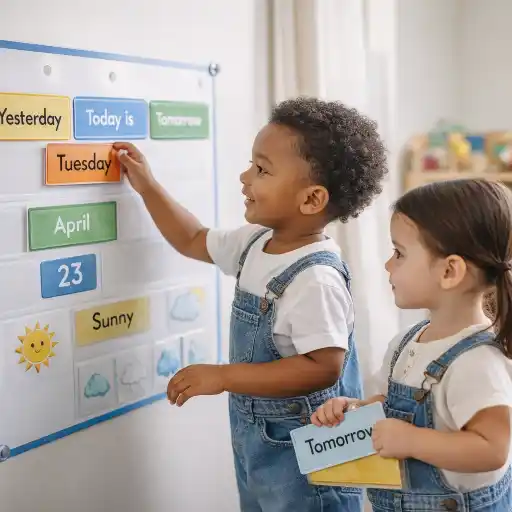
Fairness does not require every child to perform every task in exactly the same way. Consider children’s motor skills, communication, sensory preferences, interests, and need for predictability. A child might point to the schedule, choose a book, carry one light item, or complete a role with a peer. These are meaningful contributions when the child has agency and the role supports the group.
Make assignments transparent and avoid giving popular roles repeatedly to children who are quick to volunteer or easiest for adults to direct. At the same time, do not rotate so rigidly that a child loses a needed accommodation or is pushed into an overwhelming task. Offer a preview of changes, use photos or gestures, and allow extra processing time. Families can share helpful context about a child’s interests, communication, and approaches to helping.
Keep adult responsibilities with adults. Children should not handle chemicals, sharp or heavy tools, hot liquids, or tasks that compromise supervision, sanitation, or food safety. Roles such as snack helper must follow your program’s food-handling procedures. State requirements vary - check your state licensing agency.
Directors can support consistency by helping teams agree on safe roles, shared language, and accessible visual cues. Review the board periodically: Are all children offered a genuine opportunity? Do the jobs serve a real classroom purpose? Is the system supporting participation rather than rewarding compliance?
What common mistakes can make job rotation harder?
Even a well-intentioned chart can create unnecessary stress if it is treated as a rigid rule or introduced without preparation. A child who protests is not necessarily being selfish or defiant; the reaction may reflect attachment to a familiar role, uncertainty about the next assignment, or a need for more time. Look at the task and adult approach before concluding that the child needs to “learn a lesson.”
- Changing assignments without warning: Preview the rotation and point to the visual board before the change.
- Rotating too quickly: Give children enough practice to understand each responsibility; adjust the interval to their needs.
- Using jobs as rewards or punishments: Keep roles part of ordinary community participation, not a prize for behavior.
- Expecting identical participation: Adapt the materials, steps, or communication supports while preserving a meaningful contribution.
- Overprompting or taking over: Demonstrate, give one cue, and pause so children can try independently where appropriate.
Use observation to improve the system. Note what happened before a child became upset, what the child communicated, and which support helped. If the same job repeatedly causes difficulty, consider whether it is too long, unclear, inaccessible, or poorly timed. Small adjustments can make the rotation more welcoming for the whole group.
Conclusion: How can a job board turn “I wanted the same job again” into learning?
A thoughtful fall job rotation combines predictability with supported change. Teach roles explicitly, use a clear visual board, acknowledge disappointment, and coach children toward a manageable next step. Offer accessible ways to contribute and keep safety, supervision, and children’s dignity at the center.
When a child says, “I wanted the same job again,” the answer need not be a lecture or an immediate exception. It can be a warm recognition of the feeling, a reminder of the fair rotation, and an invitation to try today’s role—with reassurance that another opportunity will come. For practical classroom materials, explore the Classroom Job Rotation Board and Practice Stories Buy Now $1.99. For a deeper foundation in emotional growth and supportive interactions, consider Brighter Futures: Social Emotional Development Buy Now $16.00.
What related training can help strengthen this practice?
- Brighter Futures: Social Emotional Development Buy Now $16.00 — explores emotional development and appropriate interactions with young children.
- Supporting Children’s Independence Buy Now $24.00 — focuses on fostering autonomy, self-regulation, and practical classroom skills.
- Self-Regulation & Change: Helping Children Cope Buy Now $16.00 — covers routines, transitions, and strategies for supporting children through change.
- Supporting Social Learning: Creating Classrooms that Care Buy Now $35.00 — offers strategies for community building, relationships, and children’s problem-solving.
- Moving About the Classroom: Effective Transitions for Everyday Buy Now $35.00 — addresses predictable routines and developmentally appropriate transitions.
- Moving About the Classroom: Effective Transitions for Everyday
- Easy Steps to Resume and Interview Success
- What Makes Me Special: An Overview of Autism and ADHD
- The ABCs of Behavior: Turning Challenges into Learning Opportunities
- Job Search Basics
- Children at the Wheel: Emergent Curriculum
- Pediatric RSV First Aid & CPR/AED
- CDA Bridge Bundle: Family Child Care without Portfolio Review
- Lesson Planning for Preschoolers
- Every Moment Matters: Schedules and Transitions
- CDA Certification en Español: Recursos y Consejos para Educadores Bilingües
- Proporciones de Cuidado Infantil y Tamaños de Grupo por Edad en Nueva Jersey (Guía Rápida para Centros y Hogares)
- Proporciones de Cuidado Infantil y Tamaños de Grupo por Edad en Virginia (Guía Rápida para Centros y Hogares)
- Cómo Trabajar en el Cuidado Infantil en Carolina del Norte: Requisitos y Pasos
- Fall Circle Time Ideas for Preschool and Daycare
- Celebrando la amistad en el cuidado infantil durante el Día de los Mejores Amigos
- How do I build a fall routine that actually sticks in my classroom?
- Why Do Classroom Management Strategies Fail With 3-Year-Olds—and What Works Instead?
- How Can Smoother Classroom Transitions Reduce Challenging Behavior?
- How Do Classroom Jobs Build Responsibility and Confidence in Toddlers?
- How Can You Adapt Toddler Classroom Jobs for Different Abilities?
- How Can Fall Classroom Activities Teach Positive Behavior?
- How Can Fall Cleanup Become a Real-Life Sorting and Teamwork Activity?
- How Can Educators Help Children Shift From Loud Fall Games to Quiet Rest Time?
- How Can One Cardboard Box Become Four Fall Dramatic-Play Settings?
- How Can You Help Children Return to Familiar Classroom Routines After a Fall Festival?
- Before You Change the Fall Theme, How Can You Tell When Children Need More Time to Explore?
- How Can Preschool Plant-Care Jobs Bring the Garden Indoors in Late Fall?
- How Can Fall Classroom Jobs Help Children Practice Flexibility?
- How Can You Help Children Return to a Fall Project Across Several Days?
