Fall activities can do more than fill a seasonal bulletin board: they can give children meaningful practice with calming down, cooperating, and solving problems. For practical strategies you can carry into daily routines, explore ChildCareEd’s From Tantrums to Triumphs: Equipping Preschoolers with Self-Regulation Skills Buy Now $25.00, which focuses on engaging ways to build self-control and confidence. You can also deepen your positive-guidance toolkit with Viewing Guidance in a Positive Light  Buy Now $24.00, a three-hour online course on developmentally appropriate strategies and classroom planning.
With a little intention, pumpkins, leaves, stories, and outdoor play can become opportunities to teach the behaviors that help children feel capable and connected.
Why do fall activities offer a useful way to teach positive behavior?
Children learn social and emotional skills through relationships, repeated practice, and responsive interactions—not simply by hearing adults name the rules. A fall activity gives those skills a concrete purpose: children can share paint while decorating a pumpkin, take turns describing a leaf, or use breathing to pause during an exciting outdoor game. These experiences support positive behavior because they make cooperation, communication, and self-regulation visible and practicable.
Positive behavior is not the same as quiet compliance. It includes expressing feelings safely, asking for help, respecting others’ space, persisting through frustration, and participating in a group. Head Start describes social-emotional development as including relationships, emotional expression, and managing emotions; educators can support these abilities through warm interactions, intentional environments, and individualized practices.
Seasonal activities also invite flexibility. Not every child celebrates the same holidays, enjoys the same textures, or feels comfortable in a large group. Offer autumn and nature themes alongside optional holiday content, and provide different ways to participate—speaking, drawing, pointing, or observing. This keeps the focus on shared learning and helps each child experience success.
How can educators plan activities around specific behavior skills?
Start with a skill, then choose a seasonal activity that lets children practice it. A clear goal helps staff coach in the moment and notice progress. For example, “cooperation” can become a shared pumpkin design, while “self-regulation” can be practiced during a slow nature walk.
- 🍂 Self-regulation: Take a mindful walk and invite children to notice crunching leaves, cool air, and sounds. Pause for “smell the apple pie, cool the pie” breathing.
- Cooperation: In pairs, plan and paint one pumpkin. Model asking, “What should we try next?” and sharing materials.
- Emotion vocabulary: Make a feelings pumpkin. Children can draw a face or select a picture that shows how they feel, then share if they choose.
- Problem-solving: Sort leaves by children’s chosen features. Encourage them to explain their categories and consider another group’s approach.
- Empathy and gratitude: Read a fall story and discuss what a character might feel or need; create a gratitude tree with words, drawings, or dictated ideas.
These seasonal ideas build on the social-emotional activities collected by The Pathway 2 Success, including mindful walks, partner projects, gratitude writing, and social scenarios. Keep objectives age-appropriate: toddlers may practice a brief turn with adult support, while preschoolers may plan and negotiate parts of a shared project.
How can teachers coach behavior while children participate?
Preparation matters, but the educator’s interaction is the heart of the lesson. Before beginning, state one or two positively worded expectations in simple language: “We use gentle hands with the leaves” or “We take turns with the paintbrush.” Demonstrate the action, offer a visual cue when helpful, and give children time to try. Predictable expectations help children anticipate what to do, especially when the activity is exciting or materials are limited.
During the activity, notice specific actions rather than relying only on general praise. Try, “You waited while Maya chose a color,” or “You told Eli you wanted a turn.” This tells children exactly which skill they used. CSEFEL’s brief on building positive teacher-child relationships emphasizes warm, responsive interactions, listening, clear expectations, redirection, and acknowledging effort. Those practices help make guidance a steady part of the day, not merely a response to difficulty.
- Get down to the child’s level and use a calm, concise voice.
- Name the feeling without judgment: “You look disappointed that the pumpkin is being used.”
- Set a clear limit and teach a replacement: “Paint stays on the paper. You can ask for a turn.”
- Offer choices that preserve the learning goal: “Would you like to paint now or draw your design first?”
Children do not always use a new skill immediately in a conflict. Stay close, support safety, and revisit the strategy when everyone is calm. Repeated practice builds usable skills over time.
How can fall activities support different children and family traditions?
Inclusive planning begins by avoiding assumptions. Some children may not celebrate Halloween or Thanksgiving; others may have limited experience with outdoor settings, particular foods, or seasonal materials. Keep activities centered on nature, creativity, cooperation, and feelings, and make holiday references optional. Invite families to share seasonal traditions if they wish, without asking any child to represent an entire culture.
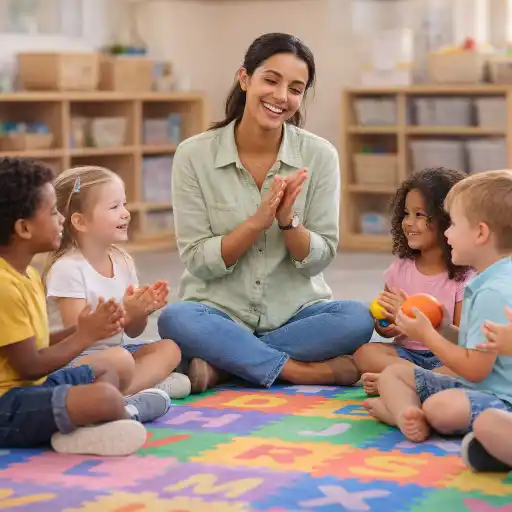
Offer ways to participate that match children’s communication, sensory, motor, and developmental needs. A child who prefers not to touch damp leaves can sort picture cards. A child who is not ready to speak to the group can point to an emotion face or dictate an idea to an adult. Use larger materials when small objects present a safety concern, supervise outdoor exploration, and check family information for allergies or sensitivities.
Adapt the challenge while keeping the central social goal. In a shared craft, one child might choose colors, another hold the paper, and another describe the plan. A nature walk can be shorter, wheelchair accessible, or conducted indoors with collected items and sound recordings. The aim is meaningful participation—not identical performance. A culturally responsive approach also means listening to children’s perspectives and treating differences as ordinary parts of classroom life.
How can staff reinforce progress and avoid common pitfalls?
Keep the approach consistent across the teaching team. Before an activity, agree on the skill being taught, the key expectation, and a few shared phrases. During a pumpkin-painting project, for instance, staff can use the same prompts for turn-taking and the same calm response when a child becomes frustrated. Consistency reduces confusion and makes it easier to recognize what is helping.
Afterward, reflect briefly: Which children practiced the skill? What support helped? Was the activity too long, crowded, or difficult to access? A simple note or observation can guide the next lesson. Avoid turning seasonal projects into contests that rank children’s work, forcing children to share personal feelings, or expecting a single activity to eliminate challenging behavior. These activities teach and rehearse skills; children may need many opportunities and additional individualized support.
- Common pitfall: Too many expectations at once. Try instead: Teach one target skill and use a short reminder.
- Common pitfall: Correcting children only after a conflict. Try instead: Model the skill and notice early attempts.
- Common pitfall: Making participation depend on speaking or touching materials. Try instead: Offer visual, verbal, and observational options.
- Common pitfall: Treating a calm-down tool as punishment. Try instead: Practice calming strategies during settled moments and make them available as support.
For more ideas on practicing regulation when children are calm, see fall-themed self-regulation activities. As you adapt projects, remember that state requirements vary—check your state licensing agency for applicable supervision, safety, and program policies.
How can providers carry these lessons beyond the fall season?
Positive behavior develops through ordinary, repeated experiences, so carry the same teaching steps into winter crafts, spring planting, mealtimes, and transitions. Identify a skill, model it, give children a chance to practice, and recognize their efforts with specific feedback. A shared classroom routine—such as asking for a turn or taking a calming breath—can be revisited in many settings and with different materials.
Partner with families by sharing the skill the group is practicing and a brief example of what children are learning. Keep communication strengths-based and respectful of each family’s values and language. Staff can also review observations together and adjust supports when a child needs a different entry point. The goal is not a behavior-free classroom; it is a supportive community where children are learning how to communicate, recover from challenges, and care for one another.
For a broader foundation in positive guidance, providers may consider ChildCareEd’s Staying Positive: Guidance for Preschoolers Buy Now $24.00, focused on positive discipline and social-emotional development, or Brighter Futures: Social Emotional Development Buy Now $16.00, which explores emotional development and interactions with young children. Course suitability and any training-hour recognition depend on individual program and local requirements.
Conclusion: What is the key to teaching positive behavior through fall activities?
Fall activities teach positive behavior most effectively when educators plan them around a specific skill and coach children with warmth, clear expectations, and repeated practice. A leaf walk can nurture mindfulness; a shared pumpkin project can develop cooperation; a story or feelings craft can support empathy and emotional vocabulary. These activities are not just seasonal entertainment—they are engaging contexts for learning how to manage feelings, solve small problems, and participate with others.
Begin with one activity and one achievable goal. Model the behavior, offer inclusive ways to join, notice children’s efforts, and reflect with colleagues afterward. When seasonal learning is grounded in responsive relationships and adapted to children’s needs, providers can turn autumn’s everyday materials into lasting opportunities for growth.
- Moving About the Classroom: Effective Transitions for Everyday
- Building Equity: Inclusionary Practices in Preschool
- From Tantrums to Triumphs: Equipping Preschoolers with Self-Regulation Skills
- The ABCs of Behavior: Turning Challenges into Learning Opportunities
- Mysteries of Challenging Behavior Solved
- Connections That Count: Building Relationships in Child Care
- Texas Director Credential
- Every Moment Matters: Schedules and Transitions
- Professional Integrity in Child Care
- ¿Qué Calificaciones Necesitas para Trabajar en Cuidado Infantil?
- Actividades de Motricidad Gruesa que Desarrollan el Equilibrio, la Coordinación y la Fuerza
- 10 Ejemplos de Cómo la Cultura Influye en el Desarrollo Infantil
- Proporciones de Cuidado Infantil y Tamaños de Grupo por Edad en Nueva Jersey (Guía Rápida para Centros y Hogares)
- Proporciones de Cuidado Infantil y Tamaños de Grupo por Edad en Virginia (Guía Rápida para Centros y Hogares)
- ¿Cuál es la Diferencia Entre la Crianza Respetuosa y la Crianza Permisiva?
- Ejemplos de Crianza Respetuosa vs. Crianza Permisiva
- Cómo Trabajar en el Cuidado Infantil en Carolina del Norte: Requisitos y Pasos
- How can preschool teachers use simple classroom management techniques that really work?
- Calabazas, hojas y manzanas: actividades de otoño para preescolares
- How do positive interactions improve outcomes in child care?
- Celebrando la amistad en el cuidado infantil durante el Día de los Mejores Amigos
- Why Do Classroom Management Strategies Fail With 3-Year-Olds—and What Works Instead?
- Why Is My Preschool Classroom So Chaotic? 7 Classroom Management Fixes to Try
- Which Positive Guidance Strategies Actually Work in Child Care?
- How Can Positive Guidance Transform Early Childhood Classrooms?
- How Can Child Care Providers Build More Effective Classroom Management?
- How Can Preschool Teachers Use Fall Activities to Strengthen Family Engagement?
- How Can Fall Classroom Activities Teach Positive Behavior?
- What Fall Classroom Behavior Challenges Should Child Care Providers Avoid—and How?
