When children return to the same leaves, acorns, or questions day after day, they may be showing you that the fall inquiry is still unfolding—not that it needs a new theme. Learn how to recognize meaningful engagement and plan a responsive next step, and consider Children at the Wheel ONLINE  Buy Now $24.00 for focused learning on emergent curriculum and the Cycle of Inquiry. The course can help you connect children’s interests with intentional classroom planning; the practical cues below can help you decide what to do tomorrow.
Why does it matter to pause before changing the theme?
Seasonal plans can make classroom life feel organized, but a theme calendar is not a reliable measure of children’s learning. A child may need repeated encounters to develop a question, test an idea, negotiate a play scenario, or revisit a discovery with new materials. Changing the theme too quickly can interrupt that process just as it is becoming more complex.
Giving an inquiry time is not the same as leaving the curriculum to chance. The NAEYC guidance on planning and implementing an engaging curriculum explains that written curriculum can remain flexible and responsive to children’s interests, experiences, and learning needs. Educators still bring developmental knowledge, learning goals, safety practices, and intentional interactions; children’s thinking helps shape the pathway.
This distinction can be reassuring for providers and directors managing busy schedules. You do not need to produce a fresh craft every day to demonstrate purposeful teaching. Notice what children are doing, consider what they may be trying to understand, and choose a thoughtful next opportunity. That approach honors their #curiosity while keeping curriculum purposeful and manageable.
What signs suggest children need more time with a fall inquiry?
Look for patterns rather than relying on one excited comment. Children may return to a leaf collection, repeatedly compare colors, build the same kind of outdoor shelter, or bring a question about rain or changing weather into different parts of the day. Repetition often signals that children are refining an idea, not simply repeating an activity without purpose.
Pay attention to both visible action and quieter forms of engagement. A child who watches closely, draws a detailed picture, points to a difference, or listens while peers debate may be deeply involved. Children do not all communicate interest in the same way, so include gestures, movement, home-language talk, drawings, and assistive communication in your observations.
- Children return to the materials or topic across several days or settings.
- They ask new questions, make predictions, or explain a theory to a peer.
- They change their approach after a result surprises them.
- Their play grows more detailed, collaborative, or sustained.
- They represent ideas through building, drawing, movement, storytelling, or dramatic play.
Try recording specific evidence instead of a broad label. For example: “Three children compared five leaves, sorted them by shape, and wondered why two were still green.” This short note gives a team something concrete to interpret. The observation-centered approach described in observing and documenting emergent curriculum can help educators notice learning embedded in play and identify possible next steps.
How can educators decide whether to extend, adapt, or conclude?
Use a simple reflection cycle: observe, interpret, respond, and observe again. First, ask what children actually did and said. Then consider what their actions might suggest they are investigating. Finally, offer one useful change—perhaps a new tool, a different material, a book, or a chance to revisit a place—and see what happens.
Imagine children repeatedly collecting and comparing fall leaves. Instead of preparing a week of leaf crafts, you might add magnifiers, sorting trays, paper for observational drawings, and a question such as, “What differences can we find?” If interest shifts toward how leaves move in the wind, adapt the experience rather than insisting on the original plan. If children stop returning to the materials and their play moves elsewhere, conclude the inquiry with a brief review of what they noticed.
- Extend when children’s questions and engagement are growing.
- Adapt when the topic still matters but their direction changes.
- Conclude when the inquiry has run its course or children’s attention has moved on.
There is no required number of days for a fall investigation. A focused exploration might last a few days or develop over several weeks. The important question is whether the experience continues to invite thinking, participation, and worthwhile learning—not whether the calendar says it is time to move on.
How can you protect exploration time in a busy classroom?
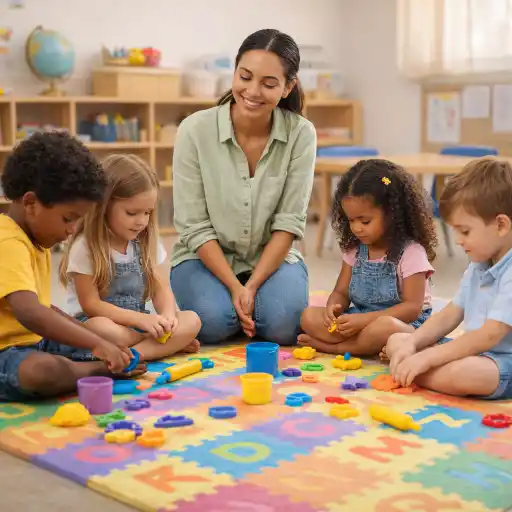
Time is part of the learning environment. If children are interrupted just as they begin to test an idea or develop shared play, they may not have the opportunity to revise, persist, and discover new possibilities. The guidance on why children need more time to explore, create, and experiment underscores the value of sustained play, open-ended materials, and adults who support without taking over.
Protecting exploration does not require an open-ended schedule or elaborate preparation. Consider where transitions can be reduced, whether materials can remain available across days, and how a small group might continue an investigation while others choose different play. Predictable routines can coexist with flexibility: children know what to expect, while educators preserve time for meaningful inquiry.
- Keep a small collection of safe fall objects available for repeated use.
- Allow children to return to an investigation at another point in the day or week.
- Use visual reminders or a question board to help children reconnect with previous ideas.
- Offer a short transition warning before ending deeply engaged play when practical.
- Make space for observation and team reflection during planning time.
🌱 Start small: protect one uninterrupted block of play and observe what children do with the extra time. Directors can support staff by reviewing schedules, helping teams reduce unnecessary interruptions, and affirming that purposeful exploration may look messy or slow while learning is underway.
How can fall exploration remain inclusive, intentional, and safe?
Children should have more than one way to participate in an inquiry. Some may want to handle leaves; others may prefer to observe, point, draw, use a tool, or describe what they notice. Offer accessible materials, varied group sizes, visual supports, and communication options. Invite families to share relevant knowledge or words from home, while avoiding assumptions that every family celebrates the same seasonal traditions.
Keep learning goals in view without turning them into a script. A leaf investigation might support descriptive language, comparison, early measurement, collaboration, or observational drawing. Choose one or two goals that genuinely connect with children’s activity, then notice how those skills emerge through play. NAEYC’s curriculum guidance stresses meaningful connections, attention to each child, and flexibility in how planned experiences are adapted.
Safety remains essential, especially when using natural materials. Inspect objects for mold, sharp edges, choking hazards, or other risks; supervise closely and follow program policies. Adapt materials for children’s ages and needs. State requirements vary - check your state licensing agency for applicable rules and documentation expectations.
Common pitfalls to avoid include:
- Changing the theme because the planned week is over, without considering children’s engagement.
- Adding daily products or crafts instead of responding to children’s questions.
- Assuming only vocal or highly active children are interested.
- Keeping a topic going after children have clearly moved on.
- Documenting observations without using them to guide planning.
Use the Children at the Wheel ONLINE course Buy Now $24.00 to explore how the Cycle of Inquiry can structure observation, hypotheses, planning, and facilitation. For a concise planning routine, the Tracking Progress, Shaping Futures: Observation & Assessment Skills Buy Now $55.00$45.00 course focuses on objective documentation and using assessment information to set goals. The Project-Based Learning for Children Buy Now $16.00 course offers another related perspective on inquiry and sustained projects.
Conclusion: How do you know when children need more time to explore?
Children may need more time when they return to a question or material, develop new theories, revise their approach, or deepen their play. Observe carefully, record concrete evidence, and choose one responsive next step. Continue when engagement and inquiry are growing, adapt when children’s direction changes, and conclude thoughtfully when the investigation has run its course.
The goal is not to keep every fall theme alive, nor to move on simply because a calendar says so. The more useful question is: What are children working to understand, and what support will help them explore it further? By protecting time for play, planning with intention, and making participation accessible, providers can let children’s ideas guide the learning while remaining attentive to developmental goals and program responsibilities. In practice, trust #observation, protect #play, support #inclusion, and make #reflection part of your routine so each inquiry can grow at a pace that serves children.
- 💛🧩 ¿Cómo puedo hacer que mi enseñanza sea inclusiva para los niños con autismo?
- Daily Lesson Planning Tips for Busy Child Care Providers
- Recursos en Español sobre el Sueño Seguro del Bebé
- Fall Circle Time Ideas for Preschool and Daycare
- Canciones, juegos y preguntas de círculo para niños
- Fall Challenge Accepted! Hands-On Learning Games for Pre-K
- How Can Fall Foods Help Children Explore Family Traditions?
- How Can You Plan an Engaging Fall Curriculum for Preschoolers?
- How Can Fall Literacy Activities Build Early Language and Communication Skills?
- How Can Fall Harvest Activities Teach Young Children Healthy Eating Habits?
- How Can You Adapt Fall Learning Activities for Children of Different Ages?
- How Can Responsive Teaching Make Fall Classroom Activities More Effective?
- How Can Low-Cost Fall Classroom Activities Strengthen Professional Teaching Practices?
- How Can You Plan Fall Activities for a Mixed-Age Family Child Care Group?
- When a Fall Activity Falls Flat, How Can Children’s Responses Shape What Comes Next?
- How Can You Help Children Return to Familiar Classroom Routines After a Fall Festival?
- How Can One Fall Activity Work for Three Age Groups in Family Child Care?
- How Can Fall Clubs Engage School-Age Children Who Have Outgrown Preschool Crafts?
- How Can You Refresh Fall Learning Stations Without Buying New Materials?
- Before You Change the Fall Theme, How Can You Tell When Children Need More Time to Explore?
