Outdoor play is wonderful for young children. It builds big muscles, growing brains, and happy hearts. But playgrounds in Washington also bring some neighborhood risks: stinging bugs, slimy slugs, and plants that can hurt skin or cause poisoning. This article helps chi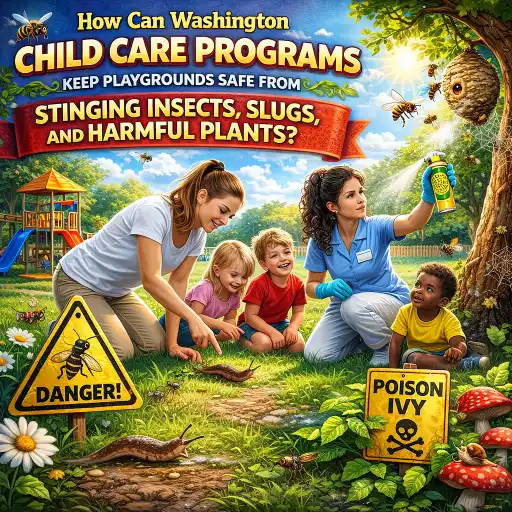 ld care providers and directors spot hazards, prevent problems, and respond quickly if an injury or exposure happens. Use these ideas with your program routines and local rules — state requirements vary - check your state licensing agency.
Why does this matter for my program?
1) Kids explore with their hands and mouths. That means a bee, a slug, or a berry can become a problem fast. 2) Staff can stop many incidents by planning, checking the yard, and teaching children simple rules. Research and resources show outdoor play benefits children’s development while safety steps reduce risks — see the CDC guide on outdoor play and safety for ECE programs for helpful tips here.
1. Look for signs: nests in eaves, holes in the ground, paper nests in trees, or many insects near trash. Professional pest services can help identify nests — removal near doors or play areas should be done by trained technicians (example: local pest experts).
- 🪲 Keep food and trash sealed and away from play areas.
- 🌼 Avoid planting or placing lots of bright, fragrant flowers right next to play spaces — they attract pollinators.
- 🧯 Block holes near pathways and inspect eaves, logs, and shrubs for nests.
3. If a child is stung: follow first aid: stay calm, wash the sting, scrape off the stinger if present (don’t squeeze), apply ice, and watch for allergic signs. Staff should know the signs of severe reaction: trouble breathing, swelling of the face/throat, and fainting. Have a plan to call 911 and your local poison control (1-800-222-1222) and keep emergency meds such as epinephrine accessible if a child has a known allergy — practice using a trainer device and follow guidance like epinephrine injection directions.
4. Training and policies: include stinging insect response in staff training and supervision plans. The NIOSH quick facts give helpful first aid and prevention steps for workers and caregivers here. Consider enrolling staff in training courses on injury prevention and classroom safety to build confidence and ensure consistent procedures.
What are practical ways to reduce #slugs on playgrounds and garden areas?
1. Know the problem: Slugs are common year-round in Washington and may hide under mulch, boards, and plant pots. They love vegetables and low plants and can damage gardens and tripping areas if numbers grow.
- 🧹 Clean up debris: remove boards, old mats, leaf piles, and dense weeds where slugs hide.
- 🌿 Replace heavy mulch near paths with coarser material or a tidy border to reduce hiding spots.
- 🐦 Encourage natural predators like birds and frogs by keeping bird feeders and water features maintained (avoid broad insecticides that harm predators).
3. Low-risk controls:
- 🔶 Use copper tape on raised beds or around planters — slugs avoid crossing it.
- 🍺 Set a few sunk-in shallow containers with stale beer as traps (check and empty daily).
4. Chemical controls: only consider slug baits carefully — they can harm wildlife and pets. If used, follow label instructions and keep all chemicals locked away from children. Local extension info and news stories from Washington State outline species and control tips for our climate — see a summary from WSU and local coverage here.
5. Teach and supervise: remind children not to pick up slugs and to wash their hands after gardening or outdoor play.
How can we identify and remove harmful #plants near play areas?
1. Do a plant inventory: walk the yard and list every plant within reach. If you can’t identify a plant, block it or remove it. ChildCareEd has a helpful guide for plant safety and lists of non-poisonous options to make choices easier — see safe plant choices and the poisoning plants resource here Buy Now $0.00.
2. Common risky plants in the Pacific Northwest include poison oak/ivy, certain nightshades, and toxic mushrooms. WSDOT and regional guides list local poisonous and harmful plants — check their photos to help ID plants near your program here.
3. Practical removal steps (work with grounds staff):
- 🪓 Remove or fence off poisonous plants that children could reach.
- 🪴 Replace risky plants with safe alternatives and label garden plants so staff and families know what’s growing.
- 🧤 Wear gloves when handling unknown plants and dispose of cuttings in sealed bags.
4. Education: teach simple rules: “Ask before you touch,” and “Don’t taste berries.” Use nature tables and labeled plants as learning tools. ChildCareEd articles on nature-based learning and outdoor classrooms include safety tips and activity ideas you can adapt — see Outdoor Montessori Classroom and Using nature as your classroom.
What routines and emergency steps should our staff have ready?
1. Prevention checklist (daily/weekly):
- 🔎 Daily quick yard scan for nests, slugs, and new plants.
- 🗓 Monthly deeper check: look under play structures, in mulch, and near fences.
- 📋 Keep an up-to-date list of children with insect allergies and medication plans; practice anaphylaxis drills.
2. Emergency items on site:
- 📞 Emergency phone numbers and a communication plan to reach families quickly.
- 💊 Epinephrine auto-injector(s) if individual care plans require them; staff trained to use them (guidance).
- 🧴First aid kit, ice packs, disposable gloves, and access to Poison Control at 1-800-222-1222 or webPOISONCONTROL.
3. Practice and documentation: run tabletop scenarios for stings, slug contact (if a child swallows a slug or slug bait), and plant exposures. Record checks and fixes in your safety log. Use hazard mapping and outdoor safety guides from ChildCareEd to build routines and staff training here.
4. Common mistakes and how to avoid them:
- ❌ Mistake: Not checking after storms — fix: include post-storm inspections.
- ❌ Mistake: Letting unknown plants stay in reach — fix: identify and remove unknowns immediately.
- ❌ Mistake: Relying only on chemicals — fix: combine habitat changes, supervision, and targeted removal.
Conclusion
Keeping Washington playgrounds safe is a team effort that mixes simple checks, smart landscaping, staff training, and clear emergency plans. Use the child care resources linked above for plant lists, outdoor play planning, and safety training from ChildCareEd and trusted public health sources like the CDC and Poison Control. When staff feel prepared, and the yard is checked regularly, children get the benefit of outdoor learning with fewer interruptions and risks. Remember your five quick action steps:
- 👀 Scan the yard daily for nests, slugs, and new plants.
- 🪴 Identify and remove poisonous plants; replace with safe options.
- 🛡 Change habitats to make slugs and nests less welcome.
- 🚑 Keep emergency meds, trained staff, and Poison Control info handy.
- 📚 Use training and resources like ChildCareEd to build policies and staff confidence (playground safety guide Buy Now $0.00).
FAQ
- Q: If I see a nest, should staff remove it?
- A: No. Call a professional pest remover if the nest is near play areas. Staff should keep children away and notify families.
- Q: Can we use insect repellent on children?
- A: With parental permission and following product labels, yes. ChildCareEd’s repellent guide shares safe-use tips here Buy Now $0.00.
- Q: What if a child eats a berry from the yard?
- A: Call Poison Control (1-800-222-1222) and follow their instructions. Keep a sample of the plant if safe to do so.
- Q: Who should check plants and bugs?
- A: Assign one trained staff member each week to do the walk-through and log findings. Rotate duties so everyone knows the routine.
For more ideas on outdoor learning that stay safe and joyful, visit ChildCareEd’s collections on using nature as your classroom and outdoor play activities here and here. Stay curious, stay prepared, and keep your #safety-first mindset as you enjoy outdoor play with children.
How do we spot and respond to stinging insects on the #playground?2. Prevention steps (easy to check weekly):2. Simple habitat changes (do these first):
- 1,2,3, Eyes on Me: Classroom Safety
- Play Safe, Think Big: Literacy Through Play
- CDA Bridge Bundle: Family Child Care without Portfolio Review
- CDA Bridge Bundle: Infant/Toddler without Portfolio Review
- CDA Bridge Bundle: Preschool without Portfolio Review
- Texas Director Credential
- 10 Hour Health and Safety Orientation Training
- Family Child Care: Building, Premises, and Outdoor Safety
- CDA Certification en Español: Recursos y Consejos para Educadores Bilingües
- Menos Estrés a la Hora de Comer: Rutinas Simples Que Sí Funcionan
- Recursos en Español sobre el Sueño Seguro del Bebé
- ¿Qué Calificaciones Necesitas para Trabajar en Cuidado Infantil?
- 10 Ejemplos de Cómo la Cultura Influye en el Desarrollo Infantil
- Capacitación en Salud y Seguridad Preventiva en Línea para Proveedores de Cuidado Infantil
- Cómo Iniciar el Proceso de Obtención de la Licencia de Cuidado Infantil
- Normas de Licenciamiento de Cuidado Infantil en Virginia para Centros Diurnos Infantiles y Hogares Diurnos Familiares
- Proporciones de Cuidado Infantil y Tamaños de Grupo por Edad en Maryland (Guía Rápida para Centros y Hogares)
- Proporciones de Cuidado Infantil y Tamaños de Grupo por Edad en Nueva Jersey (Guía Rápida para Centros y Hogares)
- Proporciones de Cuidado Infantil y Tamaños de Grupo por Edad en Virginia (Guía Rápida para Centros y Hogares)
- Cómo Trabajar en el Cuidado Infantil en Georgia: Requisitos y Pasos
- Cómo Trabajar en el Cuidado Infantil en Wisconsin: Requisitos y Pasos
- Capacitación Previa al Servicio para Proveedores de Cuidado Infantil en Nevada
- How can Washington child care programs keep playgrounds safe from stinging insects, slugs, and harmful plants?
- How can Florida child care programs keep kids safe from snakes, insects, and harmful plants on the playground?
- Celebrando la amistad en el cuidado infantil durante el Día de los Mejores Amigos
- Canciones, juegos y preguntas de círculo para niños
- La mejor manera de hacer seguimiento a la capacitación de su equipo de daycare How to Organize Staff Training for Your Child Care Center Cómo organizar la capacitación del personal para su centro de cuidado infantil
- Cómo simplificar la capacitación para sus empleados de daycare
