Dear directors and providers: this short guide helps you keep young children safe outside in Oklahoma. Yo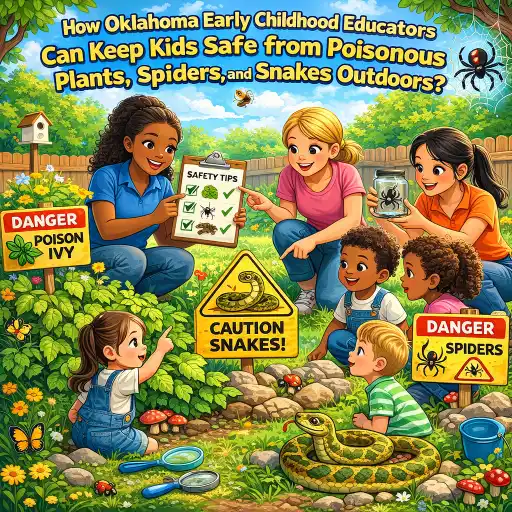 u will find simple checks, easy steps, and what to do in an emergency. This article focuses on #Oklahoma programs and real outdoor risks. It also uses ideas from ChildCareEd resources about the outdoor classroom and hazards like poisonous plants, spiders, and snakes. State requirements vary - check your state licensing agency.
Why does this matter for our #outdoorsafety and children?
Why it matters (short):
- Healthy learning: Outdoor time helps physical and emotional growth, so we want it to be safe. See The Outdoor Classroom for ideas.
- Preventable injuries: Many problems happen when adults don’t see hazards. ChildCareEd warns about common outdoor hazards and how to check for them in Creating Safe Outdoor Play Environments.
- Families trust us: When parents drop their children off, they expect safe outdoor time. Simple steps keep that trust strong.
Short tip: Do a quick area check each morning. It takes 2–5 minutes and significantly lowers the risk. For lists of hazardous and safe plants, use the ChildCareEd plant lists: poisonous plants list Buy Now $0.00 and non-poisonous plants list Buy Now $0.00.
How do we find and remove poisonous plants, spiders, and snakes from play areas?
- Map and inspect the site every month and do a quick scan each day.
- 🔍 Look under swings, near fences, and by woodpiles.
- 📸 Take a photo after your monthly walk to track changes.
- Identify plants and remove hazards.
- 🌿 Use ChildCareEd's poisonous plants list Buy Now $0.00 to know what to pull out.
- 🌼 Keep a list of safe plants from non-poisonous plants Buy Now $0.00 for gardens.
- Reduce spider and snake hiding spots:
- 🪵 Stack wood away from play areas and keep it off the ground.
- ✂️ Trim tall grass, clear leaf piles, and seal gaps under sheds.
- Set clear borders and signage so staff and families know where children may go.
- Use a map and hazard checklist. ChildCareEd offers hazard-mapping ideas in their outdoor safety resources (hazard mapping).
Keep records of your checks and removal steps. This helps when you train staff or answer parent questions.
What can staff do every day to prevent bites and poisonings?
- Active supervision and ratios
- 👀 Staff must move and scan, not sit in one place. ChildCareEd's training on active supervision is useful (Family Child Care: Building, Premises, and Outdoor Safety
 Buy Now $16.00).
 - Keep appropriate staff-to-child ratios for outdoor play and stay within your state rules — state requirements vary - check your state licensing agency.
- 👀 Staff must move and scan, not sit in one place. ChildCareEd's training on active supervision is useful (Family Child Care: Building, Premises, and Outdoor Safety
- Daily safety checklist (do this every morning)
- 👣 Walk the play area: look for plants, webs, snake sheds, holes, and trash.
- 🧰 Remove sharp objects and move toys away from risky spots.
- 💧 Provide shaded water and sun protection; follow parental permissions for sunscreen and repellents.
- Train and practice
- 👩🏫 Offer short staff refreshers on what poisonous plants look like and how to identify venomous spiders (black widow, brown recluse) — see CDC spider guidance.
- 🎯 Practice simple drills: what to do if a child finds a snake, a spider, or a strange plant.
- Prevent common mistakes
- ❌ Mistake: Leaving shoes, gloves, or towels where spiders hide — avoid by storing gear in sealed bins.
- ❌ Mistake: Thinking small plants are safe — use the ChildCareEd plant lists to check.
- ✅ Tip: Rotate outdoor zones and remove debris weekly.
What are the first steps if a child is bitten, stung, or touches a poisonous plant?
Stay calm and act fast. Use Poison Control and emergency services when needed. The steps below are simple and clear.
- Assess the child.
- If the child is not breathing, has severe trouble breathing, is unconscious, or has seizures — call 911 now. For a broader classroom response plan, review guidance on handling seizures and medical emergencies.
- If symptoms are mild (redness, small swelling), treat with first aid and call Poison Control for advice: 1-800-222-1222 / webPOISONCONTROL.
- Spider bite first aid
- 🩹 Wash the area with soap and water, put a cool pack on it, and watch for spreading redness or severe symptoms.
- For bites from a suspected black widow or brown recluse, call Poison Control or seek medical care quickly; see Nemours spider bite guidance and CDC spider info.
- Snake bite first aid
- 🚑 Keep the child calm and still to slow the spread. Do not cut, suck, or use a tourniquet. Seek emergency care right away. Local snake-bite patterns vary; see regional data like public health or scientific summaries (snake bite studies).
- Poisonous plant exposure
- 🌿 For skin contact (like poison ivy), wash skin with soap and water. For ingestion, call Poison Control immediately.
- Document and inform
- 1) Record what happened, where, and when. 2) Save a photo of the plant or creature if safe. 3) Tell parents and follow your health incident policies.
FAQ
- Q: Should we remove every snake from the yard? A: Not all snakes are venomous. Remove hiding places and call animal control for venomous snakes.
- Q: Can staff identify every poisonous plant? A: Staff should know common local risky plants. Use ChildCareEd lists and remove unknowns until you confirm them (poisonous plants Buy Now $0.00).
- Q: When do we call Poison Control? A: Call if a child swallows a plant, shows worsening bite symptoms, or if you are unsure. Use webPOISONCONTROL or 1-800-222-1222 any time.
- Q: Do we need special training? A: Short refreshers on first aid, active supervision, and hazard checks help. ChildCareEd courses cover these topics (health and safety training Buy Now $0.00).
Conclusion
Outdoor play is one of the best gifts we give children. With simple daily checks, clear rules, staff training, and a plan for emergencies, we keep playing safely and joyfully. Use the ChildCareEd resources linked above for checklists and trainings to make your plan stronger. Remember: state requirements vary - check your state licensing agency.
Final quick checklist (3 items): 1) Do a daily walk and mark hazards; 2) Train staff on active supervision and first aid; 3) Post emergency numbers and save Poison Control (1-800-222-1222).
Thank you for the work you do. Your careful plans keep kids learning and exploring safely in nature. #poisonousplants #spiders #snakes
Outdoor play is great for kids. It builds muscles, thinking, and calm. But nature also brings risks. Poisonous plants can make a child sick. Some spiders can inject venom. Snakes can bite. Knowing the risks helps us plan safer play. Daily routines and training keep children safer than one-time fixes. Here are practical things every program can do. Follow these steps each season to make play spaces safer. Use the ChildCareEd hazard guidance as part of your plan (outdoor hazards).
- 45 Hour Child Growth and Development
- 45 Hour Preschool Methods and Materials
- 1,2,3, Eyes on Me: Classroom Safety
- 45 Hour Infant and Toddler Methods and Materials
- 45 Hour School Age Methods and Materials
- Texas Director Credential
- 45 hour Growth and Development Birth-age 12 ONLINE
- CDA: Communication: Keep It Simple
- CDA Certification en Español: Recursos y Consejos para Educadores Bilingües
- Cuáles Son las Señales de Alerta en el Desarrollo Infantil que Todo Educador Debe Conocer?
- 😫🧸 ¿Qué hacer cuando un bebé no quiere dormir la siesta en el aula?
- Recursos en Español sobre el Sueño Seguro del Bebé
- 10 Ejemplos de Cómo la Cultura Influye en el Desarrollo Infantil
- Capacitación en Salud y Seguridad Preventiva en Línea para Proveedores de Cuidado Infantil
- Proporciones de Cuidado Infantil y Tamaños de Grupo por Edad en Nueva Jersey (Guía Rápida para Centros y Hogares)
- Proporciones de Cuidado Infantil y Tamaños de Grupo por Edad en Virginia (Guía Rápida para Centros y Hogares)
- Lista para Guardería en Casa en Illinois: Cómo Iniciar una Guardería en el Hogar
- Consejos de Supervisión Activa para Salones de Preescolar y el Juego al Aire Libre
- Retraso del Habla en la Guardería: Cómo Pueden Ayudar los Proveedores
- Cómo Trabajar en el Cuidado Infantil en Carolina del Norte: Requisitos y Pasos
- How can we use prairie animals and nature activities with young children in Oklahoma?
- How can Oklahoma nature walks and outdoor trips teach young children?
- How can Florida early childhood educators protect children from poisonous plants, bugs, and outdoor hazards?
- How can Oklahoma early childhood educators keep children safe from poisonous plants, spiders, and snakes outdoors?
- How can Florida child care programs keep kids safe from snakes, insects, and harmful plants on the playground?
- Celebrando la amistad en el cuidado infantil durante el Día de los Mejores Amigos
- Canciones, juegos y preguntas de círculo para niños
- Cómo simplificar la capacitación para sus empleados de daycare
