Outdoor time is a big part of young children's day. It helps them grow strong, learn new words, and calm down. As a child care leader in #Washington, you know outdoor play is worth protecting. This article gives clear, practical steps you can use with staff and families to spot poisonous plants, reduce tick and wildlife risks, and run good daily safety checks. You'll find links to trusted tools fro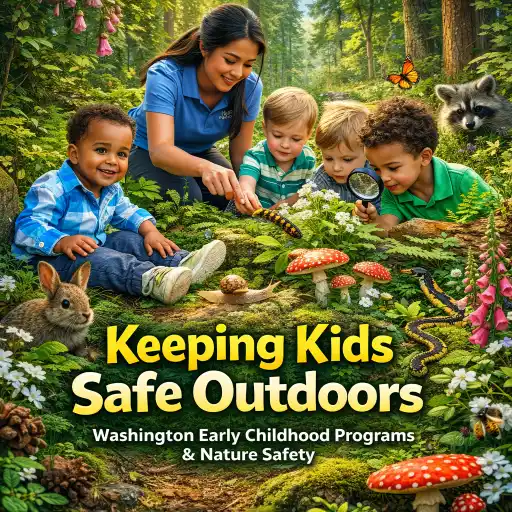 m ChildCareEd and public health sources so you can follow best practices and train your team easily. State requirements vary - check your state licensing agency.
How can we spot and remove poisonous plants safely?
1) Know the dangerous local species. In Washington, watch for poison hemlock, giant hogweed, water hemlock, and poison oak/ivy. The state list from WSDOT and regional stories like those in the Yakima Herald show clear photos and warnings.
2) Remove or block hazards safely:
- 🪓 If you remove a dangerous plant, wear gloves, long sleeves, eye protection, and a mask if needed. Dispose of plant parts in sealed bags.
- 🧴 Avoid spraying pesticides without parent notification—Washington has posting rules; review the guidance at the Pesticides and Schools page.
- 🔁 Check areas after storms and in different seasons—dead stalks can stay toxic.
3) Teach simple plant rules to children and families: 1) “Ask before you touch,” 2) “Never put plants or berries in your mouth,” and 3) “Wash hands after outdoor play.” For classroom plant ideas that are safer, see ChildCareEd’s safe plant list.
Common mistakes and how to avoid them:
- ❌ Guessing plant ID. ✅ Fix: take a photo and compare with trusted resources like WSDOT or ChildCareEd lists.
- ❌ Using chemicals without notice. ✅ Fix: follow local notification rules and favor integrated pest management—see WA pesticide guidance.
How do we reduce tick and wildlife risks during outdoor play?
2) Make simple site changes to lower tick habitat:
- 🌿 Keep grass mowed and trim edges near play areas.
- 🪵 Create a 3-foot wood chip or gravel border between play areas and brush (CDC recommendation summarized at CDC Lyme prevention).
- 🔁 Move picnic or play areas away from leaf litter, tall grass, and shrubs.
3) Teach staff tick checks and quick response steps. ChildCareEd offers a free Lyme Disease Tip Sheet Buy Now $0.00, and the CDC has posters and a short video on preventing Lyme in children.
4) Wildlife safety basics:
- 🐾 Keep food and trash secured to avoid attracting animals.
- 👀 Teach children to watch wildlife from a distance; never touch baby animals.
- ⚠️ Have a plan for snake encounters and bites; move children away and call for help if needed.
5) Prepare for exposures: post local emergency numbers and know Poison Control (1-800-222-1222) for plant or animal exposure. The ChildCareEd hazard mapping tool helps you plan likely wildlife and plant risks on your site.
How should staff run daily safety checks and supervise wildlife hazards?
1) Use a short, consistent daily routine that every staff member follows. ChildCareEd suggests a quick checklist; adapt it for your site (Hazard Mapping).
2) A simple 5-step outdoor safety scan (numbered so it’s easy to teach):
- 🔎 1–3 minute hazard scan for glass, animal waste, sharp objects, and plants.
- 🌤️ Check weather, heat index, and air quality.
- 👀 Assign supervision zones and position staff to move and scan actively.
- ⛑️ Verify first-aid kit, sunscreen and repellent permissions, and emergency phone access.
- 📋 Record the check on a daily log and note any follow-up tasks.
3) Train staff with short practice drills (15–30 minutes). Run a weekly walk-through and a monthly deeper check. ChildCareEd’s playground safety checklist is a good model for equipment and surface checks.
4) Supervision tips to prevent wildlife incidents:
- 👁️ Keep low child-to-staff ratios near water, brush, or natural areas.
- 🗣️ Teach children simple rules: look, point, and tell an adult.
- 🚫 Avoid unplanned nature hikes into dense brush without extra staff and parent permission.
5) Keep records of daily checks, incidents, and corrective actions. These logs help you improve routines and show families and licensors your careful approach.
How do we train staff and work with families so outdoor time is routine and safe?
1) Short trainings that stick: use 15–30 minute practice sessions to teach the hazard scan, plant-ID steps, and tick checks. ChildCareEd has courses and quick guides you can use in staff meetings, like Outdoor Play and Safety in Washington, and training on supervision and weather rules.
2) Numbered family communication plan:
- 📣 Send a welcome packet with your outdoor rules and gear list (hats, layered clothing, boots in wet months).
- 🤝 Ask families to sign permission slips for sunscreen and approved repellents.
- 🧺 Offer a gear loan or list local sources for low-cost boots and rain gear.
- 📷 Share weekly photos and one learning moment so families see the value of nature time.
3) Policy checkpoints: maintain posted routines, emergency plans, and a pesticide notification plan per Washington rules. See the state pesticide posting guidance at Pesticides and Schools.
4) Inclusion and health plans: plan for children with allergies, mobility limits, or special health needs. Coordinate with families and health providers so every child can join safely.
5) Keep it simple and repeat: short, frequent practice builds staff confidence. State requirements vary - check your state licensing agency.
Conclusion and quick FAQ
Outdoor play can be safe and joyful with small routines, clear communication, and good training. Use these steps:
- 🌱 Identify and label plants; remove or block hazards.
- 🕵️ Run a daily 1–3 minute hazard scan and log it.
- 🦺 Train staff in short drills; involve families with clear notes and permissions.
- 🧯 Prepare for ticks and wildlife with simple site changes and prevention steps from the CDC and ChildCareEd.
FAQ
- Q: What if I find poison hemlock? A: Block the area, keep children away, wear protection to remove it, or call the grounds crew, and alert families. See local photos at WSDOT.
- Q: How do we handle ticks after a bite? A: Remove the tick promptly, save it (if possible), and follow your health plan. Contact families and recommend a medical check. Use CDC resources on tick prevention (CDC Lyme prevention).
- Q: Who checks pesticide rules? A: Follow Washington posting laws and notify parents as required (WA pesticide guidance).
- Q: How to teach children not to eat berries? A: Use consistent rules, model behavior, and label places with a picture sign: “Ask first.”
Thank you for caring for children's outdoor learning. Small, repeated steps keep children safer and make outdoor time more fun for everyone. Key ideas: daily hazard scans, plant ID and removal, tick prevention, and quick staff practice. Use ChildCareEd resources and state guides to build a plan that fits your site and families. #outdoor #safety #plants #ticks #Washington
1) Do a plant inventory. Walk your yard and note every plant children can reach. Label safe plants and remove or block unknown ones. Use ChildCareEd’s plant safety guides (Lists and Images of Poisoning Plants Buy Now $0.00) to help identify hazards.1) Prevent tick bites: dress children in light-colored clothing, tuck pant legs into socks on tall-grass days, and use EPA-approved repellents per parent permission. The CDC suggests daily tick checks and other easy steps.1) Outdoor play helps children's bodies and brains. The CDC explains many benefits and cautions.
2) Poisonous plants and wild animals can cause serious harm fast. Washington has several hazardous plants listed by the state and in local news stories—use local guides to know what grows near your program (see Poisonous and Harmful Plants in Washington).
3) Small routines protect children and help staff feel confident. Simple checks and family communication reduce mishaps and stress. For program tools and plant lists, see ChildCareEd’s resources, such as Lists and Images of Poisoning Plants Buy Now $0.00 and List of Non-Poisonous Plants for Children.
- 45 Hour Child Growth and Development
- How To Keep A Healthy Class: Six Tips for Germ Control
- Professional Presence in Early Childhood
- 1,2,3, Eyes on Me: Classroom Safety
- Pediatric RSV First Aid & CPR/AED
- CDA Bridge Bundle: Family Child Care without Portfolio Review
- CDA Bridge Bundle: Infant/Toddler without Portfolio Review
- CDA Bridge Bundle: Preschool without Portfolio Review
- Texas Director Credential
- CDA Certification en Español: Recursos y Consejos para Educadores Bilingües
- Recursos en Español sobre el Sueño Seguro del Bebé
- Proporciones de Cuidado Infantil y Tamaños de Grupo por Edad en Virginia (Guía Rápida para Centros y Hogares)
- Consejos de Supervisión Activa para Salones de Preescolar y el Juego al Aire Libre
- Retraso del Habla en la Guardería: Cómo Pueden Ayudar los Proveedores
- Cómo Trabajar en el Cuidado Infantil en Carolina del Norte: Requisitos y Pasos
- How can Washington early childhood educators support outdoor play, safety, and learning in daycare?
- How can DC early childhood educators keep children safe from poisonous plants during outdoor play?
- How can Florida early childhood educators protect children from poisonous plants, bugs, and outdoor hazards?
- How can Washington child care programs keep playgrounds safe from stinging insects, slugs, and harmful plants?
- How can Washington early childhood programs keep children safe from poisonous plants and forest wildlife outdoors?
- How can Oklahoma early childhood educators keep children safe from poisonous plants, spiders, and snakes outdoors?
- How can North Dakota early childhood programs teach children about nature and wildlife?
- Why is outdoor education essential for children growing up in North Dakota?
- How can Washington classrooms be more inclusive using nature, play, and community?
- Canciones, juegos y preguntas de círculo para niños
- Cómo simplificar la capacitación para sus empleados de daycare
- Can forest preschool activities be integrated into traditional programs?
- How Can Providers Bring Nature-Based Learning Into Any Program?
- Why Is Outdoor Play Important in Early Childhood Education?
