When germs move quickly through a classroom, children miss learning time and families and staff face added stress. A few consistent, well-planned routines can reduce transmission while keeping care warm and developmentally appropriate; ChildCareEd’s Prevention and Control of Infectious Diseases  Buy Now $16.00 course offers focused learning on practical infection-prevention strategies and immunization. This two-hour online course can help you strengthen classroom practices and build knowledge relevant to health-and-safety training needs; check your state’s requirements before enrolling.
For additional focused learning, explore How To Keep A Healthy Class: Six Tips for Germ Control Buy Now $24.00, which focuses on hygiene-centered ways to maintain a healthier classroom.
Why does illness prevention matter in early care?
Young children learn through close interaction: they share toys, explore materials with their hands and mouths, and depend on adults for help with toileting, diapering, and wiping noses. These ordinary parts of early learning can also create opportunities for germs to spread. Providers cannot prevent every illness, but thoughtful routines can lower avoidable exposure and support children’s comfort and participation.
Prevention is also a team practice, not a single cleaning task. The CDC notes that early care programs can reduce infectious-disease spread through planning, consistent procedures, and teaching children healthy habits. A predictable approach helps staff respond with confidence, gives families clearer expectations, and makes it easier to protect both children and colleagues.
The goal is not a sterile classroom or fear around everyday play. It is a safe, welcoming environment where health routines are embedded into the day. When teams agree on procedures and practice them consistently, small actions—such as handwashing before snack or promptly separating a mouthed toy—can make a meaningful difference.
Which daily routines reduce the risk of transmission?
Consistent hygiene routines are among the most practical layers of protection. Teach handwashing as a skill and build it into predictable moments, rather than relying on reminders only when hands look dirty. The CDC recommends washing with soap and water for at least 20 seconds and drying hands thoroughly.
- 🧼 Wash hands on arrival, before food preparation and eating, after toileting or diapering, after wiping noses, and after outdoor or messy play.
- Model cough and sneeze etiquette: use a tissue or elbow, discard the tissue, and wash hands.
- Keep each child’s personal belongings—including cups, toothbrushes, and bedding—separate and clearly identified.
- Supervise sanitizer use; when soap and water are unavailable, use hand sanitizer containing at least 60% alcohol, following age and safety guidance.
- Support families in monitoring symptoms before drop-off and communicate your program’s stay-home expectations clearly and kindly.
Make these routines developmentally appropriate. Songs, picture cues, and adult modeling can help children build a lasting #handwashing habit. Staff need the same reminders: gloves do not replace hand hygiene, and hands should be washed after glove removal and after handling waste.
How should providers clean, sanitize, and disinfect?
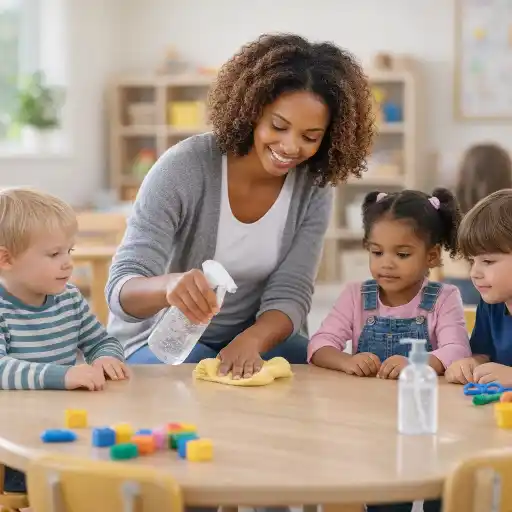
These terms describe different tasks, and choosing the right one protects children while avoiding unnecessary chemical use. The CDC defines cleaning as removing dirt and germs with soap, water, and scrubbing; sanitizing reduces germs to levels considered safe for specific items; disinfecting uses products to destroy remaining germs on surfaces after cleaning. In general, clean first, then sanitize or disinfect as the surface and situation require.
- Clean tables after meals and activities, and clean visibly dirty or frequently touched surfaces on a regular schedule.
- Sanitize items that may enter children’s mouths, such as feeding equipment and mouthed toys, using an appropriate product or method.
- Disinfect diaper-changing surfaces, bathrooms, and areas contaminated by body fluids, following your program’s procedures and product directions.
- Use gloves and other required protective equipment when cleaning blood or body fluids; dispose of waste safely and wash hands afterward.
Read product labels, observe the required wet-contact time, ventilate the area, and store chemicals locked and out of children’s reach. Never mix cleaning products. Assigning staff responsibilities and using a simple #cleaning schedule helps turn these steps into a reliable classroom system.
What should an illness policy and response plan include?
A clear illness policy supports consistent decisions without asking educators to diagnose. It should describe observable symptoms that warrant contacting a family, circumstances in which a child may need to go home, supervision while awaiting pickup, and return-to-care expectations. The CDC advises programs to encourage families to keep children home when they have symptoms of infectious illness and to refer families to health care providers for testing or care when appropriate.
When a child becomes unwell, respond calmly and protect the child’s dignity. Move the child to a comfortable, designated space away from close group activity while maintaining adult supervision. Notify the director and the child’s family, explain what staff observed rather than offering a diagnosis, and record the time, symptoms, actions taken, and family contact.
Policies should be shared at enrollment, reviewed with staff, and explained in accessible language. Return rules can vary by illness and local guidance, so avoid treating one timeframe as universal. State requirements vary - check your state licensing agency. When several people develop similar symptoms or a reportable illness is suspected, contact the local health department and follow its instructions.
How do ventilation, vaccination, and family partnership add protection?
Illness prevention works best in layers. Alongside hygiene and cleaning, improve airflow when feasible: maintain HVAC systems, increase outdoor air safely, and consider appropriate portable air cleaners for the space. Take activities outdoors when conditions and supervision allow. These steps can complement, not replace, hand hygiene and illness procedures.
Encourage families and staff to stay up to date on routine vaccinations, sharing trusted information without judgment or pressure. Keep family conversations practical: explain what symptoms to watch for, how the program responds, and whom families can contact with questions. Consistent communication builds trust and helps staff act early when a child needs support.
Directors can make prevention easier by equipping classrooms with accessible sinks, tissues, labeled storage, cleaning supplies secured from children, and a supervised area for a child who becomes ill. Brief staff refreshers help substitutes and regular educators follow the same procedures. Strong #ventilation, clear policies, and respectful family partnership are not add-ons; they are part of a healthy learning environment.
Conclusion: What are the most important steps to prevent classroom illness?
Providers can reduce the spread of illness by combining simple routines with clear systems: teach thorough handwashing and respiratory etiquette, separate personal belongings, clean before sanitizing or disinfecting, and use products safely. Establish an illness policy that describes observable symptoms, family notification, supervised care while awaiting pickup, and return expectations aligned with current local guidance.
Also strengthen airflow where practical, encourage routine vaccination, communicate respectfully with families, and coordinate with public health when a cluster or reportable illness arises. These practices protect children and staff while preserving the play, relationships, and exploration that make early care meaningful. Start with one routine your team can improve this week, then build from there. State requirements vary - check your state licensing agency.
Additional ChildCareEd courses
- Shoo, Germs! Don’t Bother Me! Buy Now $24.00 — learn about communicable diseases, hygiene, and practical classroom policies.
- Illness, Medication, and Allergies in Child Care Buy Now $32.00 — deepen knowledge of illness signs and symptoms and medication and allergy practices.
- Handling and Storage of Hazardous Materials Buy Now $10.00 — review safe handling and disposal procedures for hazardous materials and biological contaminants.
- How To Keep A Healthy Class: Six Tips for Germ Control
- Reducing the Risk of Sudden Infant Death Syndrome
- Moving About the Classroom: Effective Transitions for Everyday
- Children at the Wheel: Emergent Curriculum
- Creating Environments that Nurture Growth and Community
- Texas Director Credential
- How To Keep A Healthy Class: Six Tips for Germ Control
- Everyday Safety: Creating Healthy Environments
- Family Child Care: Building, Premises, and Outdoor Safety
- Moving About the Classroom: Effective Transitions for Everyday
- Ah-Choo!
- CDA Certification en Español: Recursos y Consejos para Educadores Bilingües
- What Parents and Educators Need to Know About Child Safety
- 10 Ejemplos de Cómo la Cultura Influye en el Desarrollo Infantil
- Capacitación en Salud y Seguridad Preventiva en Línea para Proveedores de Cuidado Infantil
- Proporciones de Cuidado Infantil y Tamaños de Grupo por Edad en Maryland (Guía Rápida para Centros y Hogares)
- Proporciones de Cuidado Infantil y Tamaños de Grupo por Edad en Virginia (Guía Rápida para Centros y Hogares)
- How can childcare programs prevent the spread of illness?
- How can childcare programs protect young children in North Dakota from West Nile, ticks, and extreme heat?
- How can child care programs prevent the spread of illness?
- How can North Dakota child care providers protect children now that measles is back in 2026?
- How Can New York Child Care Providers Protect Children Now That Measles Is Back in 2026?
- How can child care programs keep kids safe on the Fourth of July in North Dakota?
- How should Michigan child care providers watch for measles this summer?
- How should New York child care providers respond to a measles exposure?
- How can North Dakota providers prevent and manage common illnesses?
- How can childcare settings prevent the spread of illness?
- How Can Daycare Programs Prevent the Spread of Common Illnesses?
- How Can Classrooms Prevent the Spread of Illness During Cold and Flu Season?
- How Can Child Care Providers Prevent the Spread of Illness in the Classroom?
