When colds, stomach viruses, influenza, RSV, and other infections move through a classroom, consistent routines can protect children, staff, and families. Strengthen your daily practices with Prevention and Control of Infectious Diseases  Buy Now $16.00, a two-hour online course that builds practical knowledge while supporting applicable training requirements; for a classroom-focused option, explore Shoo, Germs! Don’t Bother Me! Buy Now $24.00.
Why does infection control matter in early care?
Young children spend extended periods in close contact, share materials, and are still developing skills such as handwashing and covering coughs. These conditions allow respiratory and gastrointestinal illnesses to spread quickly. Effective infection control is therefore not a single cleaning task; it is a coordinated system involving health screening, hygiene, environmental maintenance, communication, and timely response.
Strong prevention protects more than attendance. It supports children’s comfort and participation, reduces staff exposure, limits family disruption, and helps programs maintain a predictable learning environment. The CDC emphasizes that careful planning and consistent implementation can reduce infectious disease transmission in early care and education programs.
Directors can make prevention more reliable by converting broad guidance into observable routines:
- Post procedures at sinks, diapering stations, and food-service areas.
- Assign responsibility for cleaning and documentation.
- Practice illness-response procedures during staff meetings.
- Review policies with families at enrollment and whenever guidance changes.
Which daily routines reduce the spread of germs?
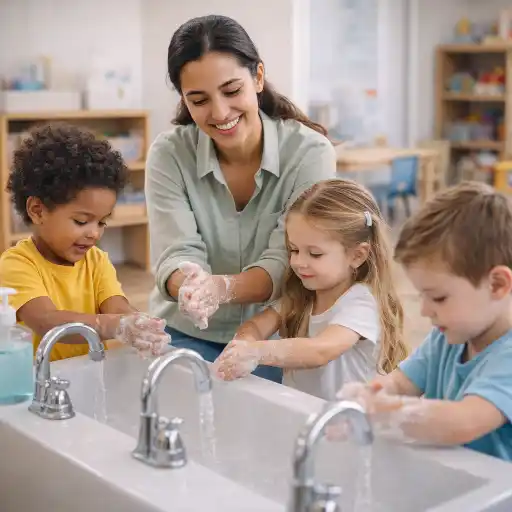
Hand hygiene is one of the most effective and teachable defenses. Staff and children should wash with soap and water for at least 20 seconds, especially upon arrival, before eating or handling food, after toileting or diapering, after outdoor play, and after coughing, sneezing, or blowing the nose. Children who need assistance should receive calm, developmentally appropriate support rather than hurried or punitive reminders.
Hand sanitizer containing at least 60% alcohol may be used when soap and water are unavailable, but it is not a substitute when hands are visibly dirty or after toileting. Closely supervise sanitizer use with young children and store it out of reach.
Other daily routines should include:
- Separating each child’s personal belongings, cups, toothbrushes, and comfort items.
- Placing mouthed toys immediately into a labeled “wash me” container.
- Covering coughs and sneezes with a tissue or elbow and disposing of tissues promptly.
- Keeping diapering and food-preparation workflows physically and procedurally separate.
- Opening windows safely, using outdoor spaces when practical, and maintaining ventilation systems.
Make routines engaging: songs, visual cues, role-play, and predictable transitions help #children understand that hygiene is part of caring for themselves and their community.
How should programs clean, sanitize, and disinfect?
These terms describe different processes. Cleaning uses soap or detergent and water to remove dirt, oils, and many germs. Sanitizing reduces germs on objects and surfaces to safer levels, particularly those that contact food or children’s mouths. Disinfecting uses stronger products to destroy remaining germs and is appropriate for certain high-risk areas or situations involving illness and body fluids.
Always clean before sanitizing or disinfecting. Follow product labels for dilution, protective equipment, ventilation, storage, and contact time. The surface must remain visibly wet for the entire stated contact time. Never mix cleaning chemicals, especially bleach and ammonia-based products, because dangerous gases can result.
A practical schedule may include:
- 🧽 Clean meal tables and activity surfaces after use and whenever visibly soiled.
- Sanitize feeding items, food-contact surfaces, and mouthed toys according to product and program procedures.
- Clean and disinfect diapering surfaces, bathroom fixtures, drinking fountains, and body-fluid spills as required.
- Clean toys, shelves, floors, and classroom materials at scheduled intervals, increasing frequency during outbreaks.
- Keep chemicals locked and inaccessible, with safety data sheets available to staff.
Directors should post a schedule and audit it through brief, supportive observations. The goal is not to catch staff making mistakes; it is to identify barriers such as missing supplies, unclear ownership, or unrealistic timing.
When should a child or staff member stay home?
An illness policy gives staff a consistent, respectful framework for decisions. A useful starting point is to ask whether the child can participate comfortably, whether the child needs more one-on-one care than the program can provide, and whether the symptoms create a meaningful risk of spreading illness.
Programs should clearly explain procedures for fever, vomiting, diarrhea, breathing difficulty, unusual lethargy, uncontrolled cough, new rash, eye drainage, and suspected communicable diseases. A child who becomes ill at the program should be moved away from the group, supervised by a familiar adult, monitored, and released to an authorized caregiver as soon as possible. Policies should also explain notification, documentation, medication, and return-to-care expectations.
Because state requirements vary - check your state licensing agency, directors should compare written policies with licensing rules and local health department guidance. Avoid requiring medical documentation for every minor illness unless a rule or public health recommendation calls for it. Use compassionate language that recognizes the realities families face while protecting the group.
Maintain confidential records of symptoms, dates, actions taken, family notification, and any public health consultation. Accurate documentation supports continuity between classrooms and helps identify clusters early.
How can a program respond to an outbreak?
An outbreak response should be prepared before multiple cases appear. Directors can create a one-page plan naming who assesses symptoms, contacts families, calls the health department, communicates with staff, coordinates enhanced cleaning, and reviews staffing coverage.
- Separate and supervise symptomatic individuals while arranging prompt pickup.
- Document symptoms, onset dates, classroom locations, and known exposures without sharing unnecessary identifying information.
- Contact the local health department when illnesses cluster, a reportable disease is suspected, or guidance is unclear.
- Increase cleaning and disinfection of high-touch areas and pause activities that increase exposure when advised.
- Send families a factual message describing what occurred, what the program is doing, and what symptoms require attention.
- Review the response afterward and revise procedures, supplies, staffing plans, or training.
Vaccination is another important layer of prevention. Programs can encourage families and staff to remain current with routine immunizations while following applicable privacy, exemption, and documentation requirements. Directors should also support staff members in staying home when ill; relying on sick employees to maintain coverage can unintentionally increase transmission.
Use authoritative disease-specific resources when needed. The American Academy of Pediatrics provides reference materials covering conditions such as influenza, norovirus, hand-foot-and-mouth disease, pinkeye, RSV, chickenpox, and pertussis.
What common mistakes should directors prevent?
Even well-intentioned programs can develop gaps when routines become rushed. Common mistakes include:
- Disinfecting without cleaning first: remove visible soil before applying disinfectant.
- Ignoring contact time: follow the label rather than wiping the product away immediately.
- Using sanitizer after toileting when a sink is available: prioritize soap and water.
- Returning mouthed toys to shelves: use a dedicated container and assign a cleaning cycle.
- Applying inconsistent exclusion rules: train staff with examples and scripts.
- Overlooking ventilation: remember that not all infections spread primarily through surfaces.
- Using vague family communication: state what families need to know without blame or speculation.
A short weekly audit can ask: Are sinks stocked? Are cleaning logs complete? Can every staff member identify the isolation area? Does the illness policy match current local guidance? Small improvements are more sustainable than occasional intensive cleanups.
Conclusion
How can daycare programs prevent common illnesses? They can combine reliable hand hygiene, age-appropriate health education, safe cleaning and disinfection, thoughtful exclusion policies, ventilation, vaccination encouragement, family partnership, and organized outbreak response. Prevention works best when procedures are visible, practiced, documented, and supported by leadership.
Begin with one staff huddle: review handwashing times, inspect the cleaning schedule, confirm the supervised illness area, and verify the local health department contact. Then strengthen professional knowledge through relevant training and current CDC, AAP, Head Start, and licensing guidance. Consistent #handwashing, #cleaning, clear #policy, good #ventilation, and respectful communication create healthier classrooms without losing the warmth and playfulness children need.
- How To Keep A Healthy Class: Six Tips for Germ Control
- Reducing the Risk of Sudden Infant Death Syndrome
- Pediatric RSV First Aid & CPR/AED
- 45-Hour Infant and Toddler Curriculum
- Creating Environments that Nurture Growth and Community
- Texas Director Credential
- Preventative Health and Safety
- Every Moment Matters: Schedules and Transitions
- Everyday Safety: Creating Healthy Environments
- Family Child Care: Building, Premises, and Outdoor Safety
- Ah-Choo!
- Summer Fun Meets Summer Safety: The Importance of Pediatric First Aid and CPR Training
- CDA Certification en Español: Recursos y Consejos para Educadores Bilingües
- What Parents and Educators Need to Know About Child Safety
- Recursos en Español sobre el Sueño Seguro del Bebé
- Normas de Licenciamiento de Cuidado Infantil en Virginia para Centros Diurnos Infantiles y Hogares Diurnos Familiares
- Lista para Guardería en Casa en Illinois: Cómo Iniciar una Guardería en el Hogar
- Cómo Trabajar en el Cuidado Infantil en California: Requisitos y Pasos
- How Can Michigan Daycare Centers Prevent the Spread of Illness?
- How can childcare programs prevent the spread of illness?
- How can North Dakota child care programs keep children safe from West Nile and tick-borne illness this summer?
- How can North Dakota child care providers protect children now that measles is back in 2026?
- How should Michigan child care providers watch for measles this summer?
- How can North Dakota providers prevent and manage common illnesses?
- How can childcare settings prevent the spread of illness?
- How can group child care programs effectively prevent the spread of illness?
- Sick or Not Sick? How Do We Make Exclusion Decisions in Child Care?
- How Can Child Care Programs Build Healthy Teeth Habits for Young Children?
- How Can Daycare Programs Prevent the Spread of Common Illnesses?
- When Should a Sick Child Be Sent Home From Daycare?
