Measles is spreading again in 2026, and North Dakota has cases. This short guide helps directors and providers keep kids safe. You will find clear steps on what to tell families and how to work with public health. We focus on easy actions you can take today for #measles #MMR #vaccination #children #childcare.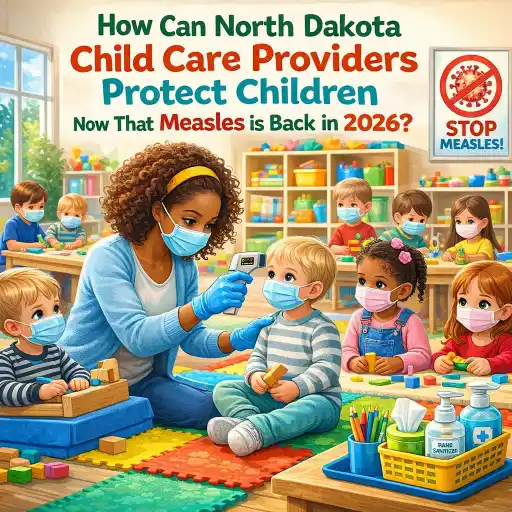
Why does this outbreak matter for my program?
1. Measles spreads fast. One infected person can infect many others in the same room. The virus can stay in the air for up to 2 hours, so a child who enters after an infected person leaves can still get sick. See the CDC overview for details at About Measles.
2. Young children are at higher risk. Babies under 12 months, children under 5, pregnant staff, and people with weak immune systems can have serious complications. The CDC explains who is most at risk in their About Measles page.
3. North Dakota already has cases in 2026. Local reporting shows cases in several counties and one new local transmission, so this is not only a distant problem. See the North Dakota update summarized here: Grand Forks County reports first measles case of 2026.
Why it matters to your program:
- Outbreaks can close rooms or programs if many kids are exposed.
- Families trust you to keep children safe; clear action builds trust.
- Costs and staff time increase during a measles response.
State requirements vary - check your state licensing agency. Also review practical childcare-focused guidance from ChildCareEd on immunization rules and illness prevention: Shots of Success and How can childcare programs prevent the spread of illness?
What immediate steps should my program take today to reduce risk?
Follow this short checklist you can use now. Numbered steps make it easier to track progress.
- 🔍 Screen and isolate: When a child or staff hmember as a fever plus cough or rash, call the family and ask them to stay home. If someone arrives sick, place them in a supervised isolation area and call their parent before they enter shared spaces. CDC isolation guidance is detailed here: Clinical Questions about Measles.
- Infectious disease prevention and control: To help staff confidently implement daily screening, isolation, and exposure-tracking routines during the outbreak, ChildCareEd's Prevention and Control of Infectious Diseases
 Buy Now $16.00 is a 2-hour online course covering how to recognize symptoms, follow isolation guidelines, and reduce disease spread in group care settings — a direct match for the screen-and-isolate steps, room assignment tracking, and public health notification process outlined in this guide. For practical, staff-facing infection-control activities and child-friendly hygiene lessons that reinforce these routines, consider ChildCareEd's Shoo, Germs! Don't Bother Me! course.
 - 💉 Check vaccine records: 2 doses of MMR protect most people. Ask families and staff for MMR records. If records are missing, advise vaccination. ChildCareEd has a guide for enrollment vaccine checks: Shots of Success.
- 🩺 Basic health and safety: For programs working to keep MMR records organized and hygiene routines consistent, ChildCareEd's Administering Basic Health and Safety Buy Now $24.00 is a 3-hour online course covering core health and safety practices, including illness prevention, cleaning protocols, and recordkeeping — directly supporting the vaccine record verification, handwashing reinforcement, and family communication steps described throughout this article.
- 🧼 Reinforce hygiene and cleaning: Teach staff and children simple handwashing routines and clean mouthed toys immediately. For practical cleaning steps, refer to How childcare programs prevent spread.
- 🗂️ Make a quick exposure plan: Keep a list of who was in each room each day for 21 days. This helps public health trace contacts fast.
- 📞 Call public health early: If you suspect measles or have multiple similar illnesses, notify your local health department right away. The CDC recommends notifying state/local health officials about suspected cases: CDC Measles.
These actions slow spread and show families you are prepared. Remember: state requirements vary - check your state licensing agency for rules about exclusion and reporting.
How do we work with families and local health officials?
Communication and clear steps help families and staff feel safe. Use these practical tips.
- 📢 Send a clear message: Tell families what happened, what you did, and what to watch for (fever, cough, runny nose, red eyes, rash). Keep messages short and kind. ChildCareEd offers templates and guidance for family notices: How can childcare programs prevent the spread of illness?.
- 📋 Offer vaccine help: Let families know where to get MMR and that two doses give the best protection. Link to CDC vaccine info: Measles Vaccination. Remind them, infants 6–11 months traveling or at risk may need an early dose; CDC and travel guidance: Travel Vaccine Recommendations.
- 🤝 Partner with public health: Share attendance lists, vaccination records (with family permission), and exposure dates. Public health can advise on who needs post-exposure vaccine or immune globulin. The CDC has tools for measles response: Measles Preparedness and Response.
- 🧾 Keep simple records: Track daily drop-off times and room assignments for at least 21 days after exposure to help contact tracing.
- 🧡 Support families: Offer calm, factual answers. Remind them: vaccinated children are much less likely to get serious measles.
What common mistakes should we avoid,d and what are the FAQ answers?
Common mistakes to avoid:
- ❌ Waiting to call public health — call early.
- ❌ Letting a sick child wait in a shared space — immediately isolate and mask if appropriate.
- ❌ Assuming records are enough without checking dates — verify 2 doses or other evidence of immunity. See CDC guidance on evidence of immunity: Clinical Questions about Measles.
Quick FAQ (short answers):
- Q: Who needs MMR? A: Most children need two doses. Adults born in 1957 or later may need 1–2 doses depending on risk. See Measles Vaccination.
- Q: Do vaccinated kids need to stay home after exposure? A: Usually not if they have evidence of 2 doses. Public health will advise. See CDC Measles.
- Q: What about infants? A: Infants 6–11 months may get an early MMR in some situations; then they still need two routine doses after 12 months. See travel guidance: Travel Vaccine Recommendations.
- Q: Should staff be excluded after exposure? A: Staff without evidence of immunity may need to be excluded; follow local public health guidance. See healthcare setting guidance: Infection Control Recommendations.
For more childcare-focused tools on illness policy, training, and vaccine checks, ChildCareEd is a helpful resource: Basic Health and Safety in Childcare and How Can Childcare Programs Prevent the Spread of Illness?.
Summary
1. Act now: screen, isolate, check records, and notify public health.
2. Encourage MMR vaccination for staff and families. Two doses protect most people and lower the risk of severe illness. CDC explains the vaccine schedule and uses here: Measles Vaccination.
3. Use simple routines for hygiene, cleaning, and family communication. ChildCareEd has ready tools and templates to help you stay organized: prevention and illness policies.
State requirements vary - check your state licensing agency. Working quickly and kindly with families and public health protects the children in your care. You are not alone—reach out to your local health department for help managing exposures and post-exposure actions.
- 45 Hour Child Growth and Development
- How To Keep A Healthy Class: Six Tips for Germ Control
- CDA Family Child Care Credential with Portfolio Review
- CDA Bridge Bundle: Preschool
- Pediatric RSV First Aid & CPR/AED
- CDA Bridge Bundle: Family Child Care
- Potty Training Made Simple
- CDA Bridge Bundle: Infant/Toddler
- Texas Director Credential
- CDA Certification en Español: Recursos y Consejos para Educadores Bilingües
- Regulaciones de Licenciamiento de Cuidado Infantil en California para Centros y Hogares de Cuidado Infantil Familiar
- Proporciones de Cuidado Infantil y Tamaños de Grupo por Edad en Maryland (Guía Rápida para Centros y Hogares)
- Proporciones de Cuidado Infantil y Tamaños de Grupo por Edad en Virginia (Guía Rápida para Centros y Hogares)
- Lista para Abrir una Guardería en Casa en Dakota del Norte: Cómo Empezar
- Capacitación Previa al Servicio para Proveedores de Cuidado Infantil en Dakota del Norte
- Las Mejores Ideas de Excursiones para Guarderías en Dakota del Norte
- How can North Dakota programs climb the Bright & Early ND steps before the July 2026 update?
- How can I manage North Dakota’s new 40-Hour CCAP attendance rule?
- How can Michigan child care providers protect children now that measles is back in 2026?
- How can North Dakota child care providers protect children now that measles is back in 2026?
- How Can New York Child Care Providers Protect Children Now That Measles Is Back in 2026?
- How can I prepare my North Dakota program for the July 13 CCDF rule changes?
- How do I track and report immunization records for child care in North Dakota?
- How should New York child care providers respond to a measles exposure?
- How can North Dakota providers prevent and manage common illnesses?
