Do you worry that a fire-safety lesson might either frighten young children or leave them unprepared when seconds count? This article gives practical, developmentally appropriate approaches to teach simple rules, rehearse calm evacuations, and partner with families so every child knows what to do. As a next step, consider ChildCareEd's Emergency and Disaster Preparedness (Online)  Buy Now
 $55.00$45.00 for an in-depth training and Creating an Emergency and Disaster Preparedness Plan Buy Now $16.00 to build a written plan you can use with staff and families; both courses help you meet practical training needs and strengthen your classroom practices.
What basic fire-safety skills should young children actually learn?
Young children need a short list of clear, repeatable actions they can perform or follow in a crisis. Focus on four core concepts: recognize helpers (firefighters), avoid fire-starting items (matches, lighters), practice safe behaviors (stop, drop, and roll; crawl low), and know how to get out and where to meet outside. These brief, concrete lessons map onto children’s cognitive abilities and reduce panic: repeated practice helps transfer calm behavior under stress. Integrate language ("get out, stay out"), simple maps for exits, and an outside meeting spot so children associate words with actions.
Use age-appropriate scaffolds: toddlers learn cues and routines; preschoolers can follow two-step directions and practice dialing pretend 911 from a safe location. Include visual supports and role play to reinforce memory. For classroom-ready materials and a home-centered escape activity, see Our Home Fire Escape Plan Buy Now $0.00 as part of planning family outreach and practice. Teaching these basics builds a foundation for safer #firesafety practices in your program.
How can I teach fire safety without frightening children?
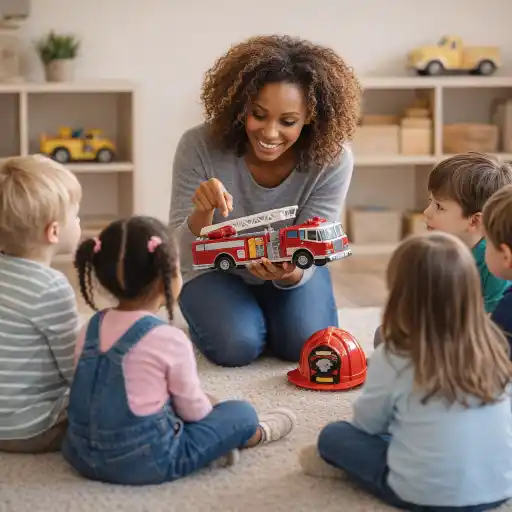
Fear is the enemy of learning; the goal is competence, not terror. Start with curiosity (show a firefighter’s helmet or a picture of a fire truck), then teach a single short skill at a time. Use stories, songs, and dramatized play to normalize helpers and gear so children view firefighters as safe, familiar people rather than frightening figures. Emphasize helpers and actions (“We tell a grownup,” “We go to the meeting spot”) rather than graphic descriptions of danger. Keep lessons brief and spread them across the week—repetition beats intensity.
Why it matters: when children practice calmly, their bodies respond more predictably during actual emergencies. Use multi-sensory methods—books, puppets, movement games—to support different learners and reduce anxiety. If a child appears distressed, offer a caregiver meeting and practice with that child in a non-threatening way. Integrating books (community-helper stories) and gentle exposure (firefighter visits or virtual tours) increases familiarity while maintaining a calm classroom environment. These strategies support both emotional safety and practical skill acquisition for #training and children’s social-emotional development.
How often should we practice drills, and how should drills be documented?
Frequency and variety are key. Many programs conduct monthly fire drills so everyone experiences routine exits; some licensing bodies require this—state requirements vary - check your state licensing agency. Vary drill conditions (nap time, transitions, different classroom doors), so staff and children learn to adapt. Occasionally practice with a real alarm sound to desensitize the cue, but balance exposure to avoid alarm fatigue or anxiety.
Document every drill: date/time, attendance, exit routes used, timing, issues observed, corrective actions, and staff roles. A drill log is essential for continuous improvement and licensing reviews. After each drill, hold a brief staff debrief (a "hot wash") to assign follow-up tasks and update your Emergency Operations Plan. Rotate staff roles (lead, sweep, attendance) so substitutes know responsibilities. For program-level guidance and sample checklists, see ChildCareEd’s practical resources and the article How Can Child Care Programs Teach Fire Safety Effectively to Young Children? Effective rehearsal builds #drills muscle memory and improves real-world response times.
What equipment and staff training should every child care program maintain?
Equipment, checks, and staff competence form a practical backbone. Essentials include:
- Working smoke alarms and CO detectors on every level and outside sleeping areas; test monthly and replace batteries per manufacturer guidance.
- Accessible fire extinguishers inspected per local code; key staff should know basic P.A.S.S. technique (Pull, Aim, Squeeze, Sweep) and when NOT to use an extinguisher for evacuation priorities.
- Evacuation backpacks or attendance packets, current emergency contact lists, and at least one staff member with pediatric CPR/First Aid on site.
- Quick-release devices or escape ladders where appropriate for upper floors, and safe, unobstructed exit paths.
- Written, practiced emergency plans and periodic tabletop exercises with community partners.
Staff training should include initial orientation, hands-on drills, and regular refreshers. Create a visible monthly safety checklist and log to show completed inspections and training. Coordinate with local fire responders for station visits and plan reviews. These steps increase staff confidence and reduce errors when every second counts—protecting children and strengthening your #evacuation capacity.
How can programs partner with families and avoid common mistakes?
Family partnership is essential: align center and home expectations so children rehearse similar routines in both settings. Communicate using concise take-home materials (home escape maps, meeting-place worksheets) and host an annual safety night or virtual briefing that models a home drill. Encourage families to practice home drills twice yearly and return a simple sign-off to confirm the practice was completed. Keep communications culturally responsive and translated where needed.
- 🧯 Provide simple, actionable take-home steps (test smoke alarms monthly, create a home meeting place, store matches out of reach).
- Offer family-friendly tools and templates—child-centered maps and printable activities—to make practice easy and engaging.
Common mistakes and how to avoid them:
- 🔥 Rushing drills or making them overly chaotic—script and rehearse adult roles so children experience calm leadership.
- Failing to rotate staff roles—cross-train everyone so substitutes can execute the plan.
- Overloading children with frightening details—focus on helpers and simple actions they can follow.
- Neglecting documentation—always log drills, tests, and corrective actions.
FAQ (short):
- How often change smoke alarm batteries? Replace at least annually and immediately if an alarm chirps.
- Are toddlers too young for drills? No—use short, calm practices that teach a cue and following an adult to the meeting spot.
- Should we teach Stop, Drop, and Roll? Yes—teach with songs and movement, keeping practice brief and positive.
- How include children with mobility needs? Create individualized evacuation plans, assign trained staff, and practice those plans regularly.
Partnering with families builds consistency and increases the likelihood that children will respond appropriately in an emergency—strengthening your whole program’s #families trust and preparedness.
Conclusion: What are the immediate, practical next steps my program should take?
Start with three achievable actions: (1) choose and schedule a short set of classroom activities to teach one core skill (e.g., stop, drop, and roll or two ways out of every room); (2) set a documented monthly drill calendar with assigned staff roles and a post-drill debrief; and (3) send a simple home escape map and family practice worksheet this month. These steps create measurable improvements in safety and confidence.
For further professional development, consider these ChildCareEd courses that align with the steps above: Responding to Emergencies Buy Now $16.00, Emergency and Disaster Preparedness (6-hour) Buy Now $60.00, and Creating Safe & Healthy Child Care Environments Buy Now $55.00. Each course offers practical guidance you can apply the same day to strengthen policies, drills, and family engagement. Remember: small, consistent steps build a strong #training culture that protects children, reassures families, and supports staff confidence.
- Stay Alert! Steps for Emergency Prep
- Administering Basic Health and Safety ONLINE
- 45 Hour Preschool Methods and Materials
- CDA Family Child Care Credential with Portfolio Review
- Teach with Respect!
- Pediatric RSV First Aid & CPR/AED
- CDA Bridge Bundle: Family Child Care without Portfolio Review
- Connections That Count: Building Relationships in Child Care
- Texas Director Credential
- Ensure the Health and Safety of Young Children
- D.C. Emergency Preparedness Training
- CDA Certification en Español: Recursos y Consejos para Educadores Bilingües
- 🔍 ¿Qué ves cuando observas a un niño aprender?
- Cómo Solicitar una Licencia de Guardería en Texas
- Regulaciones de Cuidado Infantil en Maryland para Centros y Hogares de Cuidado Infantil Familiar
- Normas de Licenciamiento de Cuidado Infantil en Virginia para Centros Diurnos Infantiles y Hogares Diurnos Familiares
- Proporciones de Cuidado Infantil y Tamaños de Grupo por Edad en Nueva Jersey (Guía Rápida para Centros y Hogares)
- Proporciones de Cuidado Infantil y Tamaños de Grupo por Edad en Virginia (Guía Rápida para Centros y Hogares)
- Lista para Guardería en Casa en Texas: Cómo Iniciar una Guardería en el Hogar
- Cómo Trabajar en el Cuidado Infantil en California: Requisitos y Pasos
- Cómo Ser Maestra de Preescolar en Maryland
- What Is Daycare and How Does It Work?
- Canciones, juegos y preguntas de círculo para niños
- Cómo simplificar la capacitación para sus empleados de daycare
- How Can Child Care Programs Teach Fire Safety Effectively to Young Children?
- How can we run fire and weather drills with young children safely and calmly?
- How Can Child Care Programs Teach Fire Safety to Young Children?
- MN Daycare Rules and Regulations 2026: Current Requirements and Upcoming Changes
- What Massachusetts EEC Regulations Do Child Care Providers Need to Follow?
