Running regular fire and severe-weather drills in early childhood settings is both a safety responsibility and an essential part of program readiness. Well-planned practice helps staff respond automatically, reduces confusion, and teaches toddlers and preschoolers what to do without creating unnecessary fear. This article gives directors and providers practical, developmentally appropriate steps for preparing, conducting, documenting, and improving fire, evacuation, shelter-in-place, and severe-weather drills. Strategies include using calm language, assigning clear staff roles, maintaining accurate attendance, supporting children with disabilities or sensory needs, practicing family reunification procedures, and reviewing each drill to identify improvements. State requirements vary, so always check with your state licensing agency and ensure your written emergency plan meets local rules.
To strengthen your program’s readiness, explore ChildCareEd’s self-paced online course Emergency and Disaster Preparedness – Online  Buy Now
 $55.00$45.00. The training helps child care professionals improve emergency readiness and includes the completion of a program-specific emergency plan. Providers can also take Creating an Emergency and Disaster Preparedness Plan – Online Buy Now $16.00, which guides teams through developing clear procedures, responsibilities, and documentation for emergencies and drills.
Why does practicing fire and weather drills with young children matter?
- Protection: Young children depend entirely on adults; practiced responses save precious seconds in a real #emergency. See planning basics at ChildCareEd: Emergency Preparedness Plans for Child Care Programs.
- Emotional safety: Calm, frequent practice reduces fear and builds confidence. The CDC emphasizes preparation and routine as protective for child mental health.
- Regulatory and operational readiness: Clear roles, Go-Kits, and drill logs satisfy licensing and speed reunification; see state-focused guidance like ChildCareEd Illinois guidance.
- Community coordination: Inviting local responders to review plans improves outcomes and community partnerships; FEMA and ChildCareEd recommend outreach and joint exercises (FEMA resources via ChildCareEd Buy Now $0.00).
Use short, simple messages for children and consistent staff cues so drills become predictable rather than frightening for little ones. Keep the focus on #children, #safety, and practical #preparedness.
How do we design age-appropriate, calm drills for toddlers and preschoolers?
- Define one short script per drill (e.g., “Listen → Walk → Huddle”) and train staff to use the same words and tone every time. ChildCareEd offers sample scripts and teaching language in its tornado and weather resources (see Tornado drills without fear).
- Use social stories, visuals, and role play before the first drill so children know what to expect; free social story examples are collected at And Next Comes L.
- Keep drills short (1–5 minutes for preschoolers), predictable, and frequent. Short, repeated practice reduces anxiety more than rare long drills—guidance echoed across ChildCareEd resources and the CCDBG materials (Texas CCDBG emergency prep).
- Offer choices and supports: allow very upset children to practice with a trusted adult, a comfort object, or observe from a quiet spot. Document and adjust for children with trauma or heightened anxiety (see CDC guidance on helping kids cope after emergencies).
- Embed play: make a brief song or game to cue movement and stillness (e.g., “Sleepy Lions” for quiet sheltering). See classroom activity ideas at Pre-K Printable Fun.
These steps help create drills that teach safety without creating fear. Use the hashtagged routines—#drills and #preparedness—regularly in staff meetings and parent communications.
What are the step-by-step procedures for fire and severe weather drills?
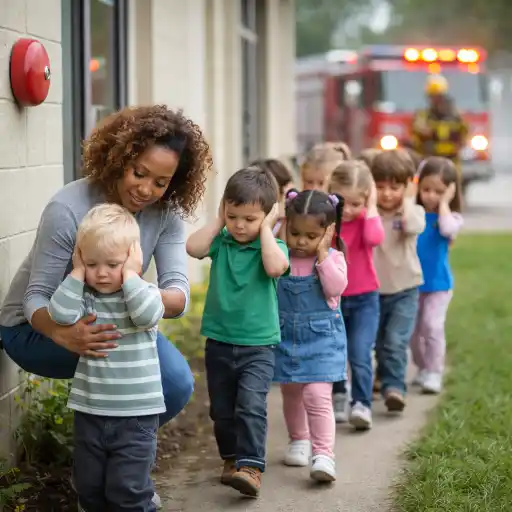
Below are concise, adaptable checklists to post in each room. Tailor to your site and include primary & secondary routes, assembly spots, and the person who carries the Go-Kit.
Fire drill checklist (quick):
- 🔔 Sound alert and give the practiced cue (staff use the same script).
- 🚶♀️ Lead children out via the nearest safe route; close doors if time permits.
- ✅ Take a headcount at each step: classroom, exit point, assembly site.
- 🎒 Ensure one staff carries the Go-Kit (attendance, meds, phone, water, comfort items).
- 📋 Reconcile names at the assembly site, then wait for "all clear" before returning.
Severe weather (shelter-in-place) checklist:
- 📣 Announce: practice phrase and move calmly to interior, window-free room.
- 🛌 Sit in designated positions (e.g., knees-to-chest for tornado shelter) with quiet activities.
- 👜 Bring Go-Kit, meds, flashlight, and attendance sheet.
- 📱 Assign a staff member to update families using pre-written messages and to record timing for licensing logs.
- ⏱️ Keep children occupied with short calming activities until the all-clear; document start/end times.
Include mobility and medical accommodations (evacuation cribs, assigned carriers) and list them on the classroom quick-card. For templates and Go-Kit lists, see ChildCareEd free resources and ChildCareEd’s storm safety guidance (Daycare Storm Safety).
How should staff be trained and families involved — and what documentation do licensors want?
Training, communication, and documentation turn plans into reliable practice.
- 👩🏫 Staff training: new hires review the written emergency operations plan (EOP) immediately and participate in drill shadowing. Require CPR/First Aid and role-specific briefings; FEMA’s IS-36 and ChildCareEd courses outline essential competencies (FEMA resources via ChildCareEd Buy Now $0.00).
- 🔁 Drill schedule: follow local rules (e.g., monthly fire drills, quarterly shelter/lockdown drills per many state guides). The Texas CCDBG changes recommend at least four shelter and lockdown drills per year (Texas CCDBG).
- 📚 Documentation for licensors: keep drill logs with date, time, participants, duration, issues found, and corrective actions. Store training records, plan reviews, and Go-Kit checks in your licensing binder — see ChildCareEd: Illinois documentation.
- 📣 Family engagement: before drills, notify families about timing and purpose; after drills or incidents, send one concise update with location, status, and reunification steps. Use templates from ChildCareEd resources to speed messaging.
- 🤝 Local partners: invite fire/EMS for an annual review and, where possible, a joint exercise. Their feedback informs realistic improvements.
Always note: state requirements vary - check your state licensing agency to confirm drill frequency, documentation retention, and reunification practices.
What common mistakes do programs make and how can we avoid them?
Common mistakes happen, but they are fixable with simple system-level changes. Here are pitfalls and smart fixes:
- ❌ Mistake: Surprise drills that frighten very young children. ✅ Fix: Use announced, short practice sessions for preschoolers; build to occasional unannounced drills for older groups. See trauma-informed suggestions in ChildCareEd tornado guide.
- ❌ Mistake: Missing Go-Kits, meds, or attendance sheets during evacuation. ✅ Fix: Store labeled Go-Kits near exits, assign a Go-Kit carrier and check kits quarterly; refer to ChildCareEd’s Go-Bag checklist in free resources.
- ❌ Mistake: Poor role assignment and no backups. ✅ Fix: Post staff role cards in each room and rotate alternates on every shift.
- ❌ Mistake: Incomplete reunification procedures. ✅ Fix: Use a single reunification flow, require photo ID, log each release, and practice the flow in tabletop exercises with staff and parents (see CDC reunification basics).
- ❌ Mistake: Inadequate documentation. ✅ Fix: Keep a drill log and quick corrective-action tracker; do a 5–10 minute debrief after each drill to capture changes.
Avoid these pitfalls to improve outcomes and reduce inspection friction. When in doubt, consult the ChildCareEd templates and FEMA/CDC guidance to align your procedures with best practice.
What questions do directors commonly ask (FAQ)?
- Q: How often should we drill? A: Monthly fire drills, and at least quarterly shelter/lockdown drills are commonly recommended; follow your state rules and CCDBG guidance (Texas CCDBG).
- Q: How do we support a very frightened child? A: Offer a familiar adult, comfort object, or allow observation; gradually increase participation. Document concerns and consult mental-health resources when worries persist (see CDC).
- Q: Who carries medications during evacuation? A: Assign a medication custodian on each shift and practice retrieval during drills; list alternates in the written plan and in the Go-Kit (ChildCareEd Go-Bag).
- Q: Can we use loud simulations for lockdown drills? A: Avoid realistic simulations that mimic violence—they can traumatize children and staff. Use clear verbal announcements and non-simulated practice instead (Texas School Safety Center).
- Q: What records do licensors expect? A: Drill logs (date, time, participants, duration, issues), training records, Go-Kit checks, and documented plan reviews—keep these accessible in a licensing binder (ChildCareEd documentation guide).
Summary
1) Start with a short, clear written plan and classroom quick-cards that list roles, routes, and the Go-Kit location (sample plans).
2) Train staff with role-specific practice, invite local responders, and keep routine, short drills so children learn without fear. Use social stories and play-based cues to teach actions.
3) Document drills, pack and inspect Go-Kits quarterly, and rehearse reunification flows. Keep parents informed with concise pre- and post-drill messages.
You are doing vital work. With a few consistent systems—posted scripts, ready Go-Kits, clear roles, and short frequent practice—you can run fire and weather drills that protect and reassure the children, families, and staff in your care. For ready templates and courses, start at ChildCareEd’s emergency preparedness hub: ChildCareEd free resources. Stay practical, stay kind, and check local rules—state requirements vary - check your state licensing agency.
- Stay Alert! Steps for Emergency Prep
- 45 Hour Child Growth and Development
- CDA Home Visitor Subject Area 3 Part 3 Birth to 5
- Engaging Indoor Activities for Inclement Weather
- CDA: Special Needs: Understanding the Whole Child
- CDA Bridge Bundle: Infant/Toddler without Portfolio Review
- CDA Bridge Bundle: Preschool without Portfolio Review
- Texas Director Credential
- 45 hour Growth and Development Birth-age 12 ONLINE
- CDA Certification en Español: Recursos y Consejos para Educadores Bilingües
- 🔍 ¿Qué ves cuando observas a un niño aprender?
- Capacitación en Salud y Seguridad Preventiva en Línea para Proveedores de Cuidado Infantil
- Proporciones de Cuidado Infantil y Tamaños de Grupo por Edad en Maryland (Guía Rápida para Centros y Hogares)
- Proporciones de Cuidado Infantil y Tamaños de Grupo por Edad en Nueva Jersey (Guía Rápida para Centros y Hogares)
- Proporciones de Cuidado Infantil y Tamaños de Grupo por Edad en Virginia (Guía Rápida para Centros y Hogares)
- Lista para Guardería en Casa en Illinois: Cómo Iniciar una Guardería en el Hogar
- How can my classroom be ready for an emergency?
- How Can Texas Child Care Providers Prepare Safe Classrooms for Weather Emergencies and Active Play?
- How can Minnesota child care programs prepare for severe weather and poor air quality?
- Canciones, juegos y preguntas de círculo para niños
- How can we talk about tornado drills so Oklahoma preschoolers learn without fear?
- Cómo simplificar la capacitación para sus empleados de daycare
- How can child care centers get ready for emergencies?
- How can childcare centers create effective emergency preparedness plans?
- How Can Child Care Programs Teach Fire Safety Effectively to Young Children?
- What Emergency Preparedness Does Every Child Care Program Need?
- How can we run fire and weather drills with young children safely and calmly?
- Weather Alerts and Child Care: How to Protect Children During Unsafe Conditions
- Texas Fire Drill Form: What Child Care Providers Should Record After Every Drill
