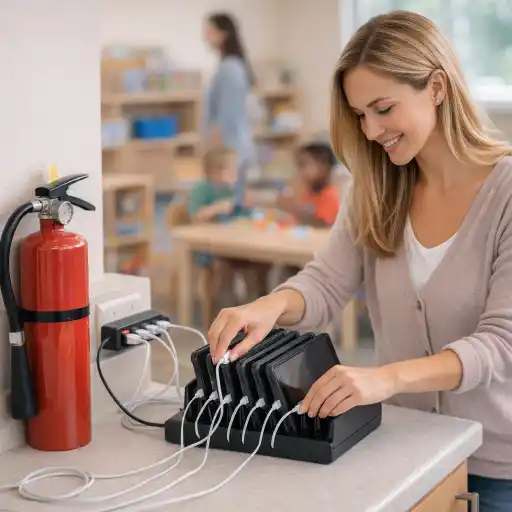
A tablet charging beside a stack of art paper is a reminder that device storage and charging deserve attention in classroom safety planning. As your program reviews practices for Fire Prevention Week, use the Classroom Supply Inventory Resource Guide Buy Now $1.49 to organize a review of devices and charging supplies, then assess charging arrangements using manufacturer instructions and your program’s safety procedures. For professional learning on identifying and preventing facility hazards, explore ChildCareEd’s Building and Physical Premises Safety  Buy Now $10.00. Read on for practical ways to organize charging areas, recognize concerns, and clarify staff responsibilities throughout the year.
Why does safe charging matter in child care?
Phones, tablets, laptops, radios, and rechargeable toys may contain lithium-ion batteries. These batteries store substantial energy in a compact space. If a battery is damaged or charged incorrectly, it can overheat and potentially ignite. The National Fire Protection Association (NFPA) highlights this risk in its 2026 Fire Prevention Week theme, “Charge into Fire Safety: Safe Charging Is a Superpower.” The campaign runs October 4–10, 2026, and emphasizes practical habits that can reduce risk.
In a child care program, a charging setup affects more than the device. Cords can create trip hazards or invite curious hands; equipment near paper, fabric, or other combustible materials can add risk; and a blocked route can make an emergency response harder. Because charging often happens in the background, a clear routine can help staff notice unsafe conditions before they become urgent.
This is not about blaming someone for a detail missed during a hectic day. Classrooms are active environments, and the strongest safety practices make the safer choice easy to repeat. A designated charging location, clear staff responsibilities, and brief checks can help protect children and preserve calm supervision. The CFOC guidance on fire prevention code compliance also reminds programs to follow applicable state-approved or recognized fire codes.
What does a safer charging routine look like?
Begin with the device manufacturer’s instructions. Use the cord and charger supplied with the device or a replacement approved by its manufacturer. A connector that fits is not proof that the charger is appropriate. Check chargers, plugs, and cords for visible wear, and remove damaged equipment from use rather than trying to repair it in the classroom.
Charge devices on a stable, hard, flat surface with airflow around them. Soft furnishings, pillows, blankets, and cushions can trap heat. Keep devices away from paper, fabric, curtains, and other materials that can burn, as well as from water, sinks, and likely spill areas. Locate charging out of children’s reach and away from exits, walkways, and places where cords may be pulled or tripped over.
- Use only the manufacturer-supplied or manufacturer-approved charger and follow device-specific instructions.
- Place devices on hard, flat surfaces—not beds, couches, cushions, or piles of materials.
- Keep cords tidy and outside pathways, doorways, and evacuation routes.
- Unplug a device when charging is complete, consistent with product guidance and program procedures.
- Assign responsibility for checking charging equipment during a regular shift or closing routine.
A small, staff-controlled charging area can make these expectations practical. Label approved chargers where useful, and make sure staff know how to report a damaged device without having to diagnose it themselves.
What hazards should a classroom walkthrough catch?
Include charging points in ordinary room checks, not only in a periodic facilities review. Look at the whole setup: outlet, adapter, cord, device, charging surface, nearby materials, and children’s access. Consider the view from a child’s height, since a cable that looks unobtrusive to an adult may be easy for a toddler to reach.
- Frayed, cracked, bent, or loose cords, plugs, adapters, outlets, or power strips.
- Devices charging on soft or combustible surfaces, or near heat, water, or spill-prone areas.
- Cords crossing paths, hanging within reach, or obstructing an exit.
- Overloaded outlets, power strips connected to other power strips, or extension cords used as permanent wiring.
- Equipment placed where children can pull, mouth, or handle it without adult supervision.
Keep electrical equipment away from water and do not run cords under rugs or through doorways. Do not daisy-chain power strips or use them as a substitute for permanent outlets. If an outlet, wiring, or facility condition concerns you, follow the program’s maintenance process and contact qualified personnel rather than modifying building wiring yourself. CFOC building and physical premises safety resources include guidance on electrical outlets and keeping devices away from water.
State requirements vary - check your state licensing agency, along with applicable fire and electrical codes. Make a note of concerns and who will follow up so that a temporary workaround does not become the routine.
How can staff recognize and respond to battery warning signs?
A device may feel somewhat warm during ordinary charging, but stop using it if it becomes unusually hot or shows other signs of a problem. Warning signs can include a swollen or misshapen battery or device, smoke, leaking, an unusual odor, discoloration, or popping or hissing sounds. The NFPA lithium-ion battery safety tip sheet offers additional guidance on recognizing problems and safe handling.
Staff should not keep charging, open, puncture, or try to repair a suspect battery. Keep children away, alert the director or designated safety lead, and follow the program’s emergency procedures. If there is smoke, fire, or an immediate threat, prioritize moving people to safety, evacuate as directed by the emergency plan, and call emergency services. Do not put staff or children at risk to move a device or retrieve equipment.
- Stop use and keep children away from a device that is unusually hot, swollen, smoking, leaking, or making unusual sounds.
- Notify the person responsible for safety and follow the program’s incident or emergency procedure.
- For smoke, fire, or imminent danger, prioritize evacuation and call emergency services according to the plan.
- Do not place lithium-ion batteries in ordinary trash or recycling; seek appropriate local disposal guidance.
For child-friendly learning, NFPA’s Fire Prevention Week 2026 classroom resources offer age-appropriate materials about rechargeable battery safety. Keep the message simple and reassuring: adults manage charging, and children tell a trusted adult if they notice smoke, unusual heat, or a strange smell.
How can directors build these practices into daily operations?
Turn general safety advice into a short, shared routine. Identify which devices are used in each room, where they should charge, and who checks them. Choose a staff-controlled location with a hard surface and airflow, away from children, combustible supplies, water, and exit routes. Include expectations in room procedures and staff orientation, and revisit them when devices or classroom layouts change.
A quick sweep is easier to sustain than an elaborate checklist no one has time to complete. Add a charging check to opening, closing, or weekly walkthroughs. Note concerns, remove damaged items from use, and assign follow-up to a named person. Invite staff to report hazards early; the aim is to solve the problem, not criticize whoever noticed it.
- List classroom devices and the approved charging location for each group or room.
- Check charger compatibility, cord condition, placement, and children’s access.
- Confirm that cords and equipment do not obstruct paths or exits.
- Unplug fully charged devices as directed and record damaged or questionable equipment.
- Review who leads evacuation, contacts emergency services, and accounts for children if an incident occurs.
📋 Try a five-minute charging sweep: find every plugged-in device, check its surface and cord, look for visible damage or warning signs, confirm that routes remain clear, and unplug devices that have finished charging according to instructions. ChildCareEd’s Stay Alert! Steps for Emergency Prep Buy Now $25.00 course can also help teams review emergency planning, evacuation, fire response, communication, and documentation.
What are the key takeaways for Fire Prevention Week 2026?
Safe charging is an everyday facility practice, not a one-week campaign. Use manufacturer-approved charging equipment, follow product instructions, charge on a hard, flat surface with airflow, and unplug devices when charging is complete as directed. Keep cords and equipment away from children, water, combustible materials, and exit routes.
Build these habits into a brief, assigned check so staff can spot damaged equipment and respond consistently. Take unusual heat, swelling, odor, leakage, smoke, or sounds seriously: stop use, keep children away, alert the designated lead, and follow emergency procedures. For smoke, fire, or imminent danger, prioritize evacuation and contact emergency services.
Fire Prevention Week 2026 runs October 4–10 under the theme “Charge into Fire Safety: Safe Charging Is a Superpower.” Use the week to review a charging area, clarify responsibilities, and share a calm, clear routine with your team. The main goal is straightforward: how can child care programs charge devices safely? By making approved equipment, sensible placement, regular checks, and a prepared response part of daily practice.
Courses to support your professional learning
- Building and Physical Premises Safety Buy Now $10.00 — focused learning on identifying and preventing hazards in child care environments.
- Stay Alert! Steps for Emergency Prep Buy Now $25.00 — practical emergency planning, evacuation, fire response, and communication topics.
- Responding to Emergencies Buy Now $16.00 — examines emergency situations, planning, and communicating with emergency personnel.
- Creating an Emergency and Disaster Preparedness Plan Buy Now $16.00 — supports developing and implementing a program preparedness plan.
- 1,2,3, Eyes on Me: Classroom Safety Buy Now
$32.00$24.00 — explores safe environments and supervision strategies for child care settings.
Review each course description and check your local training requirements to see whether a course fits your professional development plan.
References
- ChildCareEd: How Can Child Care Programs Add Device-Charging Hazards to a Safety Walkthrough?
- ChildCareEd: What Should You Do When a Rechargeable Classroom Toy Is Damaged?
- ChildCareEd: Emergency and Disaster Preparedness—Online Buy Now
$55.00$45.00 - ChildCareEd: Emergency and Disaster Preparedness—Zoom/In-person Buy Now $60.00
- ChildCareEd: Emergency Preparedness Plans for Child Care Programs
- Basic Health & Safety and Breastfeeding Awareness
- Building and Physical Premises Safety Including the Storage and Handling of Bio-Contaminants and Hazardous Materials
- Health and Safety Orientation
- Pediatric RSV First Aid & CPR/AED
- 45 Hour School Age Methods and Materials
- Texas Director Credential
- Preventative Health and Safety
- CDA Certification en Español: Recursos y Consejos para Educadores Bilingües
- Recursos en Español sobre el Sueño Seguro del Bebé
- 10 Ejemplos de Cómo la Cultura Influye en el Desarrollo Infantil
- Capacitación en Salud y Seguridad Preventiva en Línea para Proveedores de Cuidado Infantil
- Cómo Solicitar una Licencia de Guardería en Texas
- Cómo Empezar una Guardería en Casa: Requisitos y Pasos
- Normas de Licenciamiento de Cuidado Infantil en Virginia para Centros Diurnos Infantiles y Hogares Diurnos Familiares
- Proporciones de Cuidado Infantil y Tamaños de Grupo por Edad en Maryland (Guía Rápida para Centros y Hogares)
- Proporciones de Cuidado Infantil y Tamaños de Grupo por Edad en Nueva Jersey (Guía Rápida para Centros y Hogares)
- Proporciones de Cuidado Infantil y Tamaños de Grupo por Edad en Virginia (Guía Rápida para Centros y Hogares)
- Normas de Licenciamiento de Cuidado Infantil en Illinois: Guía para Centros y Hogares de Cuidado Infantil
- Lista para Abrir una Guardería en Casa en Georgia: Cómo Empezar
- Lista para Guardería en Casa en Texas: Cómo Iniciar una Guardería en el Hogar
- Consejos de Supervisión Activa para Salones de Preescolar y el Juego al Aire Libre
- Diversión fresca de verano: actividades del Día Nacional del Helado para niños
- Cómo simplificar la capacitación para sus empleados de daycare
- How Can Child Care Programs Add Device-Charging Hazards to a Safety Walkthrough?
- What Should You Do When a Rechargeable Classroom Toy Is Damaged?
- Fire Prevention Week 2026: How Can Child Care Programs Charge Devices Safely?
- How Can Child Care Programs Charge Devices Safely During Fire Prevention Week 2026?
