A shared bathroom can support growing independence, but frequent contact with toilets, faucets, handles, and shared supplies also creates many opportunities for germs to travel. Clear routines, thoughtful supervision, and visual bathroom signs can help children practice healthy habits while making the space easier for staff to manage; for a deeper grounding in hygiene and infection control, explore ChildCareEd’s Shoo, Germs! Don’t Bother Me!  Buy Now $24.00 course, which focuses on identifying communicable diseases and developing good-hygiene policies and procedures.
Why does a shared child care bathroom need a consistent germ-control plan?
Children share sinks, toilets, door handles, and sometimes step stools or dispensers. A child may touch a surface before toileting, then move to the faucet or door without washing thoroughly. Staff may also assist several children in quick succession. These ordinary routines can create opportunities for germs to move between hands and frequently touched surfaces.
A practical plan does not need to make bathroom visits stressful or overly clinical. Its purpose is to make safe actions predictable: supervise as needed, wash hands at the right moments, keep supplies available, and clean and disinfect according to a written schedule. The CDC notes that hand hygiene in early care settings can help reduce gastrointestinal and respiratory illness; handwashing also gives children a concrete way to participate in caring for themselves and their community.
Bathrooms are also learning environments. Respectful guidance supports children’s privacy and dignity while they practice toileting independence. A calm adult voice, simple visual reminders, and an accessible sink help turn a necessary transition into a manageable routine. These repeated experiences build #health habits without shaming children for accidents, missed steps, or needing help.
- Consistent procedures protect children, staff, and families.
- Predictable routines make it easier for staff to supervise and share responsibilities.
- Visual supports help children remember steps and grow more independent.
Which bathroom routines interrupt the spread of germs?
Anchor handwashing to specific moments rather than relying on a general reminder to “wash often.” Children should wash their hands after using the toilet and before returning to play or eating. Adults should wash after helping a child toilet, after contact with body fluids, and after handling waste. The Child Care Technical Assistance Network’s hand-hygiene guidance identifies toileting and assistance with toileting as key handwashing moments.
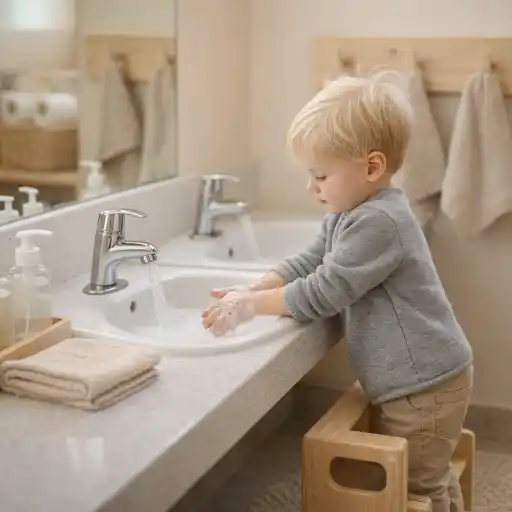
Teach one consistent sequence at the sink: wet hands, apply soap, scrub all hand surfaces for at least 20 seconds, rinse, and dry thoroughly. Include palms, backs of hands, between fingers, thumbs, and under nails. The CDC recommends building time into daily routines for handwashing and supervising or assisting younger children and children who need additional support.
- Keep soap, running water, and a reliable way to dry hands available.
- Use a short song, rhyme, or visual sequence to help children stay at the sink long enough to scrub.
- Support children without rushing them; use developmentally appropriate prompts and assistance.
- Prioritize soap and water after toileting. Hand sanitizer does not remove all germs and is not a replacement for handwashing in this situation.
Adults set the tone. When staff model the same steps and use calm language—“Soap, scrub, rinse, dry”—children receive a clear, repeatable message. For staff learning beyond bathroom routines, Prevention and Control of Infectious Diseases Buy Now $16.00 offers a focused two-hour online course about maintaining a healthy child care environment and reducing the spread of illness.
How can bathroom signs and visual cues make the routine easier?
Signs work best as prompts for a routine adults have already taught. Place a bathroom-sequence sign where children can see it while toileting and a separate handwashing sign near the sink. Use simple pictures, a small number of steps, clear contrast, and child-friendly language. Position signs at children’s eye level, where they will remain visible but will not interfere with sanitation or facility rules.
For a ready-to-use option, consider ChildCareEd’s Bathroom Signs resource. Pair visuals with demonstration and practice instead of expecting a poster to teach the full skill on its own. The CDC recommends visual cues such as posters and stickers in visible areas, including bathrooms and sinks. Visual directions can be especially helpful for children who are still learning the sequence, children who benefit from picture-based communication, and children who speak different home languages.
- Use one picture or short phrase per step: toilet, flush, soap, scrub, rinse, dry.
- Choose signs that reinforce privacy, respectful toileting, and handwashing—not just speed.
- Review the sequence together before children use the bathroom, then offer a quiet reminder when needed.
- Check signs regularly for damage, soil, or fading, and clean them according to their material and program procedures.
A sign should never replace active supervision or individualized help. Some children may need a verbal cue, a visual schedule, adapted equipment, extra time, or direct adult assistance. Coordinate supports with families and follow each child’s needs while preserving privacy and dignity. Thoughtfully placed #signs can make expectations visible without turning the bathroom into a place of constant correction.
What cleaning and disinfection practices should staff follow?
Build the bathroom into a written cleaning schedule that names the task, frequency, and responsible staff role. Toilets and sinks generally need routine cleaning and attention when visibly soiled; high-touch points such as faucet handles, flush controls, door handles, and light switches deserve particular attention. Increase cleaning or disinfection when illness or contamination makes it necessary, following public health guidance and your program’s policies.
Use the right process for the task. The CDC explains that cleaning with soap or detergent and water removes dirt and many germs. Disinfection uses an appropriate product to destroy remaining germs after cleaning. Bathrooms are among the areas that early care programs should disinfect routinely. Always follow the product label for surface compatibility, protective equipment, ventilation, and contact time; the surface must remain wet for the full label-specified contact time.
- Clean visible soil first, then disinfect as required by the schedule or circumstances.
- Use products only as directed; never mix cleaners or disinfectants.
- Keep chemicals in their original, labeled containers and locked away from children.
- Use gloves or other protective equipment when directed, and wash hands after cleaning and after removing gloves.
- Record completed tasks so staff can see what has been done and what remains.
The CDC’s cleaning and disinfection guidance for early care settings emphasizes cleaning before disinfecting and following label directions. Clear schedules reduce guesswork and help directors coach staff consistently. During illness outbreaks, consult local health authorities and licensing guidance about whether procedures or frequency should change.
How can directors support staff consistency and children’s dignity?
Even a strong written policy can falter when a busy classroom runs short on soap, paper towels, or staff coverage. Directors can make good practice easier by checking supplies, assigning bathroom responsibilities, and building enough time into transitions for children to wash and dry their hands. Shared procedures matter: children should encounter the same calm expectations across classrooms and staff shifts.
Coach staff to provide help privately and respectfully. Use neutral language, protect children from unnecessary exposure, and treat toileting accidents as care needs rather than misbehavior. Individual children may need more supervision or tailored communication supports, so make those expectations clear to relevant staff while maintaining confidentiality.
- Include bathroom hand hygiene and cleaning procedures in orientation and refreshers.
- Observe routines supportively; recognize effective practice and address gaps with practical coaching.
- Keep a simple cleaning log and a clear process for reporting a supply shortage or maintenance concern.
- Share consistent, accessible hygiene messages with families when helpful.
Common pitfalls are easy to overlook: assuming children will remember without practice, using sanitizer as a substitute after toileting, disinfecting before cleaning visible soil, or treating signs as a substitute for supervision. A brief staff huddle can clarify what each person does and when. Requirements differ by location and program type; state requirements vary - check your state licensing agency and follow applicable local public health guidance.
What is the practical checklist for a cleaner shared bathroom?
Reducing germ spread in a shared child care bathroom is a coordinated routine—not one product or poster. Handwashing at key moments, age-appropriate visual cues, attentive supervision, and safe, scheduled cleaning work together. When children receive consistent, respectful guidance, they can participate in the routine while staff maintain a hygienic environment.
- Keep soap, water, and hand-drying supplies available throughout the day.
- Teach and reinforce a 20-second handwashing routine after every toilet visit.
- Post clear bathroom and handwashing signs where children can see them.
- Schedule cleaning and disinfection of bathroom fixtures and high-touch surfaces; follow product labels and document tasks.
- Coach staff on privacy, individualized assistance, chemical safety, and what to do when supplies or equipment need attention.
These small, repeated actions create a more dependable system for children, families, and staff. Start by checking the sink area and posted steps, then review the cleaning schedule with the team. For a broader learning experience on hygiene practices and infectious-disease procedures, explore Shoo, Germs! Don’t Bother Me! Buy Now $24.00. With thoughtful routines and clear #bathroom guidance, shared spaces can support both health and growing independence.
Related ChildCareEd courses:
- CDA Home Visitor Subject Area 3 Part 3 Birth to 5
- How To Keep A Healthy Class: Six Tips for Germ Control
- How To Keep A Healthy Class: Six Tips for Germ Control
- Collaboration for the Win
- Texas Director Credential
- Prevention of Sudden Infant Death Syndrome and Use of Safe Sleep Practices
- Everyday Safety: Creating Healthy Environments
- Family Child Care: Building, Premises, and Outdoor Safety
- Supporting Families and Caregivers in Language and Literacy
- Back to School: Tips to Tackle Germs and Keep Kids Healthy
- CDA Certification en Español: Recursos y Consejos para Educadores Bilingües
- Preventing Infectious Diseases in Illinois
- Infection Control Practices for Child Care Settings
- Wash, Scrub, Shine! Fun Ways to Teach Hand Washing to Kids
- Proporciones de Cuidado Infantil y Tamaños de Grupo por Edad en Maryland (Guía Rápida para Centros y Hogares)
- Celebrando la amistad en el cuidado infantil durante el Día de los Mejores Amigos
- Cómo simplificar la capacitación para sus empleados de daycare
- What Are the Best Practices for Diapering and Handwashing Procedures in Child Care?
- How Can Classrooms Prevent the Spread of Illness During Cold and Flu Season?
- What Handwashing Rules Should Every Child Care Provider Teach?
- What Should Daycare Illness Policies Include to Protect Children, Staff, and Families?
- When Should a Sick Child Be Sent Home From Daycare?
- How Long Should a Child Stay Home After Vomiting?
- How Can Child Care Centers Properly Sanitize Toys?
- How Can Child Care Programs Make Handwashing Possible During the Busiest Part of the Day?
- How Can Child Care Providers Prevent the Spread of Illness in the Classroom?
- When Should a Sick Child Be Sent Home From Daycare?
- Cleaning, Sanitizing, and Disinfecting in Child Care: What’s the Difference?
- How Can Child Care Programs Reduce Germ Spread in Shared Bathrooms?
