Summer in Michigan means lake days and backyard pools. As a child care provider or director, you want joyful water play and safe routines. This guide gives clear steps you can use today to reduce risks near the Great Lakes and home pools. It links to practical resources from ChildCareEd, the CDC, and the Red Cross so you can plan, train staff, and talk with families. Remember: state requirements vary - check your state licensing agency. This article highlights five big ideas: planning, layers of protection, special risks of open water, staff training, and emergency steps. You'll also find quick checks and common mistakes to avoid to protect the children in your #Michigan program and build family trust.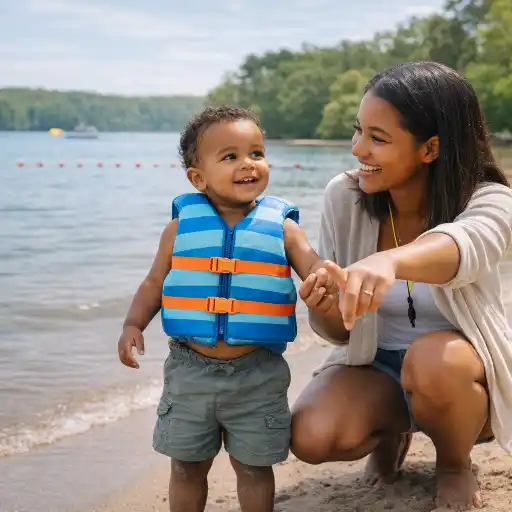
Why it matters
The Great Lakes present hazards different from pool water: currents, waves, and cold water. Local reporting shows many drownings occur along Lake Michigan shores, especially outside lifeguarded areas, in the Great Lakes.
How is lake water different from backyard pools, and what hazards should I watch for?
1. Currents and rip-like flows on the Great Lakes can pull even strong swimmers away from shore. Local safety officials urge people to know rip currents and to swim parallel to shore to escape strong currents. Great Lakes beach tips.
2. Cold water shock matters. Even on warm days, deep lake water is colder than a pool, which can cause cramps or breathing trouble. Teach staff and families about time limits and wetsuit use when needed,d Red Cross natural water guidance.
3. Visibility and rescue access differ. A fenced pool often has clear sightlines and easy access for rescue tools. Open beach areas may not. Plan for a shore watcher, a rescue gear station, and designated safe swim zones whenever you visit a beach or lake regional data.
4. What to tell families: encourage swim lessons, life jacket use on boats or in open water, and avoiding alcohol. The CDC recommends swim lessons and life jacket use for natural water safety, ty CDC Vital Signs.
What layers of protection should a child care program use for pools and water play?
- 🔒 Physical barriers: 4-sided fencing with self-closing, self-latching gates around home pools prevents unsupervised access. Check local rules—many sites list state fence standards and Michigan requirements, NTS Pool fence laws.
- 👀 Active supervision: assign a single trained "water watcher" for each water area. This person must avoid distractions and stay within arm's reach for toddlers. ChildCareEd lays out hands-on supervision tips for programs, Preventing drowning on water-play days.
- Active supervision and water safety: To help staff confidently maintain the focused, distraction-free supervision that water play requires, ChildCareEd's Safe Supervision in Child Care: Birth to School Age
 Buy Now $24.00 is a 3-hour online course covering active supervision strategies, zone assignments, headcount routines, and how to maintain safe sight lines during high-risk activities — a direct match for the water watcher role, ratio posting, and beach site checklist steps outlined in this guide.
 - 🛟 Personal flotation devices: Use U.S. Coast Guard–approved life jackets for boating and for weak swimmers in open water. Don’t rely on inflatable toys as safety devices, Red Cross Water Safety.
- 🧰 Rescue tools & policies: keep a rescue ring, reaching pole, phone, AED, and first-aid kit near water. Post a written water-play plan and parental permission forms.
- 🏫 Swim lessons & water competency: support family access to lessons; the CDC emphasizes increasing swim lesson access to reduce drowning risk,k CDC Vital Signs.
Small practical steps: remove toys from the pool area when not in use, empty wading pools after each use, lock gates, and always count children before and after water play. For group care, limit the number of children in any water activity and post the adult-child ratios and roles visibly.
How should Michigan home-based programs plan safe water-play and backyard pool policies?
1) Start with written rules. Post a short water-play policy that covers: supervision roles, ratio, and touch supervision for infants/toddlers, permission forms, life jacket rules, and what to do if a child is missing. ChildCareEd provides sample forms and guidance on communication with families in Michigan summer planning.
2) Know local codes. Michigan and municipalities may require fence height, gate latches, or additional equipment—check local building or health departments and the pool fencing guidance. Pool fence laws. State requirements vary - check your state licensing agency.
3) Prepare every outing to the lake: use a site checklist that includes designated swim zone, lifeguard presence, water temperature, prevailing winds, and rescue access. If your group goes to a public beach, choose lifeguarded areas and brief families in writing about risks before the trip, and local beach tips.
4) Parent communication and consent: send numbered trip notes: 1) location, 2) time, 3) what to bring (life jacket, towel, sunscreen), 4) phone numbers and swim ability questions. Use signed permission forms and medical info on file.
5) Practical site setup at home: create a gated pool storage for life jackets, place rescue tools on a visible hook, label a waterproof Go-Bag with emergency contacts, and run weekly safety checks. ChildCareEd templates and free PDFs can help build these lists quickly.
What training, emergency steps, and drills should staff have for water incidents?
1) Required skills: All staff should hold current pediatric CPR and First Aid. At least one staff member per shift must be certified in infant/child CPR and choking response. ChildCareEd offers blended and in-person CPR courses for providers, including CPR & First Aid training. For a concise overview of why pediatric first aid and CPR are critical for summer programming and how to enroll, see ChildCareEd's Summer Fun Meets Summer Safety: The Importance of Pediatric First Aid and CPR Training.
2) Roles and drills: assign clear roles for any water emergency: rescuer, caller (911), crowd control, and parent notifier. Practice short drills so the team moves quickly and calmly. The Red Cross recommends "reach or throw, don’t go" for most rescues unless you are trained in Red Cross rescue steps.
- 🚑 Responding to emergencies: For staff who need to feel confident acting quickly during a water incident, ChildCareEd's Responding to Emergencies Buy Now $16.00 is a 2-hour online course covering how to recognize emergencies, assign rescue roles, follow first aid steps, and communicate clearly with families and emergency services — directly supporting the missing child protocol, drill assignments, and incident documentation routines described throughout this article.
3) Missing child protocol: if a child is missing, check the water first. Seconds count—staff should be trained to check pools, tubs, and nearby water immediately and call 911 if needed. This is emphasized by CDC and ChildCareEd guidance, CDC summer swim safety,y and ChildCareEd water-play guide.
4) Documentation & follow-up: after any incident, document actions, notify parents and the licensing agency as required, and run a staff debrief to improve procedures. Legal risk is real—landowner and operator liability is discussed in legal guides about pool drownings; good policies reduce risk and help in defense if incidents occur. Liability overview.
Common mistakes & how to avoid them
- ❌ Relying on swim lessons alone — ✅ Fix: keep active supervision and life jackets for weak swimmers. CDC notes lessons reduce risk but don’t replace supervision.
- ❌ Allowing toys in the water when unattended — ✅ Fix: remove toys and empty small pools after use. ChildCareEd recommends emptying wading pools and removing attractors. Water Safety for Toddlers.
- ❌ Distracted water watcher — ✅ Fix: rotate watchers, use checklists, and ban phones during supervision.
Summary
1) Use layers of protection: fencing, active supervision, life jackets, swim lessons, and rescue tools. 2) Treat Great Lakes outings differently than backyard pool days—plan for currents, cold water, and limited rescue access. 3) Train staff in CPR and run short drills that assign clear roles. 4) Communicate with families and document policies and permission forms. ChildCareEd has many practical templates and courses to help your program prepare quickly for Michigan planning and water-play safety.
Quick checklist to keep handy:
- 🔎 Gate locked & fence intact
- 👀 Water watcher assigned (no distractions)
- 🛟 Life jackets nearby and in proper sizes
- 📞 Phone, AED, and rescue tools ready
- 📋 Signed permission forms & swim info on file
You are doing essential work. Small steps, practiced often, make water play safer and keep children smiling. For program templates, training, and free PDFs, visit ChildCareEd’s resources and review CDC and Red Cross guidance for natural water and pool safety.
1. Natural water is unpredictable. Lakes and rivers can have: currents, sudden drop-offs, cold temperatures, hidden rocks, and changing weather. These are not hazards you find in a fenced backyard pool. The Red Cross explains how natural water needs different skills and caution for Lake & River Safety. 1 Drowning can be fast and quiet; young children are at the highest risk. The CDC shares sobering national data about drowning and nonfatal drowning outcomes, and stresses prevention steps like swim lessons and supervision. CDC Drowning Data. Use the idea of "layers of protection": no single step is enough—combine many. The American Red Cross and ChildCareEd both recommend these layered steps: ChildCareEd Water Safety:
- 45 Hour Child Growth and Development
- CDA Preschool Credential with Portfolio Review
- Birth to Five CDA Credential with Portfolio Review
- CDA Family Child Care Credential with Portfolio Review
- Pediatric RSV First Aid & CPR/AED
- CDA Infant/Toddler Credential with Portfolio Review
- Texas Director Credential
- Family Child Care: Building, Premises, and Outdoor Safety
- Maximizando la Alegría y el Aprendizaje del Verano: el Papel de la Supervisión Infantil en el área Metropolitana de Dallas
- CDA Certification en Español: Recursos y Consejos para Educadores Bilingües
- 🥦✨ ¿Cómo apoyar a los niños selectivos a probar nuevos alimentos sin presión?
- Recursos en Español sobre el Sueño Seguro del Bebé
- 10 Ejemplos de Cómo la Cultura Influye en el Desarrollo Infantil
- Capacitación en Salud y Seguridad Preventiva en Línea para Proveedores de Cuidado Infantil
- Regulaciones de Licenciamiento de Cuidado Infantil en California para Centros y Hogares de Cuidado Infantil Familiar
- Proporciones de Cuidado Infantil y Tamaños de Grupo por Edad en Maryland (Guía Rápida para Centros y Hogares)
- Proporciones de Cuidado Infantil y Tamaños de Grupo por Edad en Nueva Jersey (Guía Rápida para Centros y Hogares)
- Proporciones de Cuidado Infantil y Tamaños de Grupo por Edad en Virginia (Guía Rápida para Centros y Hogares)
- Lista para Guardería en Casa en Illinois: Cómo Iniciar una Guardería en el Hogar
- Cómo Trabajar en el Cuidado Infantil en Wisconsin: Requisitos y Pasos
- Capacitación Previa al Servicio para Proveedores de Cuidado Infantil en Nevada
- Las Mejores Ideas de Excursiones para Guarderías en Georgia
- How can Michigan classrooms teach children about the Great Lakes with hands-on science activities?
- How can Michigan's Great Lakes communities fix rural child care deserts?
- Canciones, juegos y preguntas de círculo para niños
- La mejor manera de hacer seguimiento a la capacitación de su equipo de daycare How to Organize Staff Training for Your Child Care Center Cómo organizar la capacitación del personal para su centro de cuidado infantil
- Cómo simplificar la capacitación para sus empleados de daycare
- How can Michigan providers keep kids safe around the Great Lakes and backyard pools?
