Water play and pool days can be exciting learning experiences for young children, but they require careful planning, constant supervision, and reliable emergency procedures. This article gives child care directors, family child care providers, and staff practical guidance for creating strong water-safety policies, assigning clear supervision roles, inspecting equipment and play areas, maintaining secure barriers, preparing emergency supplies, and communicating expectations with families. To strengthen staff readiness, explore ChildCareEd’s self-paced online course A Watchful Eye: Supervision in Early Childhood  Buy Now $16.00, which focuses on effective supervision practices that help keep children safe in different settings. Programs can also use the free Playground and Water Safety Child Care Guidelines Buy Now $0.00 and Preventing Accidental Drowning & Responsibilities in Child Care Buy Now $0.00 resources to reinforce water supervision, barriers, staff training, emergency drills, and family education. State requirements vary, so always check with your state licensing agency when planning water activities.
Why it matters:
1) Drowning is fast and often silent. Young children are at the highest risk — many incidents occur in home pools, bathtubs, or small containers of water. See data and prevention steps from the CDC and the American Red Cross.
2) Thoughtful policies, staff training, and family partnerships reduce risk and build trust. Child care programs that rehearse roles and use layers of protection are better prepared to prevent near-misses and respond quickly if an incident occurs. For program guidance and templates, review the materials at ChildCareEd: How can childcare programs prevent drowning… and ChildCareEd: Water Safety for Toddlers and Young Children.
1) What layers of protection should our program use every time children are near water?
- 🛡️ Physical barriers: Install four-sided fencing with self-closing, self-latching gates around pools. For home-based programs, follow guidance like the ChildCareEd California pool case study and national advice from the CDC and Red Cross.
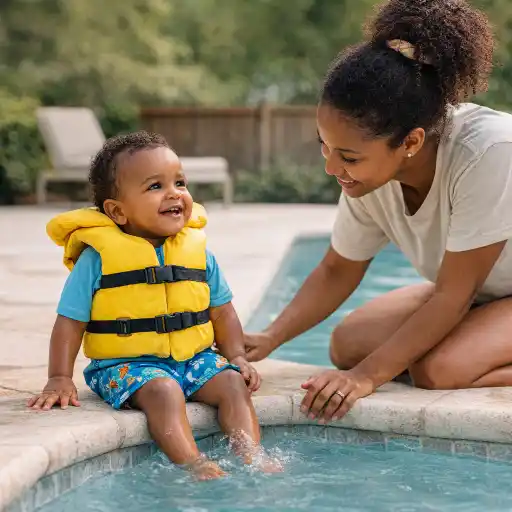
- 👀 Designated water watcher: One adult is assigned to watch the water and only the water. Use touch supervision (within arm’s reach) for infants and toddlers and an active watcher for older preschoolers. See program tips at ChildCareEd.
- 🛟 Personal flotation devices: Use U.S. Coast Guard–approved life jackets for boating and weak swimmers. Do not rely on floaties or inflatable toys — they are not safety devices (CDC).
- 📚 Swim and water competency: Offer or refer families to swim lessons; lessons reduce risk but do NOT replace supervision (Red Cross).
- 🩺 Emergency skills: Ensure staff maintain pediatric #CPR and first-aid certifications, practice drills, and keep an AED accessible if possible (ChildCareEd: Preventing Accidental Drowning Buy Now $0.00). Staff can also take ChildCareEd's First Aid & CPR course to build hands-on pediatric rescue skills and confidence in emergency response.
- 🧰 Environmental controls and checklists: Secure toys when the pool is closed, empty small water containers, lock doors that lead to water, and store pool chemicals safely (ChildCareEd Playground & Water Guidelines Buy Now $0.00).
2) How should we staff, train, and plan before every water day?
- 😊 Written water-play plan: Include supervision roles, attendance procedures, emergency steps, communication with parents, and ratios. Keep signed parental permissions and swim ability notes on file (ChildCareEd).
- 👀 Designate water watcher(s): 1 adult per pool area; for mixed-age groups, add an extra adult to maintain sight lines. During in-pool time for toddlers, use touch supervision (arm’s length).
- 📘 Required training: Ensure all staff are current in pediatric #CPR and first aid. Regular refreshers and mock drills keep skills fresh (ChildCareEd training notes).
- 🧰 Equipment & checks: Life jackets in multiple sizes, rescue ring, shepherd’s hook, first aid kit, AED (if available), phone with emergency numbers, and daily gate/cover/drain inspections (Red Cross).
- 🔁 Rehearse roles: 1) rescuer, 2) 911 caller, 3) crowd control, 4) documenter/parent notifier. Run short drills at the start of season and after staff changes (ChildCareEd emergency plan templates).
- 📋 Ratio conservative practice: Reduce group sizes or add adults for water activities—better to be conservative. Many licensing agencies have specific ratio requirements; state requirements vary - check your state licensing agency.
- 📢 Parent communication: Share rules, clothing needs, pick-up times, and your emergency plan. Obtain signed permissions and swim ability statements.
3) What immediate actions should staff take if a child is missing or submerged?
- 👀 Search the water first: If a child is missing, check all nearby water immediately. Many programs and public health resources stress this first-check step (Red Cross facts).
- 📞 Call 911: One designated staff member places the call and gives clear location details; another continues rescue and supervision.
- 🛟 Rescue safely: Use a pole, ring, or throw device first. Enter the water only if trained, able, and if doing so does not endanger the rescuer. Follow the “reach or throw — don’t go” guidance from the Red Cross.
- 💨 Begin rescue breathing/CPR: If the child is unresponsive or not breathing, start pediatric rescue breaths and CPR immediately. Trained staff should begin care while someone else continues to call EMS.
- 🔁 Use an AED if available: Turn on and follow prompts. Continue care until EMS takes over.
- 📝 Document and notify: After the event, record details, notify parents, and follow licensing reporting rules. Also run a team debrief to update policies and close any gaps (ChildCareEd emergency plans).
4) What common mistakes cause preventable risk — and how can programs avoid them?
Learning from common pitfalls helps programs strengthen practice. Here are the top mistakes and practical fixes:
- ❗ Over-reliance on swim lessons: Swim lessons reduce risk but do not replace active supervision. Always keep a designated #supervision plan in place (CDC).
- ⚠️ Distracted water watcher: Phones, reading, or socializing are frequent contributors to lapses. Make the water watcher role single-task during water times and rotate responsibilities.
- ❌ Using inflatable toys as safety devices: Floaties and water wings can fail; use Coast Guard–approved life jackets for safety when needed (CDC Summer Swim Safety).
- 🔄 Poor practice of drills and documentation: Without rehearsal, staff are slower to act. Schedule brief drills, keep emergency roles posted, and use attendance checklists for every water session (ChildCareEd templates).
- 🪣 Small water hazards overlooked: Buckets, wading pools, and pet bowls are real risks. Empty and store them after use and include them in daily checklists (ChildCareEd guidance).
5) How do we partner with families and meet licensing expectations?
Families are essential partners in #safety. Use these 6 steps to align program practice and licensing needs:
- 📄 Share your written water-play policy: Distribute the plan, rules, and permission forms before any water activity. Keep signed permissions in each child’s file (ChildCareEd).
- 😊 Explain swim ability and lesson options: Offer community referrals for swim lessons (Red Cross and local YMCAs) and explain that lessons don’t remove the need for supervision (Red Cross).
- 📋 Licensing and documentation: Maintain staff training records (pediatric #CPR, first aid), attendance rosters, emergency drills, and incident reports. State requirements vary - check your state licensing agency.
- 🔗 Use community resources: Link families to CDC drowning prevention resources (CDC resources) and local swim programs to reduce disparities in swimming access.
- 💬 Post-incident communication: After any water-related incident, share facts with families, the licensing analyst as required, and your team’s corrective actions. Transparency builds trust.
- 📈 Continuous improvement: Track near-misses, update checklists, and celebrate safety wins with staff and families to create a stronger culture of #safety and prevention.
Summary
Water activities enrich children’s learning and joy, and they also demand intentional planning. Use layered protections — barriers, a designated water watcher, life jackets, swim lessons, staff training in #CPR, and clear family communication — to reduce risk. Practice brief drills, keep conservative staffing for water days, and avoid common mistakes like distraction and over-reliance on flotation toys. For program templates, training, and checklists, see the ChildCareEd resources linked above (for example, Sample Child Care Emergency Action Plan) and national guidance from the CDC and the Red Cross. Remember: state requirements vary - check your state licensing agency.
FAQ
- Q: Can family child care providers use small inflatable kiddie pools?
A: Generally avoid them for groups. If used, empty, clean, and store them after each use and follow CDC and program guidance (CDC Outdoor Play & Safety, ChildCareEd). - Q: How close should staff be to toddlers in water?
A: Within arm’s reach — touch supervision — and ready to respond instantly. - Q: Do swim lessons mean we can relax supervision?
A: No. Lessons are protective but do not replace active adult supervision (CDC Summer Swim Safety). - Q: Who calls 911 in an incident?
A: Assign one staff member to call while others manage rescue and other children. Rehearse this role before water days. - Q: Where can I get quick checklists and emergency plan templates?
A: ChildCareEd offers free resources and sample emergency plans (ChildCareEd Resources).
When seconds count, a rehearsed, calm response is lifesaving. Use the following numbered action sequence and assign roles before any water activity. Preparation reduces error. Follow these 7 program-ready steps to plan a safe water activity: Use multiple, overlapping safety measures — no single strategy is enough. Prioritize these 6 layers:
- 45 Hour Child Growth and Development
- 45 Hour Preschool Methods and Materials
- Bienvenido! Welcoming All Families
- 45 Hour Infant and Toddler Methods and Materials
- 45 Hour School Age Methods and Materials
- CDA Bridge Bundle: Family Child Care without Portfolio Review
- Texas Director Credential
- 10 Hour Health and Safety Orientation Training
- Family Child Care: Building, Premises, and Outdoor Safety
- Water Safety for Toddlers and Young Children
- Water Safety
- Child Care Licensing in Texas: 2025 Rule Changes Every Director Needs to Know
- How should child care providers handle food, nutrition, and mealtimes for infants and toddlers?
- Recursos en Español sobre el Sueño Seguro del Bebé
- What should be on a playground safety checklist for child care centers?
- Preschool STEM Activities for Hands-On Learning
- Common Baby Safety Hazards and How to Prevent Them
- Capacitación en Salud y Seguridad Preventiva en Línea para Proveedores de Cuidado Infantil
- Proporciones de Cuidado Infantil y Tamaños de Grupo por Edad en Maryland (Guía Rápida para Centros y Hogares)
- Proporciones de Cuidado Infantil y Tamaños de Grupo por Edad en Virginia (Guía Rápida para Centros y Hogares)
- How can DC child care programs keep kids safe outdoors from insects, wildlife, and bites?
- Canciones, juegos y preguntas de círculo para niños
- How can New York child care providers use active supervision to keep children safe around water this summer?
- How can Michigan providers keep kids safe around the Great Lakes and backyard pools?
- How can Michigan providers keep children safe around fireworks this Fourth of July?
- How can childcare providers and families keep children safe around water?
- How Can Providers Bring Nature-Based Learning Into Any Program?
- What Water Safety Rules Should Every Early Childhood Program Teach?
- How Can Child Care Programs Make Handwashing Possible During the Busiest Part of the Day?
