Summer means water play, field trips to pools, splash days, and heat — and it also means we must be extra careful. This guide helps New York child care directors and providers plan safe water days using simple, repeatable steps. You will get numbered checklists, staff roles, training tips, quick emergency actions, and common mistakes to avoid. This is written in a friendly, practical way so your team can use it today. Remember: state requirements vary - check your state licensing agency.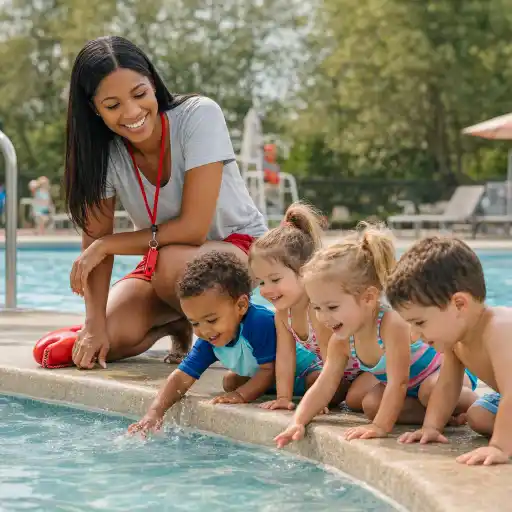
Why it matters: Drowning is fast and quiet, and the youngest children are at the highest risk. Using strong #supervision and layers of protection keeps play joyful and lowers risk. For national guidance and background, see CDC Drowning Prevention and the national standards in Caring for Our Children. For practical program steps, ChildCareEd has great resources on Water Safety and on preventing drowning and water emergencies.
What is active supervision,n and why is it the first layer of safety around water?
Active supervision means being close enough to act quickly, moving to get good sightlines, scanning and counting often, listening for changes, and engaging with children to prevent risky moments. Use these steps every time children are near #water.
- 😊 Position: place a staff member where they can see and reach the water area. Put adults at gates, pool edges, and near splash stations. See Why Active Supervision.
- 👀 Scan & Count: do a head count at every transition, before and after leaving a room, and every few minutes when children are near water.
- 👂 Listen & Anticipate: sudden quiet or unexpected noise may mean trouble—move to check it out before it becomes an emergency.
- 💬 Engage: join play, remind children of simple rules ("feet first," "stay where I can see you"), and use gentle redirection.
- 🧩 Arrange: remove blind spots, keep low shelves and clear sightlines, and limit the number of children near water at once.
Why this matters: Studies and guidance from the CDC and ChildCareEd show that supervision plus environmental design reduces drowning risk. Keep the whole team using the same language and the same short routines.
How do I plan safe water play days in my New York program?
Plan in layers: policies, staffing, equipment, family communication, and a written emergency plan. Follow these numbered steps when scheduling any water activity. Also, remember: state requirements vary - check your state licensing agency.
- 📝 Written plan: create a one-page water-play plan that lists location, number of children, staff assignments, start/end times, and communications to families. Post this where staff can see it.
- 🔒 Barriers & Access: keep pool gates locked, remove toys after play, and secure accidental water sources (buckets, coolers, pet bowls). See Water Safety for examples.
- 👀 Designate a water watcher: 1 adult is always assigned to watch water — no phones, no paperwork. Rotate the role to avoid fatigue.
- 🧍 Ratios & Zones: assign clear zones so each staff member knows their sightline. For mixed ages, use age-appropriate zones and smaller groups; see Six strategies for mixed ages.
- 🛟 Equipment & permissions: have properly sized U.S. Coast Guard life jackets for outings, ensure first aid supplies are ready, and collect signed parent permissions and medical notes.
- 📣 Family notice: tell families the plan, what children should wear, and any swim lesson or life jacket rules. Share your emergency and pick-up plan in writing.
Quick check: before any water day, run a 5-point pre-check: gate locked, water watcher assigned, permission forms on hand, life jackets present, phone and AED available.
What staffing, training, and equipment do we need to respond fast in an emergency?
When seconds count, training and clear roles make the difference. Use this numbered list to prepare staff and gear.
- 📚 Required training: ensure staff hold current pediatric CPR and First Aid. ChildCareEd lists suitable courses like Pediatric First Aid & CPR Buy Now
$85.00$80.00. The Red Cross also offers water safety and lifeguard training for programs that run pools (Red Cross Swim Safety). For a concise guide on why pediatric first aid and CPR training are essential for summer water safety and how to enroll in ChildCareEd courses, see Summer Fun Meets Summer Safety: The Importance of Pediatric First Aid and CPR Training. - 👥 Assign emergency roles (numbered):
- Rescuer — pulls the child out or uses a reaching/throwing device;
- Caller — dials 911 and gives location details;
- Crowd control — moves children to a safe place and comforts others;
- Recorder/communicator — documents the event and notifies parents and licensing.
- 🧰 Gear checklist: AED, fully stocked first aid kit, reaching/pulling device, phone with emergency numbers, and properly fitted life jackets. Keep a diagram of where this gear is stored.
- 🔁 Practice drills: run short, 10–15 minute drills each season so staff practice pulling a child, starting CPR, calling 911, and handing off to EMS. Debrief and update the plan after each drill.
- 📄 Documentation: after any incident or drill, file a brief report and schedule a follow-up to adjust the plan. Share lessons with staff and families.
Training requires recertification and quick refreshers. ChildCareEd and the Red Cross have courses and online refreshers to keep skills current.
How do we supervise, spot risks, and avoid common mistakes on water days?
Use the seven active supervision steps and a short list of common pitfalls to avoid. Keep language simple for staff and families and practice often.
- Position, scan & count, listen, anticipate, engage, arrange — the core steps from ChildCareEd’s active supervision guides (7 Active Supervision Strategies and Why Active Supervision).
- 🔍 Common mistakes and fixes:
- ❌ Staff distracted by phones. ✅ Fix: water watcher phone-off policy and visible role sign.
- ❌ One adult is supposed to watch too many zones. ✅ Fix: assign zones and have a floater during transitions.
- ❌ Assuming swim lessons replace supervision. ✅ Fix: keep touch supervision for young children even after lessons (see CDC).
- ❌ Using inflatable toys as safety devices. ✅ Fix: use U.S. Coast Guard life jackets for non-swimmers (Red Cross).
- 🧠 Practice & coaching: use short observations (10–15 minutes), give 1 praise + 1 tip feedback, and rotate water watcher duties to prevent fatigue. ChildCareEd suggests this in leadership and coaching guides.
- 🧾 Quick tips for staff: count at every transition, keep rescue tools in reach, empty buckets right away, and always check the water first if a child is missing.
FAQ (short):
- Q1: How close should staff be to toddlers in water? A: Within arm’s reach — touch supervision is recommended for infants and toddlers (see Water Safety for Toddlers).
- Q2: Do swim lessons remove the need for supervision? A: No. Lessons help skills but never replace active supervision (CDC).
- Q3: Should we use kiddie pools in group care? A: Use extreme caution; many programs recommend emptying and cleaning daily or avoiding them in group settings (Water Safety).
- Q4: When do we call 911? A: For unresponsiveness, no breathing, seizure in water, or signs of severe distress — call 911 immediately.
Conclusion
- ✅ Keep the plan simple: assign a water watcher, post a one-page plan, and use the same counting and scanning routine every time.
- ✅ Train and drill: require CPR/First Aid, practice rescue drills, and coach staff frequently.
- ✅ Use layers: fences, gates, life jackets, small groups, clear sightlines, and engaged staff protect children.
For program tools, posters, and training, start with ChildCareEd’s water and supervision pages: Water Safety, Active Supervision, and the drowning-prevention guide at Preventing Drowning. And again: state requirements vary - check your state licensing agency. Keeping routines short, practiced, and shared with families helps your team offer safe, fun water days for your #children in #NewYork with excellent #safety and calm confidence.
- 45 Hour Child Growth and Development
- 45 Hour Preschool Methods and Materials
- Mastering Supervision: Keeping Children Safe in All Settings
- 1,2,3, Eyes on Me: Classroom Safety
- Pediatric RSV First Aid & CPR/AED
- 45 Hour School Age Methods and Materials
- Texas Director Credential
- 10 Hour Health and Safety Orientation Training
- Family Child Care: Building, Premises, and Outdoor Safety
- Get Ready for Summer!
- Summer Fun Meets Summer Safety: The Importance of Pediatric First Aid and CPR Training
- Recursos en Español sobre el Sueño Seguro del Bebé
- Capacitación en Salud y Seguridad Preventiva en Línea para Proveedores de Cuidado Infantil
- Proporciones de Cuidado Infantil y Tamaños de Grupo por Edad en Maryland (Guía Rápida para Centros y Hogares)
- Proporciones de Cuidado Infantil y Tamaños de Grupo por Edad en Nueva Jersey (Guía Rápida para Centros y Hogares)
- Proporciones de Cuidado Infantil y Tamaños de Grupo por Edad en Virginia (Guía Rápida para Centros y Hogares)
- How can we run safe water play and heat-safe summer activities for preschoolers in Texas?
- Canciones, juegos y preguntas de círculo para niños
- How can New York child care programs keep young children cool and hydrated during a heat wave?
- What indoor activities help New York child care programs stay safe and happy during a heat wave?
- How can New York providers bridge the summer gap with year-round learning?
- How can New York child care providers use active supervision to keep children safe around water this summer?
- How can my Minnesota child care program prevent drowning this summer?
- How can Michigan providers keep kids safe around the Great Lakes and backyard pools?
- How can we build a Minnesota summer program that keeps school-agers engaged?
- How can I build a nature-based curriculum for my New York program?
- How can childcare providers and families keep children safe around water?
- How Can Child Care Providers Teach Children to Recognize Safe and Unsafe Summer Choices?
- How Can Child Care Providers Plan a Balanced Summer Learning Routine for Young Children?
