Summer brings fun water play — and real risks. This short guide helps child care directors and providers plan safe water days at your #Minnesota program. It gives clear steps you can use today, links to trusted resources, and checks to reduce the chance of #drowning. Keep this page with your water-play plan and share it with staff and families.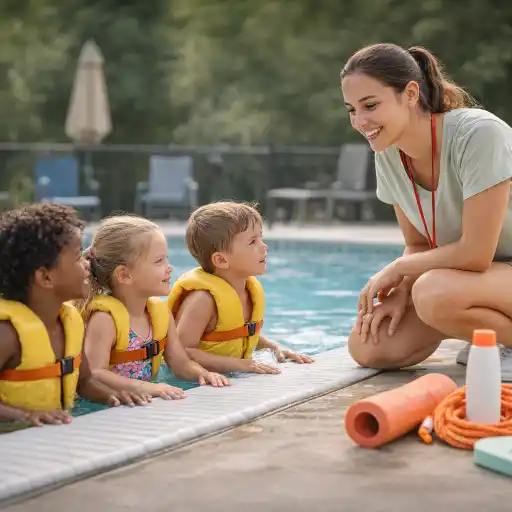
Why this matters:
1) Drowning is a leading cause of death for children ages 1–4. See the data from the CDC. 2) Drowning can be silent and quick. 3) Layers of protection work best — supervision, barriers, life jackets, swim lessons, and trained staff. For child care-focused tips and program ideas, see ChildCareEd’s article Water Safety for Toddlers and Young Children and the post on preventing drowning during water play.
What are the most important layers of protection we should use?
Use more than one safety step every time children will be near #water. Think of safety as a set of layers. Key layers are:
- 👀 Active supervision and water safety: To help staff confidently maintain the focused, distraction-free supervision that water play requires, ChildCareEd's Safe Supervision in Child Care: Birth to School Age
 Buy Now $24.00 is a 3-hour online course covering active supervision strategies, zone assignments, and how to maintain safe sight lines during high-risk activities — a direct match for the water watcher role, touch supervision standard, and pre-activity checklist steps outlined in this guide.
 - Barriers and gates: four-sided fencing that fully encloses pools and locked gates for spas or hot tubs. ChildCareEd highlights fencing and locked doors in its water safety guidance.
- Life jackets and approved floatation: Use U.S. Coast Guard–approved life jackets for boating and weak swimmers. Don’t rely on air-filled toys as safety devices (Red Cross).
- Swim lessons and water competency: lessons reduce risk but never replace supervision; Red Cross and CDC both recommend lessons plus active watching (Red Cross for Kids, CDC).
- Remove temptations: keep toys and buckets away from gates and doors so children aren’t attracted to water when it’s unsupervised. ChildCareEd explains removing temptations in its tips.
Why this matters to your program: layers reduce one-point failures. If one layer slips (for example, a child knows how to open a gate), other layers (alarms, locked doors, a water watcher) still protect children.
How should we staff, train, and equip for safe water days?
Preparation keeps everyone calm and fast in an emergency. Use clear roles, training, and gear.
- Staffing and roles:
- Designate 1 adult as the water watcher for a group. For infants and toddlers, use touch supervision (within arm’s reach) as advised by ChildCareEd (ChildCareEd).
- Use extra adults for mixed-age groups. Write down who watches when and post it.
- Training:
- All staff must have current pediatric CPR and First Aid. The Red Cross offers Adult & Pediatric CPR/AED courses, and ChildCareEd explains what to expect from certification (ChildCareEd First Aid & CPR). For a program-focused overview of pediatric first aid and CPR that highlights preparing staff for summer water activities, see ChildCareEd's pediatric first aid and CPR training guide. Programs scheduling seasonal activities or needing a short, program-focused refresher may also find ChildCareEd's Spooktacular CPR Safety guide useful for re-certifying staff and practicing pediatric scenarios relevant to child care settings.
- Practice emergency drills and rescue roles regularly (rescuer, phone/911 caller, crowd control, documentation).
- 🚑 Responding to emergencies: For staff who need to feel confident acting quickly during a water incident, ChildCareEd's Responding to Emergencies Buy Now $16.00 is a 2-hour online course covering how to recognize emergencies, assign rescue roles, follow first aid steps, and communicate clearly with families and emergency services — directly supporting the drill assignments, missing child quick plan, and incident documentation routines described throughout this article.
- Equipment & checks:
- 🛟 Keep life jackets sized for children and check their condition.
- 📱 Have a charged phone nearby, a stocked first aid kit, and an AED if possible.
- 🔒 Check gates, self-closing latches, and remove climbable objects near fences.
- Policies & paperwork:
- 📋 Create written water-play plans, parent permission forms, and a missing-child quick plan (check water first!).
- 🔁 Run a short drill at the start of each water season and when staff changes.
Reminder: state requirements vary - check your state licensing agency. Minnesota rules and training expectations have changed over time; see Minnesota bill summaries for licensing updates, such as training and supervision rules (Minnesota Senate summary).
What common mistakes do programs make, and how can we avoid them?
Knowing common pitfalls helps you fix small problems before they become tragedies. Here are frequent mistakes and clear fixes.
- Relying only on swim lessons.
- Distracted supervision (phones, conversations, tasks).
- Fix: Make a water-watcher rule: no phones, no food, no paperwork. Use short shift times and rotate watchers.
- Using inflatable toys as safety devices.
- Fix: Use only Coast Guard–approved life jackets for risk reduction. Air toys are play items, not safety gear.
- Skipping drills and documentation.
- Fix: Run monthly drills, log near-misses, and review policies. ChildCareEd recommends drills and checklists in its program post (ChildCareEd water play guide).
Quick avoidance checklist before every water activity:
- 🔒 Gate locked and free of climbables?
- 👀 Water watcher assigned and off their phone?
- 🛟 Life jackets on for weak swimmers or boating?
- 📞 Phone and emergency plan ready?
Frequently asked questions (FAQ)
- Q: Can we use small inflatable kiddie pools at the program?
A: Use caution. ChildCareEd advises emptying and cleaning them daily or avoiding group use. Small pools can be a hazard if left filled or unsupervised (ChildCareEd, CDC).
- Q: How close should staff be to toddlers in water?
A: Within arm’s reach and ready for touch supervision for infants and toddlers. This keeps rescue time to a minimum (ChildCareEd).
- Q: Do lifeguards remove staff responsibility?
A: No. Lifeguards add protection,n but do not replace your designated water watcher and program policies. Always keep your staff roles clear.
- Q: What training is essential?
A: Pediatric CPR/First Aid, active supervision training, and site-specific drills. See ChildCareEd’s First Aid & CPR materials and Red Cross courses (ChildCareEd CPR, Red Cross CPR).
Conclusion
Water play can be safe and joyful when you plan, train, and watch closely. Use layers of protection — strong #supervision, barriers, life jackets, swim lessons, and current CPR/First Aid training. Keep simple checklists, run brief drills, and share your plan with families. For program-focused tips and training links, ks check ChildCareEd’s water safety pages (water play guide, water safety for toddlers).
Remember: state requirements vary - check your state licensing agency. Your planning and attention make summer safe and fun for the children in your care. #safety #drowning #water #Minnesota
- Summer Fun Meets Summer Safety: The Importance of Pediatric First Aid and CPR Training
- 10 Reasons this Summer to Take Pediatric First Aid and CPR with ChildCareEd
- Summer Safety: Daycare Providers and Parents Need First Aid and CPR Training
- CDA Certification en Español: Recursos y Consejos para Educadores Bilingües
- 📜 ¿Qué es el Título 22 en el cuidado infantil de California?
- 👶 ¿Cuáles son las proporciones y grupos requeridos en Dakota del Norte? 🏫
- 10 Ejemplos de Cómo la Cultura Influye en el Desarrollo Infantil
- Capacitación en Salud y Seguridad Preventiva en Línea para Proveedores de Cuidado Infantil
- Cómo Empezar una Guardería en Casa: Requisitos y Pasos
- Proporciones de Cuidado Infantil y Tamaños de Grupo por Edad en Maryland (Guía Rápida para Centros y Hogares)
- Proporciones de Cuidado Infantil y Tamaños de Grupo por Edad en Nueva Jersey (Guía Rápida para Centros y Hogares)
- Proporciones de Cuidado Infantil y Tamaños de Grupo por Edad en Virginia (Guía Rápida para Centros y Hogares)
- Cómo Trabajar en el Cuidado Infantil en California: Requisitos y Pasos
- Capacitación Previa al Servicio para Proveedores de Cuidado Infantil en California
- Celebrando la amistad en el cuidado infantil durante el Día de los Mejores Amigos
- Cómo simplificar la capacitación para sus empleados de daycare
- How can New York child care providers use active supervision to keep children safe around water this summer?
- How can my Minnesota child care program prevent drowning this summer?
- How can childcare providers and families keep children safe around water?
- Reglas y regulaciones de guarderías en Minnesota 2026: Requisitos actuales y próximos cambios
