Many family child care providers in California have a backyard #pool or care near a neighbor's pool. This story — and the safety lessons it taught — can help you keep children safe. Below you will find clear steps for rules, prevention, training, emergency action, and common mistakes to avoid. Use short lists and simple plans so every staff member can follow them. Remember: state requirements vary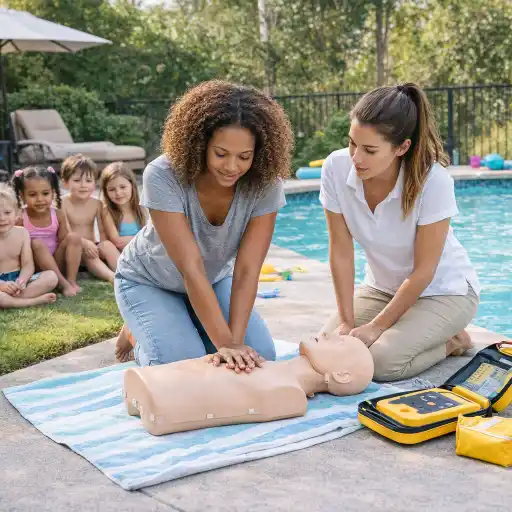 - check your state licensing agency.
Why it matters
1) Drowning is fast and quiet. Young children can drown in inches of water. The CDC explains that drowning is a leading cause of death for young children, so planning matters (CDC Drowning Data).
2) Backyard pools are common at home-based programs. Following California rules and good practice keeps your license and your families' trust. See California licensing basics at California Home Daycare Licensing Standards.
1) What California rules and laws should family child care homes know about backyard pools?
2. Know the Swimming Pool Safety Act and local building codes. The California law (Swimming Pool Safety Act) sets required barriers, alarms, and other safety choices for private pools; see the law at Swimming Pool Safety Act.
3. Check county health and building rules. Counties publish permit, inspection, and operation guides — for example, San Diego County hosts pool publications and permit forms at Pool Publications.
4. Follow DSS regulations for child care facilities. If your licensed family child care home uses a pool, your licensing analyst may require specific documentation and safety measures. Always confirm with your licensing analyst: state requirements vary - check your state licensing agency.
2) How can we prevent drowning and make backyard pool days safer?
2. Practical steps to follow each time you use the pool:
- 😊 Assign a single water watcher. That person has no other tasks during pool time.
- 👀 Maintain touch supervision for infants and toddlers (within arm's reach).
- 🔒 Lock gates and doors with self-closing, self-latching devices when the pool is not in use, per the Swimming Pool Safety Act (Justia - Swimming Pool Safety Act).
- 🛟 Use U.S. Coast Guard–approved life jackets for weak swimmers; do not rely on toys as flotation.
- 📋 Keep a written water-play plan and signed parental permissions on file.
3. Control small water hazards: empty water tables, buckets, coolers, and pet bowls right after use. ChildCareEd emphasizes that even shallow water can be dangerous (Water Safety for Toddlers and Young Children).
4. Limit access and temptations. Remove climbable objects near fences and keep toys out of the pool area when it is closed; a four-sided isolation fence reduces risk significantly (Red Cross).
3) What training, staffing, and equipment should family child care homes have?
- 😊 Pediatric First Aid & CPR for infants and children — keep current certificates on site. ChildCareEd offers courses that meet many state needs: Pediatric First Aid & CPR Buy Now
$85.00$80.00. Learn why this training matters and how it equips caregivers to act in emergencies in our guide Be a Superhero: How Pediatric First Aid and CPR Save Lives. - 📚 Preventive Health & Safety training and active supervision courses like those at ChildCareEd (Water Safety and related trainings).
- 🔁 Regular drills and role practice so staff know who calls 911, who rescues, who watches other children, and who records the event.
2. Staffing and ratios:
- 👀 Designate one adult as the water watcher for every pool area. For mixed groups, add an extra adult to keep sight lines clear.
- ➡️ Keep ratios conservative during water activities; if unsure, add one more adult per group.
3. Equipment and site checks:
- 🧰 Life jackets in varied sizes and in good condition.
- 🚑 AED on site if possible, emergency phone, rescue ring, shepherd's hook, and stocked first aid kit.
- 🔎 Daily check of gates, latches, pool drains (anti-entrapment covers), and chemical storage; county guides can help — see Pool Publications.
4. Communication and paperwork: Keep parental permissions, swim plans, attendance rosters, and staff certifications ready for licensing visits. ChildCareEd templates and checklists make this easier (Licensing Standards).
4) What should staff do in an emergency if a child is missing or submerged?
1. Practice a clear step-by-step emergency plan and assign roles before pool use. The Red Cross and ChildCareEd both recommend rehearsed roles so the response is calm and fast.
2. Immediate actions (when seconds count):
- 👀 Search: If a child is missing, check the water first. Time is critical.
- 📞 Call: One person calls 911 right away and gives clear location details.
- 🛟 Rescue: If safe, pull the child out using a rescue tool. Avoid entering the water unless trained and able to do so safely.
- 💨 Assess and act: If the child is not breathing, begin rescue breathing and pediatric CPR immediately while someone else continues to call for help. Use an AED if available and follow prompts (Red Cross guidance: Red Cross Home Pool Safety).
- 📝 Document and notify: After emergency care, document events, notify parents, and report per licensing rules. ChildCareEd guidance on water-play emergencies recommends clear reporting steps (How can childcare programs prevent drowning...).
3. Practice and learning: Hold short drills, review near-misses, and update your plan. State note: state requirements vary - check your state licensing agency for reporting rules.
Conclusion: What are the key takeaways and common mistakes to avoid?
1. Key takeaways (quick list):
- 😊 Plan: written pool rules, parental permissions, and daily checklists.
- 👀 Supervise: one designated water watcher; touch supervision for toddlers.
- 🧰 Train: current pediatric CPR/First Aid and regular drills.
- 🔒 Protect: barriers, locked gates, life jackets, and safe drain covers.
- 📋 Document: attendance, staff training, and incident reports ready for licensing.
2. Common mistakes and how to avoid them:
- ❗ Relying only on swim lessons — fix: keep active supervision even after lessons.
- ⚠️ Letting phones or tasks distract the water watcher — fix: make water watcher a single-task role.
- ❌ Forgetting to empty small water containers — fix: add emptying to end-of-day checklist.
Want more help? ChildCareEd has water safety and First Aid/CPR trainings and templates to make this easier: Water Safety, First Aid & CPR Buy Now $85.00$80.00, and licensing help at California Home Daycare Licensing Standards.
Hashtags: Keep these five words handy in your plans: #pool #water #safety #supervision #California
FAQ (short):
- Q: Can I use an inflatable kiddie pool at my family child care? A: Use caution; many experts advise emptying and cleaning daily or avoiding them for groups. See CDC and ChildCareEd guidance.
- Q: Who calls 911? A: Assign one staff member to call 911 while others manage rescue and other children.
- Q: Do we need lifeguards? A: Most family child care homes do not use lifeguards; instead, use trained staff and close supervision.
- Q: Where do I find sample checklists? A: ChildCareEd templates and county pool guides (e.g., San Diego County) are good places to start.
- 45 Hour Child Growth and Development
- Basic Health & Safety and Breastfeeding Awareness
- CDA Family Child Care Credential
- 1,2,3, Eyes on Me: Classroom Safety
- CDA Family Child Care Credential with Portfolio Review
- Pediatric RSV First Aid & CPR/AED
- CDA Bridge Bundle: Family Child Care
- Texas Director Credential
- Family Child Care: Building, Premises, and Outdoor Safety
- Que es Título 22 en California?
- ¿Cómo solicito la licencia para una guardería en California?
- Regulaciones de Cuidado Infantil en Maryland para Centros y Hogares de Cuidado Infantil Familiar
- Regulaciones de Licenciamiento de Cuidado Infantil en California para Centros y Hogares de Cuidado Infantil Familiar
- Normas de Licenciamiento de Cuidado Infantil en Virginia para Centros Diurnos Infantiles y Hogares Diurnos Familiares
- Lista para Abrir una Guardería en Casa en Carolina del Norte: Cómo Empezar
- Lista para Abrir una Guardería en Casa en Dakota del Norte: Cómo Empezar
- Lista para Abrir una Guardería en Casa en Georgia: Cómo Empezar
- Lista para Guardería en Casa en Illinois: Cómo Iniciar una Guardería en el Hogar
- Lista para Guardería en Casa en California: Cómo Iniciar una Guardería en el Hogar
- Lista para Guardería en Casa en Texas: Cómo Iniciar una Guardería en el Hogar
- Consejos de Supervisión Activa para Salones de Preescolar y el Juego al Aire Libre
- Cómo Trabajar en el Cuidado Infantil en California: Requisitos y Pasos
- Cómo Ser Maestra de Preescolar en California
- Capacitación Previa al Servicio para Proveedores de Cuidado Infantil en California
- Capacitación Previa al Servicio para Proveedores de Cuidado Infantil en Georgia
- How can Michigan providers keep kids safe around the Great Lakes and backyard pools?
- How did a backyard pool change water safety at California family child care homes?
- Proporciones para guarderías en casa bajo el Título 22: Cómo la mezcla de edades cambia su capacidad en California
