Outdoor #play is essential for young children’s physical development, confidence, creativity, social skills, and overall well-being, but it must be supported by consistent safety systems. Child care directors and providers can reduce risk by inspecting play areas before use, maintaining age-appropriate equipment and protective surfacing, monitoring weather conditions, securing gates and boundaries, and assigning clear zones of responsibility to staff. Strong active supervision means positioning adults strategically, scanning and counting frequently, anticipating hazards, and remaining close enough to respond immediately. This guide provides practical routines, quick staff checks, and evidence-informed strategies that protect #children while preserving the important developmental benefits of outdoor learning. State requirements vary, so always check with your state licensing agency.
To strengthen outdoor safety practices, explore ChildCareEd’s self-paced online course Family Child Care: Building, Premises, and Outdoor Safety  Buy Now $16.00. The course focuses on active supervision, outdoor boundaries, equipment and surfacing inspections, water and traffic risks, weather hazards, and maintaining effective sight-and-sound supervision. Programs can also use ChildCareEd’s free Playground Safety Checklist Buy Now $0.00 to inspect equipment, ground surfaces, visibility, and other common hazards before children enter the play area.
Why does safe outdoor play matter for my program?
1) Benefits and balance: Outdoor experiences build gross motor skills, social negotiation, and resilience; they also reduce stress and improve attention when managed well. See the research summary at ChildCareEd on outdoor play and the Pan-Canadian position on risk and learning (active outdoor play statement).
2) Risk reality: Falls, heat injury, poor air quality, insect-borne illness, and water incidents are preventable with layered planning. National guidance on playground standards and surfacing (referenced in ChildCareEd resources) and public-health guidance from the CDC explain why systems matter.
3) Why it matters for your program operations:
- Safer play lowers injury and liability and builds family trust.
- Clear systems make supervision and training simple to implement daily.
- Intentional outdoor practice preserves play benefits while reducing needless harm.
What daily routines and checks reduce hazards before children go outside?
Make a short, written routine every staff member follows before outdoor time. Use a checklist and require initials so the practice becomes non-negotiable; ChildCareEd provides printable checklists like the Ultimate Playground Safety Checklist and a short guide on daily playground safety (daily playground safety).
- 🔍 Inspect equipment: look for loose bolts, splinters, rust, missing parts; tag out any unsafe piece. (inspection tips)
- 🌡️ Temperature check: touch metal and dark plastic — if too hot to touch, delay or move play. (weather guidance)
- 🧹 Surface scan: remove glass, animal waste, debris, and confirm cushioning (wood chips, sand, rubber) depth and evenness.
- 🪧 Age-appropriate zones: confirm toddlers use lower equipment and signage is visible; separate age groups when possible. (CFOC and space guidance)
- ✅ Log it: staff initials a short form; record repairs and near-misses to support continuous improvement. (building & premises resources)
State licensing and local codes affect frequency and documentation—state requirements vary - check your state licensing agency.
How should staff supervise outdoor play to prevent most injuries?
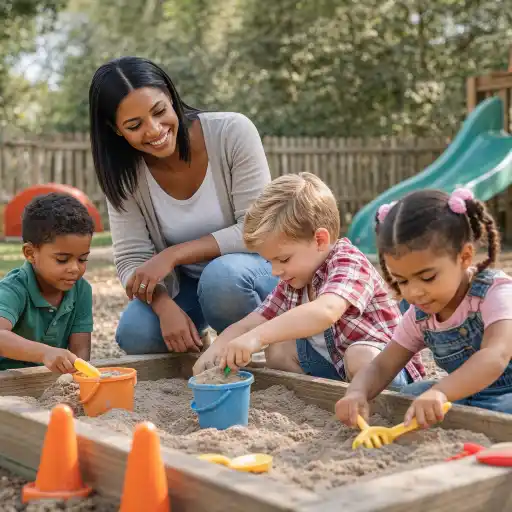
Active supervision is the highest-yield safety strategy. Teach staff simple habits: position, scan and count, listen, anticipate, and engage. ChildCareEd's active supervision resources explain these steps clearly (Active Supervision).
- 📌 Zone the yard: divide space into numbered zones and assign one adult per zone; rotate assignments so staff stays alert.
- 👀 Scan rhythm: scan left-to-right and near-to-far, and perform head counts at transitions and at set intervals.
- 😊 Engage quickly: step into play to teach rules (feet-first slides) and de-escalate rough play.
- 🔁 Use a 60-second huddle: before going out, name zones, who carries the first-aid kit, and note hazards.
- ⚠️ Common mistakes to avoid: 1) one adult covering too much ground — fix by shrinking zones or adding a floater; 2) phones and paperwork during supervision — adopt a phone policy; 3) not logging near-misses — record them to prevent bigger problems later.
For visual tools and short practice sessions, see ChildCareEd's active supervision trainings and posters (training Buy Now $16.00).
How do we manage weather, air quality, insects,cts and water risks?
1) Weather and heat: plan shade, water breaks, and cooler time blocks; use the ChildCareEd heat and weather guidance for routines (Weather Safety).
2) Air quality: check AQI before each outdoor block. Use a simple traffic-light rule (green/yellow/orange/red) tied to AQI values and log checks. ChildCareEd provides AQI and smoke tools and practical steps for smoky days (Air Quality tips); public guidance from the CDC and EPA supports indoor air actions.
3) Insect protection: use EPA-registered repellents per label instructions and protective clothing; review CDC insect guidance (mosquito prevention).
4) Water safety: apply layers of protection—fencing, life jackets, close adult water-watchers, and CPR-trained staff. ChildCareEd and national partners recommend strict adult assignment and immediate rescue protocols; see the CDC drowning prevention summary and the Red Cross water-safety guidance (CDC drowning prevention, Red Cross water safety).
What steps follow an incident and how do we improve playground safety over time?
Have a short, rehearsed post-incident protocol and a longer-term improvement loop. ChildCareEd offers incident templates and reporting guidance (incident & checklist guidance).
- 🚨 Immediate steps: move the child to a safe area, provide first aid, call 911 if required, and isolate hazards from other children.
- 📞 Notify family: make a timely, factual call describing what happened and care provided.
- 📝 Document thoroughly: use an incident form with time, witnesses, staff on duty, and follow-up actions.
- 🔧 Tag out and repair: place clear out-of-service markers on broken equipment and schedule repair; follow ASTM/CPSC guidance for major repairs and standards (ASTM F2373, playground standards).
- 🔁 Review and train: discuss the incident in staff meetings, update checklists, and run short drills or coaching observations (1 praise + 1 tip).
Maintain records of inspections and repairs; this supports continuous improvement and demonstrates compliance during licensing reviews—state requirements vary - check your state licensing agency.
Conclusion — What are the quick wins my team can implement this week?
- 🔧 Post a 5-point morning outdoors checklist and require staff initials (inspect, temp check, surface scan, zones, log).
- 👀 Adopt zone-based active supervision and a 60-second pre-play huddle.
- 🌤️ Add a weather & AQI traffic light at the exit door and rehearse the move-in drill for storms/smoke. (weather chart Buy Now $0.00)
- 🩺 Confirm CPR and water-watch assignments and that asthma/allergy plans are current.
- 📈 Start a near-miss log and review it monthly to spot trends.
FAQ (short):
- Q: How often should we inspect equipment? A: Daily quick checks before outdoor play and documented periodic inspections; follow your program schedule and standards. (playground checklist)
- Q: When should we cancel outdoor play? A: Use your posted weather/AQI chart—extreme heat, red AQI, lightning, icy surfaces, or unsafe equipment are common triggers. State rules may add specifics—state requirements vary - check your state licensing agency.
- Q: Do playground standards matter? A: Yes. Use current ASTM/CPSC standards for equipment and surfacing; ChildCareEd and ASTM resources explain requirements. (ASTM)
Keeping outdoor play safe is a systems job: short, consistent routines + active supervision + environmental checks. Use the ChildCareEd resources linked here for printable checklists and staff trainings and combine them with CDC and Red Cross guidance for weather, air quality, and water safety. Your next step: pick one quick win from the list above and make it required this week.
- 45 Hour Child Growth and Development
- CDA Home Visitor Subject Area 3 Part 3 Birth to 5
- CDA Home Visitor Subject Area 2 Part 3 Birth to 5
- Balancing Physically Active Play in Child Care
- 24 Hour Texas Pre-Service
- Texas Director Credential
- Balancing Active Play in Child Care
- Family Child Care: Building, Premises, and Outdoor Safety
- Mindful Supervision: Balancing Safety & Independence in Montessori
- Planning Summer Fun: Texas Child Care Providers
- Recursos en Español sobre el Sueño Seguro del Bebé
- What Kind of Property Works for a Child Care Center?
- How can Washington early childhood educators support outdoor play, safety, and learning in daycare?
- How Do Minnesota Winters Affect Young Children's Mental Health?
- Air Quality and Child Care in North Carolina: Outdoor Play Safety Tips
- How can Florida early childhood educators protect children from poisonous plants, bugs, and outdoor hazards?
- How can Washington child care programs keep playgrounds safe from stinging insects, slugs, and harmful plants?
- How can Oklahoma early childhood educators keep children safe from poisonous plants, spiders, and snakes outdoors?
- How can Washington classrooms be more inclusive using nature, play, and community?
- Canciones, juegos y preguntas de círculo para niños
- How can Minnesota child care programs keep kids learning and engaged over the summer?
- Why Should Early Childhood Programs Prioritize Outdoor Play?
- How can child care programs prevent heat-related illness during outdoor play?
- Should Early Childhood Programs Give Children More Outdoor Time?
- How can child care programs prevent seasonal safety hazards like heat, cold, allergies, holiday risks, and outdoor play dangers?
- Why Is Outdoor Learning Growing in Early Childhood?
- How Can Child Care Providers Build Healthy Habits for Young Children?
- How Can Child Care Programs Make Physical Activity a Daily Practice?
- How Can Child Care Programs Build Effective Sun Safety Practices for Children?
